Imago
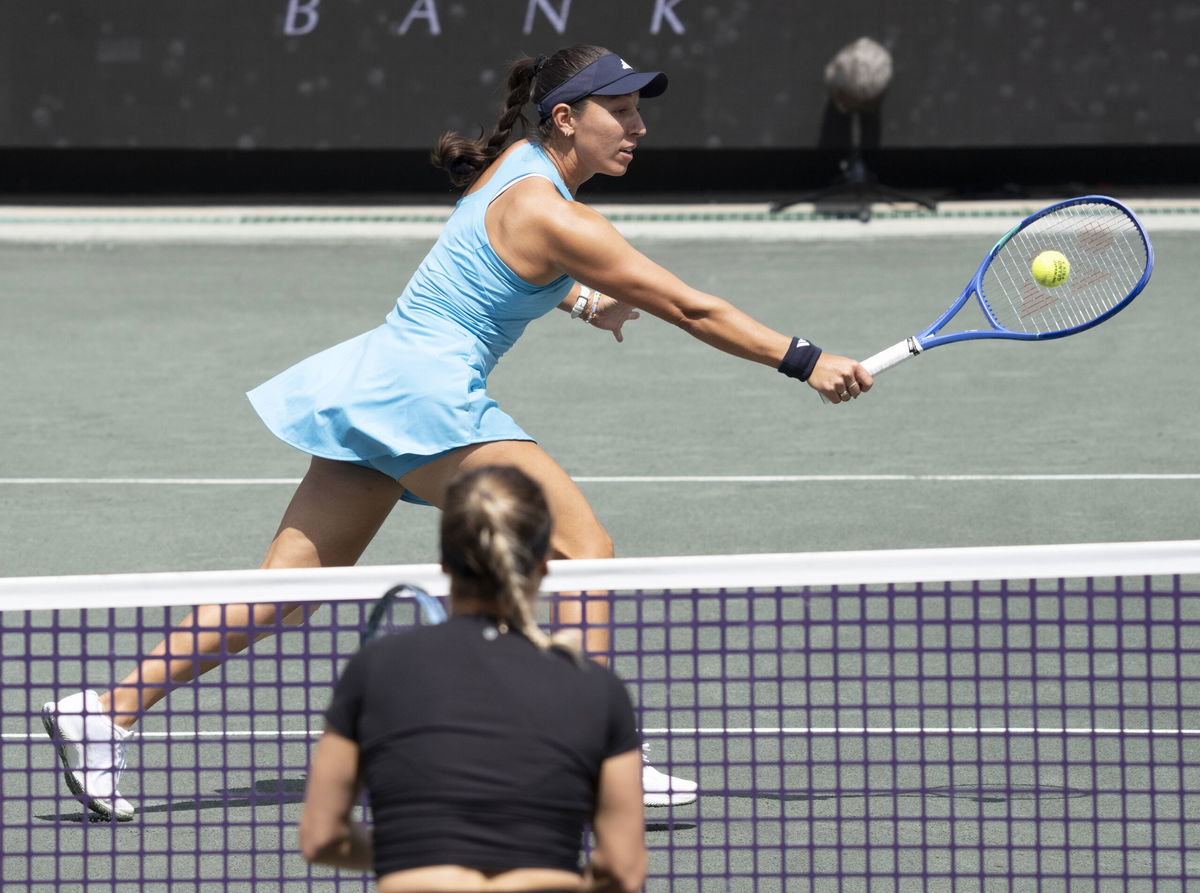
April 1, 2026: Jessica Pegula USA and Yulia Putintseva KAZ split the first two sets 6-4, 4-6 at the Credit One Charleston Open being played at Credit One Staduim in Charleston, South Carolina / USA Ã /Tennisclix/ TENNIS 2026: Credit One Charleston Open April 1 PUBLICATIONxINxGERxSUIxAUTxONLY – ZUMAc04_ 20260401_zma_c04_064 Copyright: xLesliexBillmanx
Imago
April 1, 2026: Jessica Pegula USA and Yulia Putintseva KAZ split the first two sets 6-4, 4-6 at the Credit One Charleston Open being played at Credit One Staduim in Charleston, South Carolina / USA Ã /Tennisclix/ TENNIS 2026: Credit One Charleston Open April 1 PUBLICATIONxINxGERxSUIxAUTxONLY – ZUMAc04_ 20260401_zma_c04_064 Copyright: xLesliexBillmanx
A month ago, Jessica Pegula felt panic surge after dropping the opening set to Donna Vekić in Indian Wells, before steadying herself to win. That same unease resurfaced at the Charleston Open, where a grueling 3-hour, 10-minute battle against Yulia Putintseva pushed her to the brink again, enough for her to call the experience a “nightmare.”
Watch What’s Trending Now!
After the win with a 4-6, 6-4, 7-5 scoreline, Pegula pointed to a key turning moment early in the second set. She described it as a phase where panic began to set in.
“I had a bit of a panic moment at the beginning of the second set. I was frustrated because it felt like nothing I was doing was working. I knew the patterns she was playing against me, but I couldn’t quite solve it. I was missing a lot of balls trying to execute my own patterns,” she added.
Even though she understood her opponent’s tactics, she struggled to respond effectively. This created frustration and a sense of uncertainty during the match. That phase showed a broader issue with control. Pegula explained how external conditions made the situation even harder. The wind and shadows affected her ability to judge the ball. High balls became especially difficult to track and return.
Jessica Pegula in press after her 3h 10 min 4-6, 6-4, 7-5 battle vs Yulia Putintseva in Charleston, the longest win of her career:
“She’s a nightmare. If there’s one person in the draw I would really not want to play first match on clay, she was like the number one.” 🤣 pic.twitter.com/s4GGecGUvU
— Christian’s Court (@christianscourt) April 1, 2026
Putintseva’s playing style added another layer of difficulty. It forced Pegula to constantly decide whether to step forward or stay back.
“She was playing really well. She’s tough—hitting high, loopy balls. It was windy, and there were shadows on one side of the court. It made it difficult with those high balls. I wanted to take some out of the air, but it’s hard to judge them when they’re that high, and the wind moves them around. You start second-guessing yourself and feel out of position.”
During the match, Putintseva also took a medical timeout. This happened at 3-3 in the first set due to a small cut on her knuckle. Despite that interruption, the match continued with high intensity. Both players stayed competitive throughout the contest.
Pegula even called it a “terrible matchup” because of her opponent’s unpredictable style. The combination of wind, lighting, and playing style turned the match into a test of adaptation. It became less about clean execution and more about handling pressure.
The win extended Pegula’s strong record in deciding sets. She improved to 7-1 in three-set matches this season and 16-4 since the US Open. This match also became the longest tour-level win of her career. It surpassed her previous 3:04 victory over Leylah Fernandez in the 2024 Cincinnati quarterfinals.
It was also her longest match overall since a 3:21 loss to Liudmila Samsonova in Berlin last year. These long matches show her ability to endure and stay strong under pressure.
Now through to the Round of 64, Pegula will face Elisabetta Cocciaretto. Cocciaretto had recently beaten Coco Gauff at the Qatar Open.
And heading into the next round, Pegula is focused on regaining her rhythm. She will look to build on this tough win and improve her consistency on clay.
Jessica Pegula reflects on tough clay-court challenges
Jessica Pegula had never dropped a set to Yulia Putintseva in their previous three meetings. However, this was their first clash on clay, which changed the dynamic completely.
Putintseva, who was chasing her eighth career Top 5 win, pushed Pegula to the edge. The match turned into a gripping tactical battle and could be one of the best matches of the 2026 season.
At one stage, Putintseva came very close to taking control. She held two points to go 3-0 up in the third set. Despite that pressure, Pegula stayed composed. She made smart shot choices at crucial moments to turn the match around.
After the match, Pegula summed up her experience during the on-court interview. “Not a lot of words,” Pegula said in her on-court interview. “All I could think was, ‘Welcome to clay-court season.’ Oh my God, it’s my first match on clay. Kudos to Yulia. She’s a really tricky opponent, especially on clay.”
Beyond the match, Pegula also reflected on her approach to clay courts. She made it clear that she does not want to completely change her playing style. Instead, she wants to carry forward the strengths she developed on hard courts. She aims to adjust only where necessary.
“I want to bring the things I’ve improved on hard courts into clay. At the end of the day, I’m not going to play like a traditional clay-court player. I’ll still take the ball early and change direction. I don’t want to move away from that.”
As of April 2026, Pegula holds a 133-81 career record on clay at the WTA level. This gives her a win percentage of 62.15%. She also won a clay-court title in 2025 at the Charleston Open. This highlights her growing confidence on the surface.
Over the past 52 weeks leading into April 2026, she has posted an 11-5 record on clay. This shows steady improvement compared to earlier stages of her career.
With the clay season now underway, new challenges are emerging. It will be important to see how she handles tougher tournaments in the coming months.
Written by

Edited by

Riya Singhal