
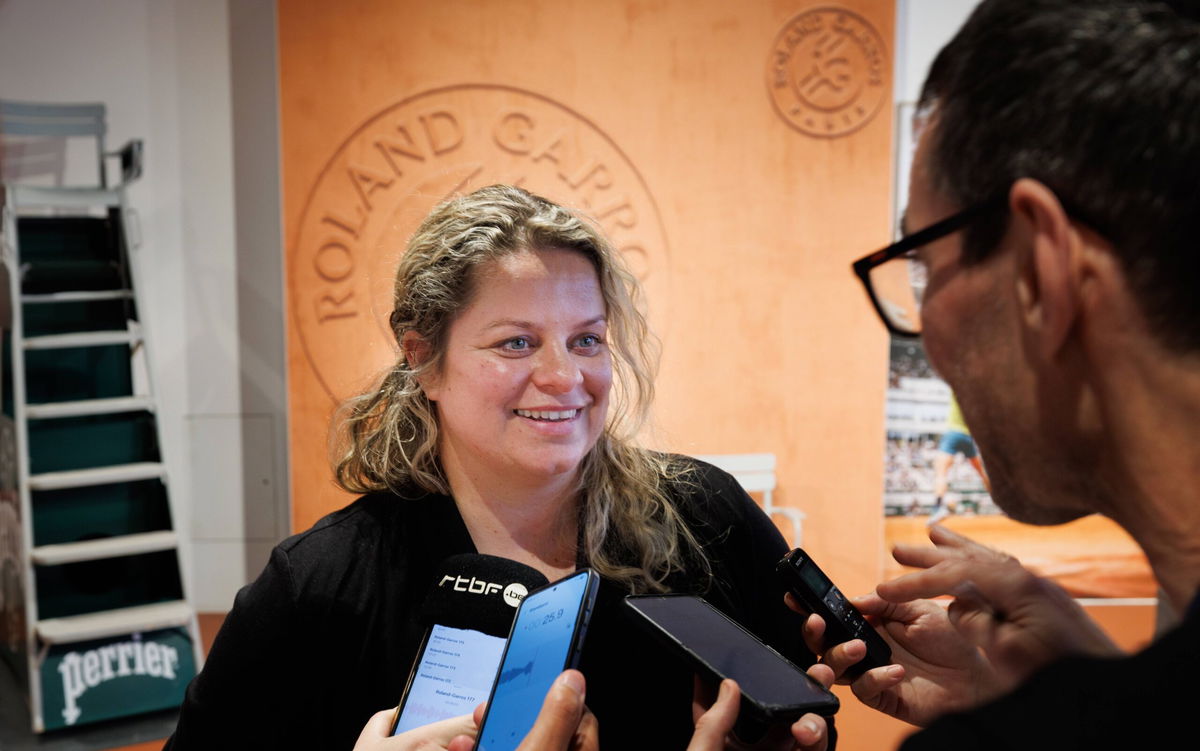
Novak Djokovic‘s proposals to shorten the game were a bit too radical, and it is no surprise that another former World No.1 and a Grand Slam champion has disagreed with the Serb’s opinions. Four-time Major champion Kim Clijsters did not align with Nole’s ideas to shorten tennis matches, voicing her support for the traditional scoring system.
“I think there’s nothing greater than seeing a big four-five hour match. And they don’t happen every day, right?” said Clijsters on the Love All Podcast. “But like to have a few of them in a tournament, especially if you can have a Novak against Sinner or Novak against Rafa, Rafa against Roger, like those moments I feel stand out so much in the history of our sport. And it would be a shame if we don’t have that. I don’t think I want to see that…I think as a player and I’m also kind of old school, I don’t like to see a lot of changes to our sport.”
Watch What’s Trending Now!
Djokovic had advocated for tennis matches to be shortened by playing best of five sets, but having a ‘first to reach four games’ format, while having no ad scoring. The 24-time Major champion had opined that matches finishing within a two-hour window would be beneficial for the players and all the other stakeholders in the sport.
However, Clijsters is not far off the mark, as long Grand Slam matches between the best players in the world give the sport narratives that sell the greatness of the tennis players to audiences. Some of the best matches among the Big Three were long epics that have found their place in the history books, such as the Federer-Nadal final at Wimbledon 2008 or the Nadal-Djokovic final at the 2012 Australian Open.
Also, Clijsters is bang on when she talked about marathon matches not being an everyday occurrence. This year, there have been three matches in the Australian Open and one match in Wimbledon that have crossed the four-hour mark. On the other hand, the French Open had a whopping twenty men’s singles matches that crossed the four-hour mark. One could sympathize with Djokovic’s perspective as the Serb featured in those long matches at every Slam, and doing so at the age of 39 can be quite a grueling task.
The Serb’s point about reducing match lengths has merit, as the tennis schedule is rigorous, and playing five-set matches on top of playing every week on the Tour is a recipe for injuries. On the ATP side of things, the likes of Carlos Alcaraz and Holger Rune have been out of action for quite some time, and top players like Arthur Fils and Jack Draper are struggling with injuries as well.
While tennis is not averse to making changes in cases of shortening the matches, as the sport has seen best-of-five-set matches be moved from high-profile events like the Olympics and the Masters 1000 events, making wholesale changes to the scoring system at the Slams might not be an easy thing to do, as Clijsters pointed out the historical significance of the same.
However, the scoring system is not the only area where Clijsters pushed back on her podcast.
Kim Clijsters Has Her Say on On-Court Coaching
Clijsters has a liking towards the traditional aspects of the sport on court, as the scoring system is not the only thing she pushed back on in her podcast. The Belgian has not been a massive fan of the “on-court coaching” system introduced at the Australian Open, where players benefit from having their teams on the sidelines and receiving active input from them during the match.
While this initiative has broadcasting value, as it gives the audience at home a glimpse into the interaction between the players and their team, Clijsters was not a big fan. The Belgian felt that the traditional method, where the player had to figure out obstacles on the court on their own, enhanced the player’s ability and the sport.
“I remember when the on-court coaching was happening, I was like, ‘What are we doing?” said Clijsters on the Love All podcast. “Taking something that’s good and changing it.'”
Clijsters also had a balanced opinion on players withdrawing from mandatory 1000 events earlier this year. In one of her podcast episodes, the Belgian talked about the withdrawals of top players like Iga Swiatek and Aryna Sabalenka from the WTA 1000 event in Dubai. While the overall sentiment was that players had the right to withdraw from tournaments, Clijsters pointed out the financial difficulties the big events faced when top players withdrew at the last moment, leading to an awkward dynamic between tournament directors and sponsors.