
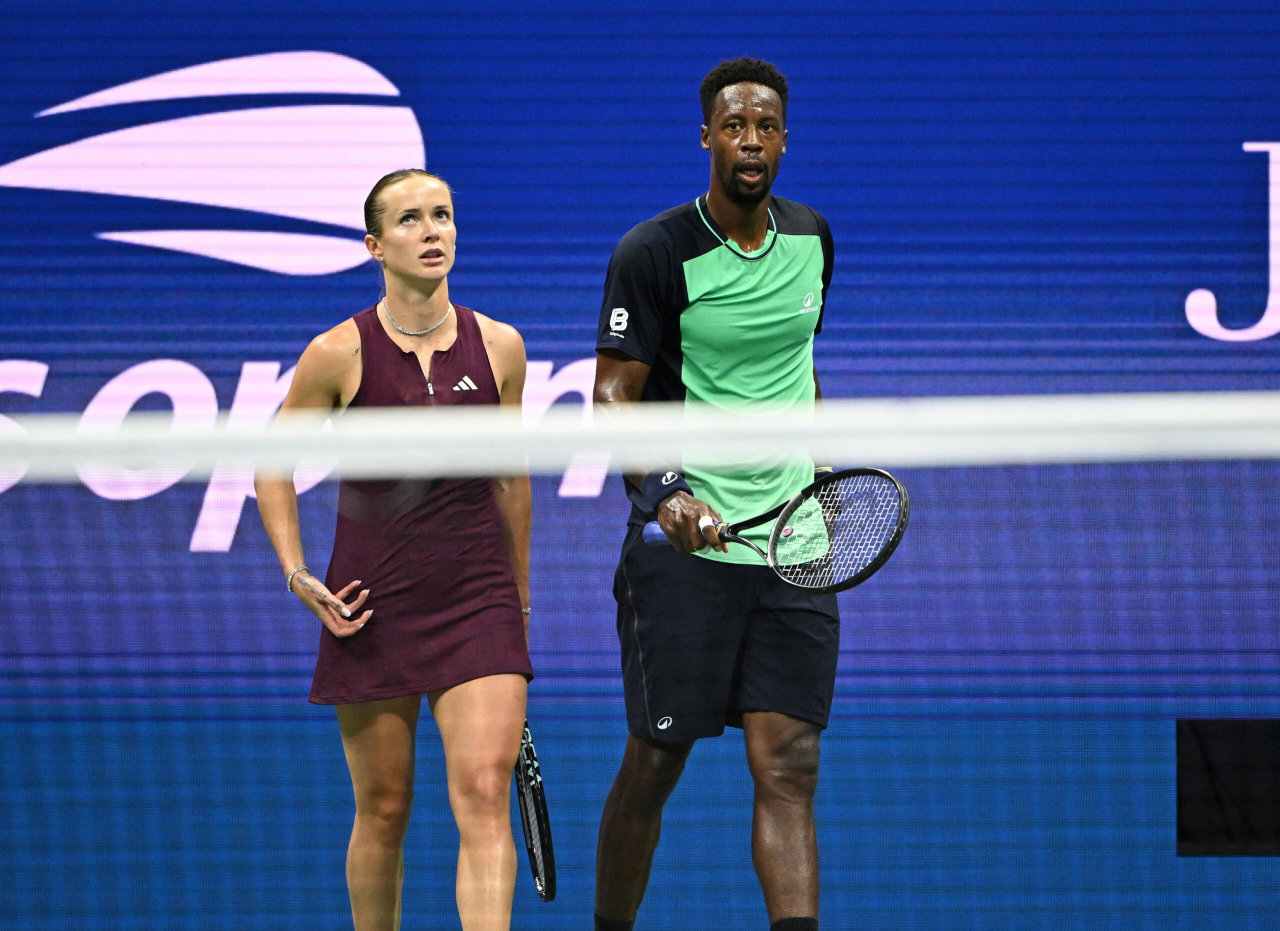
Tennis fans have spent years watching Elina Svitolina and Gael Monfils support each other through victories, defeats, injuries, and difficult moments away from the court. Their relationship became one of the sport’s most familiar love stories, but the announcement that they were ending their marriage has brought an ugly side of social media into view. Svitolina has faced criticism over a decision that concerns her family, and Monfils has had to defend her publicly. Now, former US Open champion Andy Roddick has made it clear that he has little patience for people who believe they have a say in the couple’s private lives.
Watch What’s Trending Now!
Speaking on the latest episode of the Andy Roddick’s Served podcast, which he co-hosts with tennis journalist Jon Wertheim, Roddick addressed the backlash after discussing Svitolina’s qualification for the WTA Finals. He questioned why the former couple still had to respond to public opinion about their separation.
“The fact that they’re still having to address it based on other people’s feedback is ridiculous,” Roddick said. “Let them live. Let them make their decisions, cuz they’re adults.”
The American did not stop there. He urged fans to give both players the space they need to navigate a difficult personal chapter without having to defend their choices to strangers.
“Like, let them get through it. They don’t need input. Let them be. Let them figure their stuff out. We wish them both, uh, all the best,” he added.
Roddick’s message was direct. Svitolina and Monfils do not owe the public a detailed explanation of every decision they make about their relationship. Their status as professional athletes may put their careers in the spotlight, but it does not give fans the right to dictate how they handle their marriage.
Svitolina announced the end of her marriage to Monfils on October 19, bringing an end to a relationship that began in 2018. The couple married in July 2021 and welcomed their daughter, Skai, in October 2022. Their announcement surprised many tennis fans who had followed their relationship over the years.
In her statement, Svitolina spoke about the emotional toll of Russia’s war against Ukraine and the effect it had on her life beyond tennis. She described sleepless nights, doubts, and a gradual loss of herself. She also acknowledged the support Monfils had given her during difficult periods. Her message made clear that the decision was painful, but she felt she needed to find her way back to herself. She asked for kindness and privacy and stressed that their daughter would remain their priority.
The response to her announcement soon became a problem of its own. Monfils publicly defended Svitolina after she received hostile comments from people who disagreed with her decision. He described some of the criticism as “unkind at best and venomous at worst.” He also reminded fans that the public cannot understand every detail of a relationship from a social media post. His statement made his position clear: he respected Svitolina’s decision, even though the separation had hurt him.
Monfils also acknowledged that the separation had taken a heavy emotional toll on him. During a Twitch livestream, he spoke about struggling mentally, eating less, and finding it difficult to train as he wanted. The situation also came amid his sudden retirement from professional tennis, which had ended his planned farewell season earlier than expected. His final competitive appearance came at the US Open, rather than at the Paris Masters, where he had intended to say goodbye to his home crowd.
There is also a tennis story beyond the headlines about their relationship. Svitolina qualified for the WTA Finals for the first time since 2019 after a strong season that included titles in Auckland and Rome. The season-ending event gives her another major goal to pursue on court, even as she deals with changes in her personal life.
Andy Roddick Also Raises Concerns About the Pressure of Tennis’ Anti-Doping Rules
The Svitolina-Monfils discussion was not the only issue Roddick addressed on the Served podcast. In another conversation, he spoke about the anxiety tennis players can experience under the sport’s anti-doping system. His comments followed an unusual incident involving Lorenzo Musetti, who requested permission to use his phone during a match in Lyon because of a scheduled anti-doping reminder.
Musetti’s quarterfinal against Luca Van Assche extended beyond 1 a.m. The Italian had set his availability for a possible anti-doping test at that time, but the match was still in progress. He asked ATP supervisor Rogerio Santos for permission to access his phone and update his whereabouts information. Musetti eventually won the three-hour, 33-minute contest, but the incident drew attention to the demands placed on players by testing requirements.
Roddick used the discussion to explain why anti-doping procedures can cause significant anxiety, even among players who have done nothing wrong. He recalled speaking with players about false positives and concerns over substances they may have consumed without knowing they could cause a problem. The former world No. 1 said the fear of receiving a doping-related email can leave players constantly worried about the consequences.
“I’ve talked to people about the fear of getting that email,” Roddick said, referring to the anxiety players experience around potential anti-doping issues. He added that the psychological pressure can be real regardless of whether a player has knowingly done anything wrong.
The two discussions concern different subjects, but they show Roddick’s willingness to question the pressure surrounding professional tennis.
For Svitolina and Monfils, the immediate request is simpler: let them handle their separation without turning it into a public trial. Roddick has delivered his message. Whether the online critics listen is another matter.