
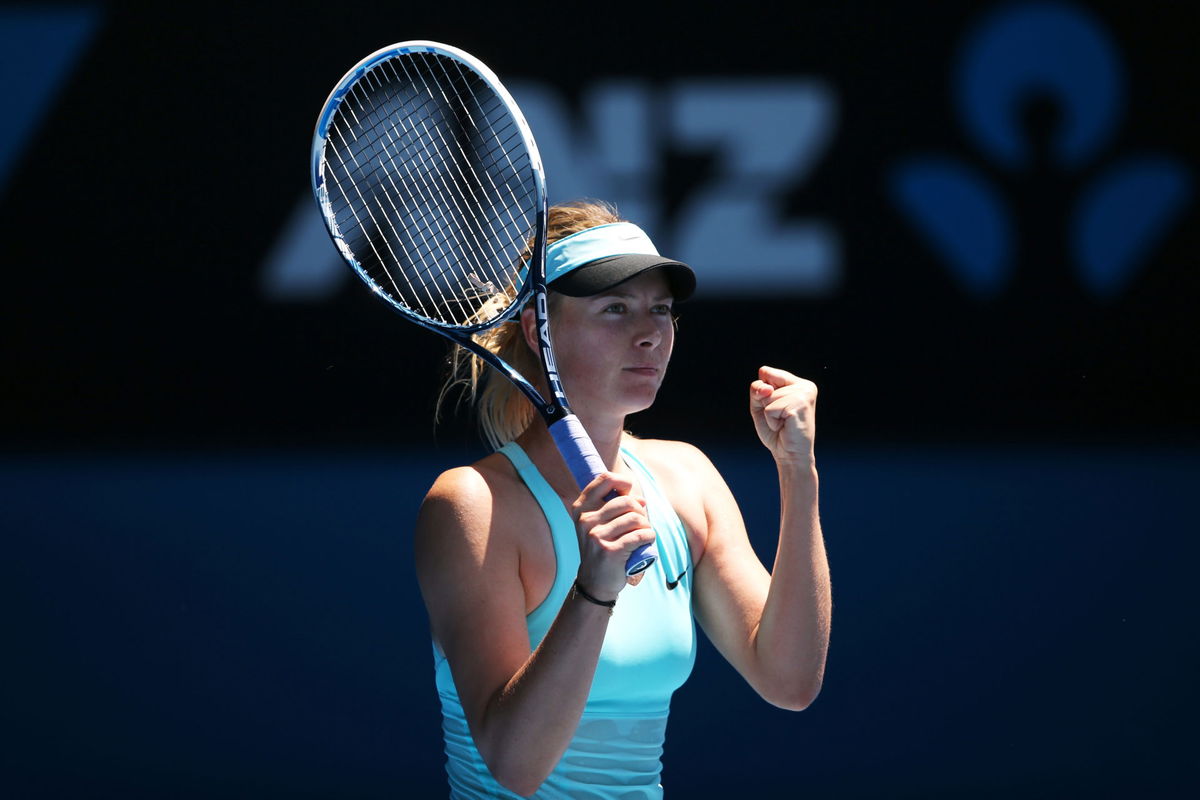
With just $700 in his pocket and an unshakable belief in a better future, Yuri Sharapov arrived in Florida with his 7-year-old daughter, Maria Sharapova. Determined to break into the world of elite tennis, he was chasing the elusive American Dream at a time when the sport was largely male-dominated.
Watch What’s Trending Now!
Those early years were anything but easy. Maria picked up English by watching television and had little access to formal education. Separated from her mother for years, she grew up in an environment that demanded resilience far beyond her age. And yet, she has often reflected on that time without regret, acknowledging the strength it instilled in her. “I’ve had to stand up for myself many times,” she has said. And perhaps it’s those very experiences that made her ‘Pretty Tough.’
So, when the 5x Grand Slam champion decided to spotlight the kind of ‘female ambition’ that often gets overshadowed in male-dominated podcast spaces, she chose to take charge herself, stepping up and leading from the forefront.
That vision has now taken shape with her new podcast, Pretty Tough, set to launch on April 22 in collaboration with Vox Media. More than just a show, it aims to reshape the conversation around women’s role in sports and media, an area where such voices are still far too rare.
“Introducing Pretty Tough, my new show about the pursuit of excellence without apology. It challenges how we discuss female ambition and explores the multitudes that make us,” she wrote in the announcement post on Instagram.
The show comes as a direct response to a long-standing and growing trend within the podcast industry. The most popular sports and culture shows, the daily heavy-hitters, and the loudest voices have largely leaned toward a male-dominated ecosystem. That same imbalance carries into sports media as well, where the most widely heard perspectives continue to be overwhelmingly male.
With Pretty Tough, the 38-year-old is deliberately pushing back against that dynamic. It’s an effort to carve out space and ensure her voice, and others like hers, are part of that conversation.
View this post on Instagram
“There are phenomenal women doing it, but there are certainly not enough of them,” she told the Wall Street Journal.
Interestingly, the project was pitched to several partners before Sharapova ultimately settled on Vox Media. For the 38-year-old, creative control carried far more weight than any upfront financial incentive, and Vox offered her exactly that. The deal reportedly includes a guaranteed minimum along with revenue sharing on advertising, aligning both vision and value.
As for the content, the first season already promises a diverse lineup, featuring conversations with comedian Chelsea Handler and NFL CFO Christine Dorfler, among others. It sets the tone for the kind of voices and stories the podcast aims to amplify.
The very name of the show, “Pretty Tough,” is provocative. It embodies the conflict between the expectations placed on a woman in the public eye and the truth of what it costs to compete to be at the top. For someone who was criticized and appreciated throughout her career because of the way she played, her ferociousness on the court, the title fits perfectly.
Episode 1 will be out on April 22. The show is available on every podcast platform.
What Sets Sharapova Apart as the Face of Pretty Tough
Maria Sharapova never had a linear career, and that’s precisely what makes her such a compelling voice on the subject she’s now exploring. She wasn’t just one of the most marketable female athletes in the world; she was also among the most scrutinized.
While her value to brands remained consistently high, it was often dissected and judged in ways that equally successful male athletes rarely experience. That contrast, in many ways, shapes the perspective she now brings to the conversation around ambition, visibility, and the pressures that come with both.
One of the most publicly disputed cases in the history of the sport was her 15-month tennis ban in 2016. She tested positive for meldonium, which she claimed she had been using for a decade as a regimen due to medical reasons, and was not aware of its addition to the list of prohibited substances.
Her re-entry after that suspension, and the way she was perceived after it, gave us an excellent example of the various standards that are applied to female athletes when they stumble. She worked her way back up to the top 100 and retired on her terms in 2020.
The cumulative weight of what she accomplished throughout her career was officially recognized when Sharapova was inducted as a member of the International Tennis Hall of Fame in 2025. It is the ultimate honor in the sport that a player can have as a tribute to their legacy.

Imago
Syndication: The Providence Journal Maria Sharapova, left, stands with Serena Williams at Sharapova s Aug. 23 induction ceremony at the International Tennis Hall of Fame in Newport. Williams was a surprise guest at the ceremony, and inducted Sharapova into the Hall. Providence , EDITORIAL USE ONLY PUBLICATIONxINxGERxSUIxAUTxONLY Copyright: xDavidxDelPoio/ThexProvidencexJournalx USATSI_26918502
And fittingly, it was Serena Williams, her most formidable rival and the player her career was so often measured against, who took the stage during Maria Sharapova’s Hall of Fame induction.
Beyond the rivalry, Serena Williams and Maria Sharapova’s journeys were rooted in remarkably similar beginnings. Both of them grew up under the unwavering belief of their fathers, an early foundation that helped shape their paths to greatness.
Hence, Williams stepping up to honor Sharapova spoke to a deeper layer of respect that exists beneath years of competition, something the media rarely captures in full.
That disconnect between the reality of how ambitious women find their way in the competitive world and how those narratives are publicly constructed, is exactly what ‘Pretty Tough’ is built to acknowledge. That ambition, which was at times unpleasant and never out of sight, is precisely what the show is meant to explore and glorify
Sharapova walking into the room with the microphone is a long-overdue move.