

Martina Navratilova’s advocacy for athlete eligibility has spread beyond tennis, as she walks into a heated debate unfolding in the WNBA and directly clashing with online critics in the process. The 18-time Grand Slam champion shared a petition on Change.org calling for “female-only” eligibility in the WNBA following the lead of Indiana Fever guard Sophie Cunningham.
Watch What’s Trending Now!
When a user argued the league was already effectively female-only, making the petition redundant, Navratilova was equally direct. “No it is not. Try again,” she wrote on X.
It’s what many advocates on her side of the argument have been claiming for a long time: The WNBA’s collective bargaining agreement does not define eligibility beyond the words “players who are women are eligible to play,” and there is no public policy governing transgender or intersex athletes in particular.
The controversy Navratilova stepped into traces back to comments Cunningham made in a July ESPN feature, where she said she wanted to “protect young girls in a locker room, or young girls in sport who shouldn’t have to go against biological men.”
Cunningham has since described herself as politically centrist, saying she agrees and disagrees with positions on both sides of the aisle, and has pushed back on suggestions that her comments amounted to hostility toward transgender people, telling reporters in August:
“I got a lot of negative feedback about me hating trans. And I’m like, ‘I never once said that.’ I think that I am here to extend love.” Cunningham’s statements garnered a mixed reception, drawing praise from Vice President JD Vance while also facing disapproval from within the league. It included comments from Minnesota Lynx coach Cheryl Reeve, who wore a shirt reading “Trans kids belong” during a nationally televised game against Cunningham’s Fever.
Imago
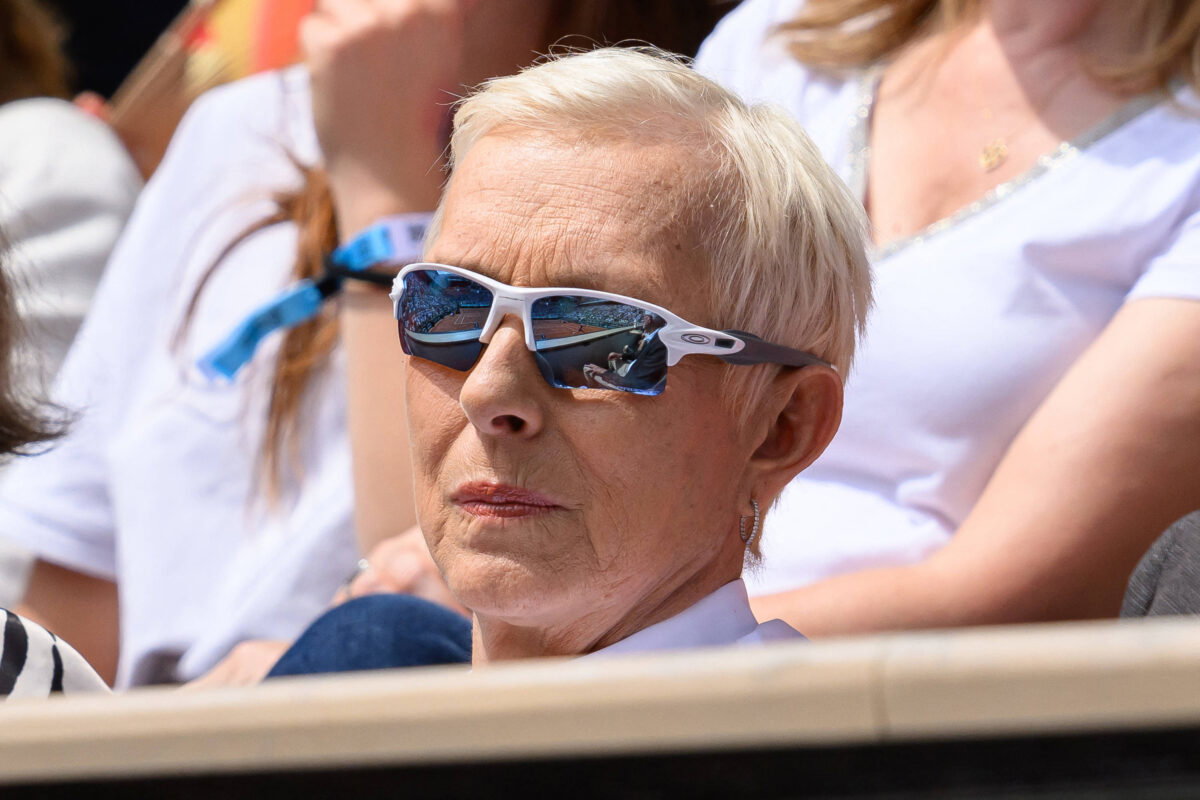
French Open – The Stands Martina Navratilova attends the Women Final of Roland Garros at Roland Garros on June 8, 2024 in Paris, France. Photo by Laurent Zabulon/ABACAPRESS.COM Paris France PUBLICATIONxNOTxINxFRAxESPxUKxUSAxBELxPOL Copyright: xZabulonxLaurent/ABACAx
It was against that backdrop that Australian broadcaster ABC drew Navratilova’s attention directly. Sports reporter Chris De Silva published an editorial arguing that while Cunningham “may be well-intentioned, the views are problematic in a league that prides itself on diversity and being a safe space for the trans community and other minorities,” and separately suggested Cunningham had been concealing her true position “under the guise of protecting the sanctity of women’s sport.”
Navratilova responded on social media with a blunt defense. “Sophie is not the PROBLEM!!! Nor is she problematic,” she wrote.
Women’s rights activist Sall Grover, who has her own history of disputes with the ABC over its editorial decisions, went further in comments to News24, calling the outlet’s characterization of Cunningham “laughable” and arguing it reflected a broader pattern. “The ABC continues to prove, from my experiences, that they find free-thinking women who reject ideology to be problematic,” Grover said.
A debate playing out across multiple sports at once
The WNBA dispute is happening at a time when the rules of eligibility have suddenly become a hot topic of debate in professional sports, including tennis itself. Navratilova has also been vocal about the stance she has taken regarding the WTA’s own new policy that all athletes should be tested for the SRY gene, which came into effect in July. It was met with support from players and criticism from groups such as the Sport & Rights Alliance, who have called for the policy to be scrapped.
Her participation in the WNBA discussion mirrors her tennis commentary, where the eligibility debate is not here to demonize transgender athletes, but instead about fairness in competition.
It is worth noting that, as of now, no openly transgender woman has played in the WNBA, a point critics of the petition and of Cunningham’s original comments have repeatedly raised. People who are advocating for stricter regulations argue that the absence of an active transgender athlete does not mean that a policy against it is not required. As evidence, they pointed to the vague framing of the WNBA’s clear standard and strongly believe that a change is long overdue.
The debate even puts weight on the legal and political landscape. In the last two months, the U.S. Supreme Court has had hearings in several states regarding the participation of transgender athletes in school-level sports. In contrast, 27 other U.S. states have laws restricting transgender individuals from taking part in girls’ and women’s sports.