

Martina Navratilova is one of the first prominent athletes to come out openly as gay in sports history. Despite being a strong supporter of the LGBTQIA+ community, she has consistently opposed non-‘biological females’ participating in the WTA Tour. The 18-time Grand Slam singles champion has supported the organization’s new eligibility policy, requiring all players to undergo one-time genetic screening for the SRY gene to be able to compete.
Watch What’s Trending Now!
“I played no part in this particular policy, but am very happy that we at the WTA are clear that we are a women’s association and only women, as in females, can compete at the highest level of women’s tennis,” Navratilova wrote on X.
The new policy supersedes an earlier policy introduced in 2024 that allowed transgender women to play on the WTA Tour if they had kept their testosterone lower than 2.5 nmol/L for two consecutive years. The new regulations state that eligibility will be based on a one-time test, which can be done with a cheek swab, saliva sample, or blood test, checking for the SRY gene normally located on the Y chromosome and linked to male biological development.
According to reports, there are currently no known transgender women competing at any level of professional women’s tennis. The last known player was Renee Richards, who competed on the professional tour between 1977 and 1981. Richards even coached Navratilova for several years of her career.

I played no part in this particular policy, but am very happy that we at the WTA are clear that we are a women’s association and only women, as in females, can compete at the highest level of women’s tennis.
The Czech-born player has also received criticism on her position in the days since the policy was announced, and she finally addressed them directly.
One online fan labeled the decision “invasive” and “transphobic,” to which Navratilova responded, saying there was nothing discriminatory about the rule but just meant to defend fair competition in the women’s category. She has also since replied to a separate user thanking her for being vocal on the issue, writing simply, “A step in the right direction by the WTA.”
The 69-year-old’s was consistent with comments she made on the subject over the past few years. In 2023, she contested the USTA’s transgender inclusion policy then in effect, asserting that advantages stemming from height and build couldn’t simply be dismissed through hormonal regulation.
She also has said that young female athletes were frequently left with little hope of a fair competition. She struck a similar note earlier this year when the International Olympic Committee introduced its own comparable SRY gene screening policy in March, welcoming that decision on social media as “about time” and thanking the organization for “paying attention to reality.”
The debate splits opinion across the tour and beyond
Not everyone in tennis agrees with Martina Navratilova, and the split has manifested itself in the tennis world’s biggest names. Billie Jean King, a 12-time Grand Slam champion and pioneer for the 1973 Battle of the Sexes, has previously spoken about transgender exclusion from women’s sports as a form of discrimination. King’s position led to a public back-and-forth between her and Navratilova roughly a month before the WTA’s latest announcement.
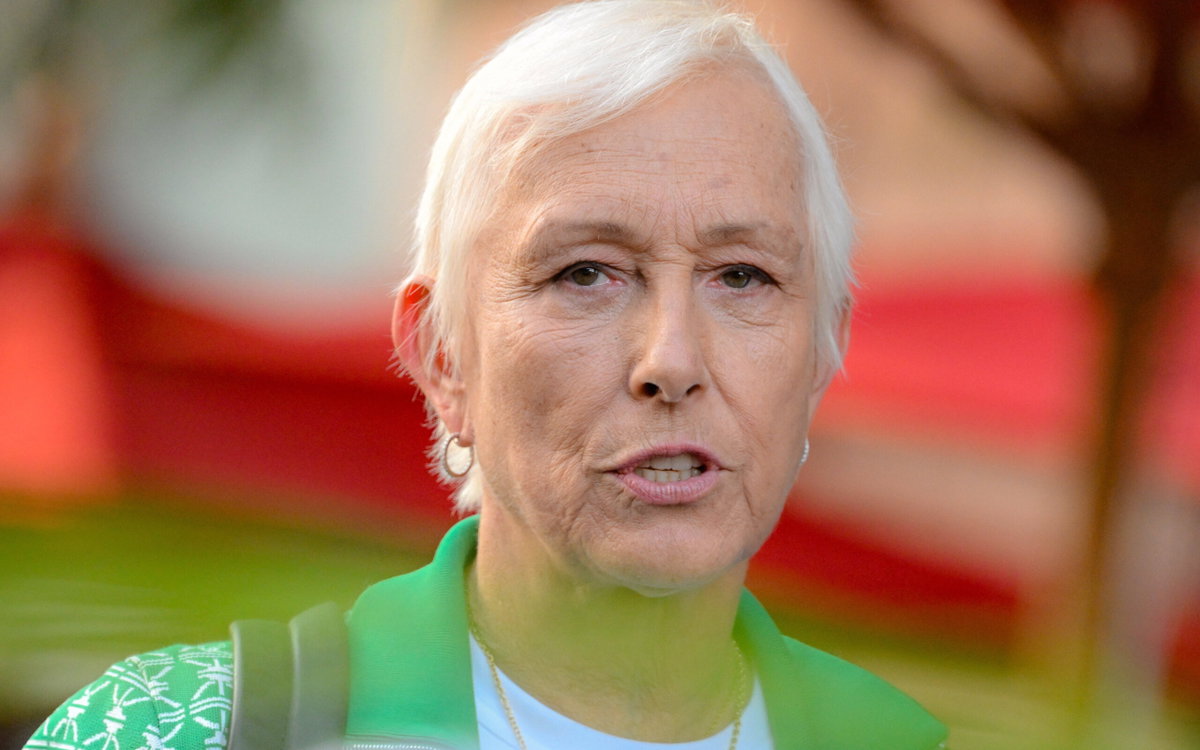
Imago
Tennis : Us Open 2024 – Martina Navratilova – Usa Tennis :Us Open 2024 – Usa – 01/09/2024 ChrysleneCaillaud/Panoramic PUBLICATIONxNOTxINxFRAxBEL
During the 2025 battle of the sexes between women’s world No. 1 Aryna Sabalenka and 2022 Wimbledon finalist and former world No. 13 Nick Kyrgios, they were asked their opinion on the issue. The Belarusian stated:
“I think it’s just not fair for a woman to basically face a biological man,” she said. “It’s not fair – the woman has worked her whole life to reach her limit, and then she has to face someone biologically much stronger.”
The Australian also echoed a similar expression: “I feel the exact same way, to be honest. I’ve got nothing to add. She hit the nail on the head.”
With this divide in the sport, WTA itself has been careful to frame the narrative: “committed to treating all players with dignity and implementing the policy in a respectful and thoughtful way.”
Although people can have opposing opinions, the choice has been made, and implementation begins this year.