
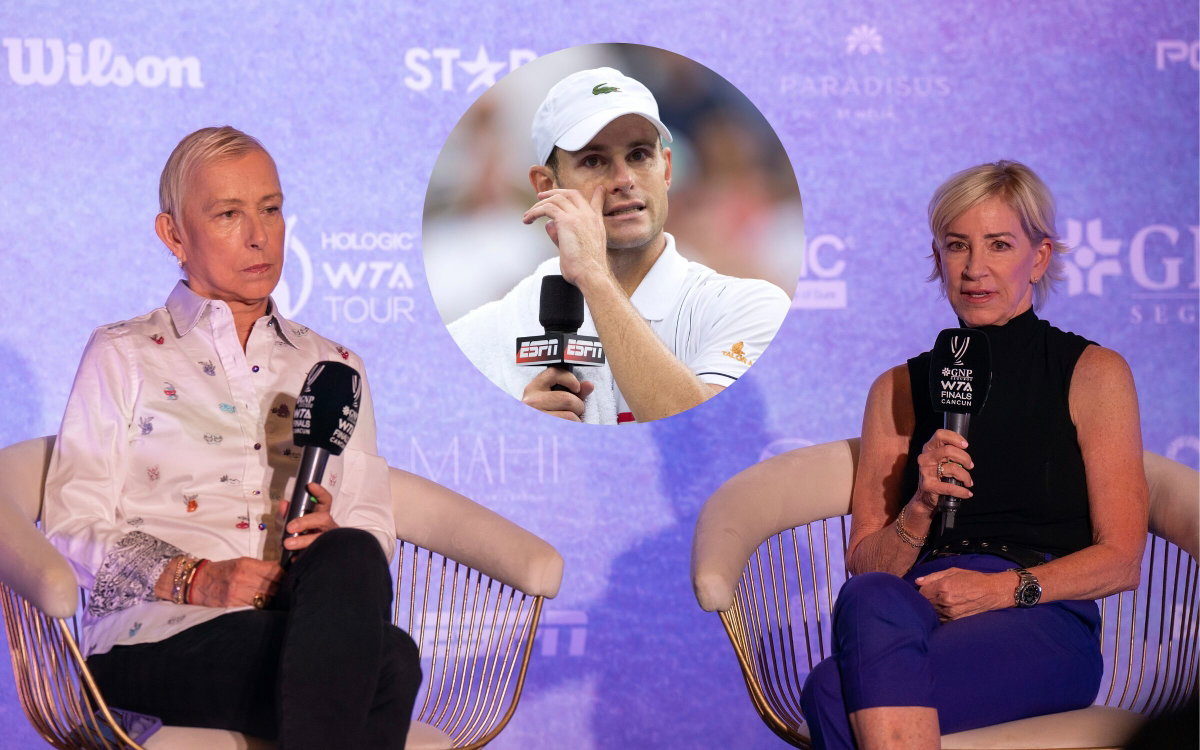
There are a few things that go beyond the fabulated rivalry of Chris Evert and Martina Navratilova in the 80s that did more for women’s tennis. Netflix chronicled the careers and lives of this legendary duo in the documentary named “Chris & Martina: The Final Set.” With its June 26 release date approaching, the former World No. 1 Andy Roddick simply wanted to be a part of their wholesome friendship.
Watch What’s Trending Now!
“There are two people who were just my absolute heroes”, said Roddick in an episode of The Served Podcast. “I think I’ve sent them both messages just randomly, like, can we be friends?”
The unique Netflix production attempts to highlight the contrast in how the two WTA legends were portrayed in the public domain, their bond of friendship, and their shared battle against a fatal disease.
Evert was the poster girl of women’s tennis from the late 70s to 80s. In contrast, Navratilova was seen as somewhat of an outsider because she had defected from her native country, Czechoslovakia. While Evert was seen as the cool and calm one, Navratilova was the more temperamental one, which reflected in her aggression and raw athleticism.
However, the most emotional part of the documentary is expected to be the shared battle against cancer that Evert and Navratilova have fought against side by side over the years and eventually beat it.
Although Roddick was not joking about wanting to be friends with them. Their relationship goes way back, with Navratilova being one of his first guests on his podcast. He worked with Evert for quite some time as well during his broadcasting tenure at ESPN.

The ultimate tennis rivalry turns into pure fandom, and honestly, who wouldn’t text Martina and Chris asking to be friends? 🎾🔥 Catch the latest episode of Serve out now, link in bio! Chris & Martina: The Final Set drops on Netflix this June 26th! 🔗
There can be no direct comparison to the rivalry between Evert and Navratilova on the court, but there were some duels that shaped women’s tennis in the future. Immediately after that, tennis saw the very protracted version of the Steffi Graf-Monica Seles rivalry, which could not run its full course, as Seles had the tragic stabbing incident. Then, later in the 90s and the 2000s, the rivalry between the Williams sisters was important for empowering representation in the sport while adding family drama to on-court proceedings.
The Evert-Navratilova rivalry is not only an exhibition of individual brilliance by the two women, but also a boost that helped women’s tennis grow.
The Evert- Navratilova Rivalry Shaped Women’s Tennis in the 1980s
Even though they met for the first time in 1973, it was the 1980s that shaped the Evert-Navratilova rivalry. Evert really dominated the matchup early, winning 23 of the first 30 matches against Navratilova. Between 1974 and 1978, Evert dominated women’s tennis, winning 7 major championships, whereas Navratilova had yet to win her first.
The period from 1978 to 1984 saw the duo’s peak dominance. Evert and Navratilova won 9 and 11 Major titles, respectively, but the rivalry turned decisively in Navratilova’s favor. The two met in nine Major finals during this period, and Navratilova won eight.
The rivalry played out its final chapter from 1985 to 1991, during which Evert won two Grand Slam finals against Navratilova, but it was the latter who dominated overall, winning eight more Major titles during this period, two of them at Evert’s expense in the finals. The two briefly paired up for doubles, adding another layer to the rivalry, but split in 1976.
They were at the forefront of the various WTA milestones, with Evert being the first No. 1 as per the computerized rankings in 1975, whereas Navratilova’s record-breaking 1984 season saw her win a 1 million dollars in prize money in a single season, something that had never been done by any female athlete in any sport back then.