
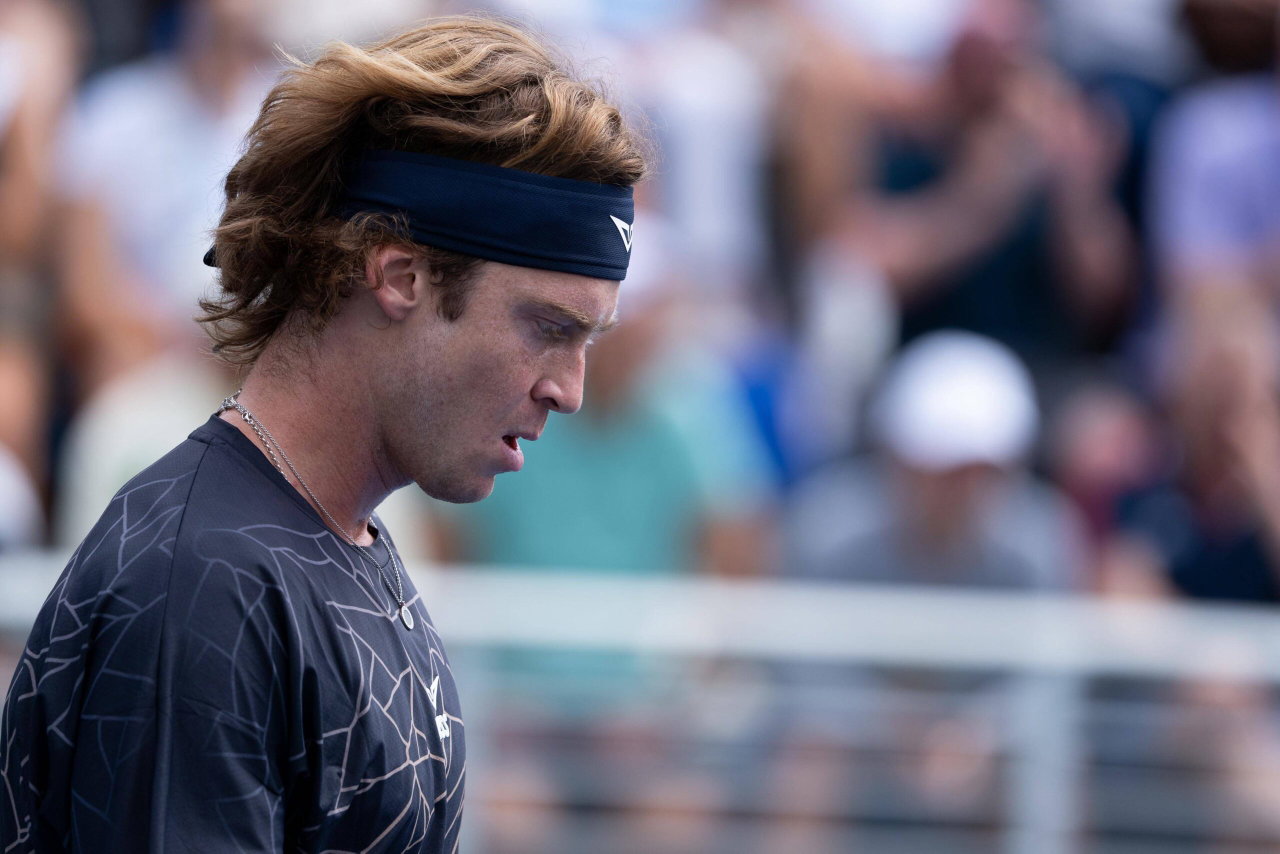
Andrey Rublev’s US Open run unraveled in two matches. He had to come back from two sets down to escape Otto Virtanen in the first round, then lost three straight sets to 21-year-old Daniel Merida after taking the opener, falling 6-7(3), 6-2, 6-4, 6-4. For a four-time US Open quarterfinalist, a second-round exit was a sharp drop, and the timing only intensified scrutiny around Marat Safin’s unusually loose role in his team.
Watch What’s Trending Now!
When discussing his coaching arrangement with Safin, Rublev admitted there is little structure to it. “It’s hard to give specifics because we have a free relationship. He wanted to come, he came. If he didn’t want to, he didn’t,” Rublev said, adding that “everything depends on Marat.”
That was enough for one fan to question whether the arrangement gives Rublev the stability he needs. “Yeah, so the relationship is shaky, just as expected. For a player like Rublev who needs stability, it would be best to quickly put an end to this collaboration and find someone else.”
That criticism carries extra weight because Safin originally became important to Rublev during one of the toughest periods of his career. After Rublev’s first-round Wimbledon exit, Safin reached out while the Russian was struggling mentally. Rublev later said, “With the help of Marat, he kind of made me understand myself or look at myself, and that was a bit of a restart from rock bottom and from there at least I was able little by little to start to move in a better direction.”
The connection itself went back much further. Rublev had known Safin since childhood and grew up idolizing the former World No. 1, while Safin already knew longtime coach Fernando Vicente and agent Galo Blanco from their own playing careers.
Once Safin showed interest in returning to tennis, Rublev pushed to bring him into the team. He joined for the clay season alongside Vicente, initially on a trial basis around Nîmes and Monte Carlo rather than as a replacement for Rublev’s longtime coach.
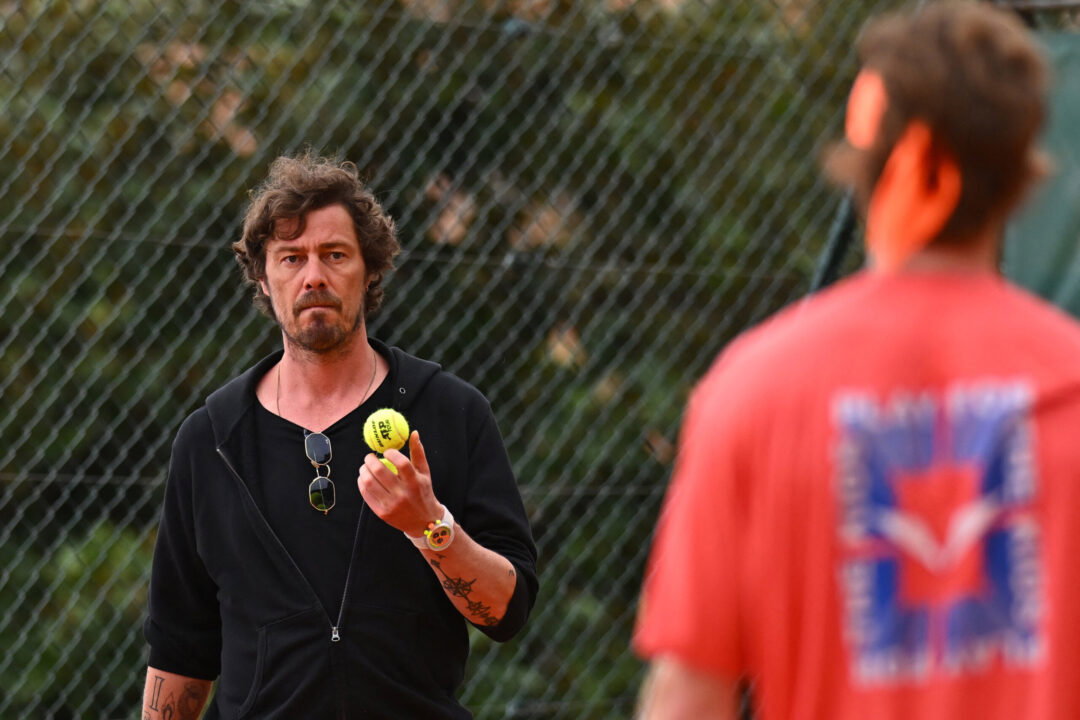
The trial lasted because Rublev liked what Safin brought. He openly said he wanted the partnership to continue, praising both his tactical input and the different perspective Safin offered on the mental side of the game.
But Safin was never a conventional full-time coach. Visa issues kept him away from parts of the North American swing, though he continued advising Rublev remotely, and by the time he returned for the US Open, his role had settled into something closer to a coach-mentor who joined the team for selected stretches.
That arrangement never became more rigid. Vicente remained the regular presence, while Safin trained with Rublev in Barcelona, appeared at certain tournaments, and stayed involved without traveling week after week.
And Safin is not the first former champion to work this way. Andre Agassi took on a similarly limited role with Novak Djokovic in 2017, making it clear from the start that coaching would not be a full-time job. Family commitments meant he would attend only selected events, and he initially made no long-term commitment beyond Roland Garros, believing even occasional input could still make a difference.
Still, as Safin became less visible at tournaments, including the latest US Open, the questions around Rublev’s setup only got louder.
Fans Turn on Marat Safin Over Rublev’s Loose Coaching Setup
One fan said, “Marat was literally in NY for the HoF ceremony, but he wasn’t by his side at the USO. I don’t get this ridiculous coaching arrangement. A coach needs to be there constantly. Look at how Carlos fired JCF, even after all that success, simply because he didn’t want to travel everywhere.”
Another questioned whether Safin should even be called a coach: “I never thought you can have a coach like that, or should it be called a ‘consultant’ instead?”
Others went straight at the lack of commitment. One fan wrote, “He needs a new coach, one who wants to see him succeed over anything else.” Another was even harsher: “Andrey, that man is scamming you.”
The backlash is really about the gap between what Rublev appears to need and how Safin works. Rublev has spent years dealing with emotional blowups and trying to add new patterns to his game, while Safin’s role remains completely flexible.
And that is where the partnership stands now. Rublev and Safin have not split and are still training together in Barcelona, but Rublev’s own description has only sharpened the question around the setup: is Safin really functioning as a coach, or more as a mentor who joins when he can?