
Imago
Novak Djokovic in first round action 2025 US Open, Day One, USTA Billie Jean King National Tennis Center, New York, USA – 24 Aug 2025New York USTA Billie Jean King National T New York NY United States of America PUBLICATIONxINxGERxSUIxAUTxHUNxGRExMLTxCYPxROUxBULxUAExKSAxCHNxDENxINDxITAxPORxESPxSWExTURxMEXxCOLxVENxPERxECUxBRAxARGxCHIxURUxPARxPANxONLY Copyright: xJavierxGarcia/Shutterstockx 15451863fv
Imago
Novak Djokovic in first round action 2025 US Open, Day One, USTA Billie Jean King National Tennis Center, New York, USA – 24 Aug 2025New York USTA Billie Jean King National T New York NY United States of America PUBLICATIONxINxGERxSUIxAUTxHUNxGRExMLTxCYPxROUxBULxUAExKSAxCHNxDENxINDxITAxPORxESPxSWExTURxMEXxCOLxVENxPERxECUxBRAxARGxCHIxURUxPARxPANxONLY Copyright: xJavierxGarcia/Shutterstockx 15451863fv
It was meant to be a smooth run into the Happy Slam for Novak Djokovic, who confirmed his return at the Adelaide International, an ATP 250 event scheduled from January 12–17, to sharpen his game ahead of the AO. Melbourne remains the stage of his greatest dominance, where ten titles fuel his pursuit of a record 25th major. Then, on a quiet Sunday evening, Djokovic dropped a bombshell, announcing he had left the Professional Tennis Players Association (PTPA), the organization he co-founded in 2020. Amid the contrast, one question endures: why would a founder walk away from his own creation?
Watch What’s Trending Now!
Djokovic’s split from the PTPA
More than five years after the PTPA officially took shape, Novak Djokovic announced that he is fully severing ties with the organization. He revealed that the two sides no longer share common ground.
Explaining his decision, he wrote, “After careful consideration, I have decided to step away completely from the Professional Tennis Players Association. This decision comes after ongoing concerns regarding transparency, governance, and the way my voice and image have been represented.”
Top Stories





He also reflected on the original purpose behind founding the organization. “I am proud of the vision that Vasek and I shared when founding the PTPA, giving players a stronger, independent voice – but it has become clear that my values and approach are no longer aligned with the current direction of the organization.”
Djokovic made clear that his priorities have shifted. “I will continue to focus on my tennis, my family, and contributing to the sport in ways that reflect my principles and integrity. I wish the players and those involved the best as they move forward, but for me, this chapter is now closed.”
After careful consideration, I have decided to step away completely from the Professional Tennis Players Association. This decision comes after ongoing concerns regarding transparency, governance, and the way my voice and image have been represented.
— Novak Djokovic (@DjokerNole) January 4, 2026
The announcement landed like a bombshell. It came at a time when the PTPA is deeply involved in legal battles that could reshape professional tennis.
In hindsight, developments from March of last year now appear to have foreshadowed this separation. Djokovic’s exit arrives during the most aggressive phase of the organization’s campaign.
At the center of the issue is a major antitrust lawsuit. The PTPA filed suit against the ATP and WTA Tours in March. It also named the International Tennis Federation and the sport’s anti-doping authorities as defendants. The lawsuit challenged the structure of professional tennis and the distribution of power and revenues.
In May, the case reached a critical moment. A federal judge ruled that the ATP Tour could not retaliate against players who joined the lawsuit. This followed the ATP circulating a letter for players to sign. The letter stated that signatories did not support the lawsuit or the PTPA.
Many players felt pressure during that process. Some players, including Djokovic and others not involved in the suit, were already pushing for change in prize money distribution.
Currently, players receive roughly 15 to 20% of Grand Slam revenues. In comparison, athletes in leagues like the NBA, NFL, and MLB receive close to 50% through collective bargaining agreements.
Judge Margaret Garnett addressed the issue directly. She ruled that circulating the letter, and an instance where an ATP board member pressured two players to sign it, amounted to “coercive, deceptive, or potentially abusive” conduct. The players involved were Alexander Zverev and Ben Shelton.
In September, the PTPA changed its legal strategy. It removed the International Tennis Federation and anti-doping authorities from the lawsuit.
In their place, it added the organizers of the Australian Open, French Open, Wimbledon, and the US Open. The organization had previously described these entities as “co-conspirators” in a “cartel” that restricted player opportunity, prize money, and welfare.
By December, another development followed. The PTPA announced that it had reached an undisclosed settlement with Tennis Australia. Tennis Australia confirmed the agreement in a statement. “Tennis Australia today confirmed it has reached an agreement to settle the class action lawsuit filed in New York District Court earlier this year, without admitting any liability or wrongdoing. The settlement remains subject to final documentation and court approval processes.”
The statement also clarified that the matter was not fully resolved. “The plaintiffs’ lawyers have applied to the court to continue the stay of proceedings against Tennis Australia while settlement documentation is completed.” This outlined the next procedural steps before final approval.
The PTPA responded through its executive director, Ahmad Nassar. Speaking via text message, Nassar said the organization hoped for better cooperation moving forward. He stated that the PTPA wished that “everyone would make more effort to resolve these matters for the benefit of players, fans, and tournaments alike as soon as possible.”
Legal resistance continued elsewhere. The other three Grand Slam tournaments and the two tours moved to dismiss the lawsuit. The ATP Tour described the case as “entirely without merit.” The WTA called it “baseless.” A spokesperson for the All England Lawn Tennis Club confirmed awareness of the Tennis Australia settlement but declined further comment due to ongoing proceedings.
Despite the partial settlement, new legal motions followed. Wimbledon, along with the French and US Open organizers, filed a joint motion to dismiss the lawsuit.
The French Tennis Federation and the All England Lawn Tennis Club argued that a US court does not have jurisdiction over them. The US Tennis Association sought arbitration with certain players. Throughout these maneuvers, Djokovic chose to remain on the sidelines as the PTPA pressed ahead with its legal fight.
Djokovic’s omission from the list of plaintiffs
When Novak Djokovic unveiled the PTPA at the 2020 US Open, the moment carried symbolic weight. A striking image showed many of the sport’s top men standing together on court, spaced apart by pandemic rules. With that single act, the 24-time Grand Slam champion placed himself in open opposition to the ATP Tour.
He followed the announcement with decisive action. Djokovic stepped away from the ATP Players’ Advisory Committee and made his position clear. He argued that players could only secure real influence and a fair share of tennis revenues through an independent body free from tour control.
In the early phase, his commitment was absolute. Djokovic even supported a bold PTPA vision of a premium tour. The concept centered on roughly 15 to 20 of the sport’s biggest tournaments and aimed to reshape power dynamics at the top of the calendar.
Imago
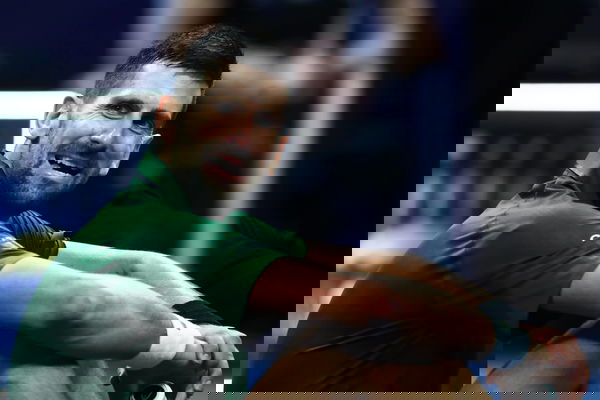
Hellenic Championship ATP, Tennis Herren 250 Final – Novak Djokovic of Serbia react during the Hellenic Championship ATP 250 final tennis match held in OAKA Stadium in Athens, Greece, 8 November 2025. IMAGO/ONE INCH PRODUCTIONS ATHENS Greece Copyright: xONExINCHxPRODUCTIONSx 6725373
Over time, however, the tone shifted. As the PTPA grew more militant in its stance toward the ATP Tour, Djokovic began to ease back. His distance was subtle but deliberate. The organization’s confrontational posture no longer fully reflected his approach.
That separation became clearer when the PTPA launched its lawsuit. Djokovic was not listed as a named plaintiff. Speaking at the Miami Open in March, he acknowledged that he did not agree with every aspect of the legal action. Still, he continued to be publicly associated with every move the group made.
That association frustrated him and those around him. Each time the PTPA clashed with tennis authorities, Djokovic was seen as part of the attack. The close-knit tennis establishment viewed him as a central figure, even when he was not directly involved.
At the same time, Djokovic was forging new relationships. He signed high-profile deals with sports investors in Saudi Arabia, agreeing to appear at events there for significant fees. The country has emerged as a major force in tennis investment and is set to host an ATP Masters 1000 event from 2028.
The breaking point came when Djokovic refused to put his name on the PTPA’s antitrust filing. The organization strongly wanted his involvement. His absence spoke louder than any statement and signaled that his path had diverged.
In truth, Djokovic sought balance. He wanted to advocate for players and push for better conditions. He did not want to be remembered as the sport’s chief disruptor as he approached the final chapters of his career.
He hinted at this shift during the US Open last summer. Reflecting on past battles, he said, “I have noticed that a lot of top players have been quite opposing the new change of the almost two-week events, the Masters level.” He added, “I support the players. But (at) the end of the day, when the players needed to be active and when there was a time of negotiations and decision-making, players weren’t participating enough.”
With the icon now stepping away, the reforms the organization once sought may struggle to gain the same momentum or reach their full potential.
Vasek Pospisil’s vision for meaningful change may no longer be sustainable
When discussions turn to the PTPA, Novak Djokovic’s name often dominates the conversation. Yet the organization was equally shaped by Canadian doubles specialist Vasek Pospisil. Pospisil believed deeply in the PTPA’s potential and carried his own ambitions for meaningful reform within professional tennis.
Last September, Pospisil spoke at length about that vision on the Behind the Racket podcast. He explained how his understanding of the sport evolved through the process. “The most important lesson I’ve learned over the past five years concerns the tennis system,” he said, reflecting on the complexity behind the scenes.
Pospisil described a system more fragmented than he once imagined. “I’ve seen that it’s far more disorganized than I thought,” he added. He stressed that momentum for reform was finally building and that change felt closer than ever.
He continued with cautious optimism. “Today, for the first time, I see that we’re very close to significant change, the kind we need to give players a real voice and an idyllic environment for their development.” In his view, tennis had fallen behind other global sports.
Imago
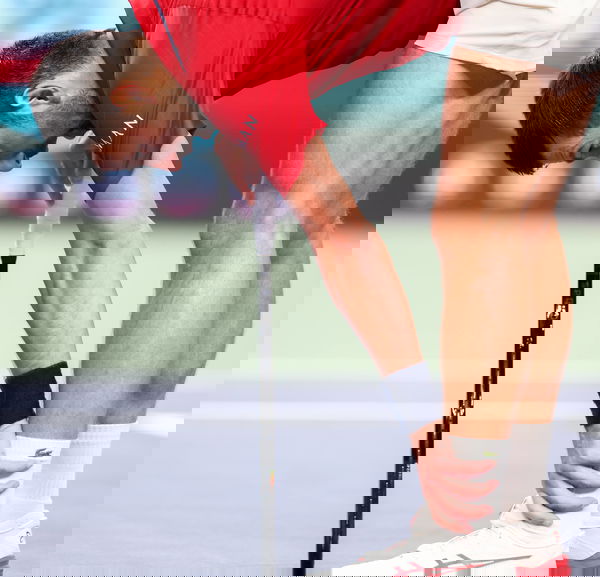
251009 — SHANGHAI, Oct. 9, 2025 — Novak Djokovic holds his ankle during the men s singles quarterfinal between Novak Djokovic of Serbia and Zizou Bergs of Belgium at the ATP, Tennis Herren World Tour Shanghai Masters tennis tournament in Shanghai, east China, Oct. 9, 2025. SPCHINA-SHANGHAI-TENNIS-ATP TOUR-SHANGHAI MASTERS-MEN S SINGLES CN DingxTing PUBLICATIONxNOTxINxCHN
That gap, he argued, forced players to act. “Tennis has lagged behind other sports, which is why we’ve been trying to collaborate with certain governing bodies all these years,” Pospisil said. He explained that legal action became unavoidable when cooperation failed.
Pospisil later clarified the PTPA’s core objective. “The ultimate goal is to give players an independent voice. That’s our main wish in response to the lawsuit.” He emphasized that structural reform would unlock broader progress.
He linked independence directly to economics. “It will pave the way for everything else: higher prize money and better revenue sharing.” For players, influence over schedules, travel, equipment, and earnings remains fundamental.
The debate over pay has long shaped tennis politics. One notable example dates to 2012, when billionaire Larry Ellison sought to increase the prize money at Indian Wells by $1.6 million. The plaintiffs argued that paying more “was likely to attract better players, draw more television partners and increase ticket sales and sponsorship revenues relative to its competitors.”
According to players, the ATP rejected Ellison’s proposal over concerns it “would pressure” other tournaments to raise prize money “above the annual rate the cartel had agreed to.”
Players view this rejection as proof that earnings are capped below true market value. Golf offered a contrasting example when LIV Golf forced the PGA Tour to increase purses.
With Djokovic now stepping away, the PTPA’s momentum faces uncertainty. His exit appears to have weakened the organization’s influence.
In the end, Djokovic chose legacy over internal politics and concerns over how his image was represented. His departure suggests deeper structural flaws affecting player welfare.
As the icon exits the stage, the future direction of the PTPA remains an open question.
