
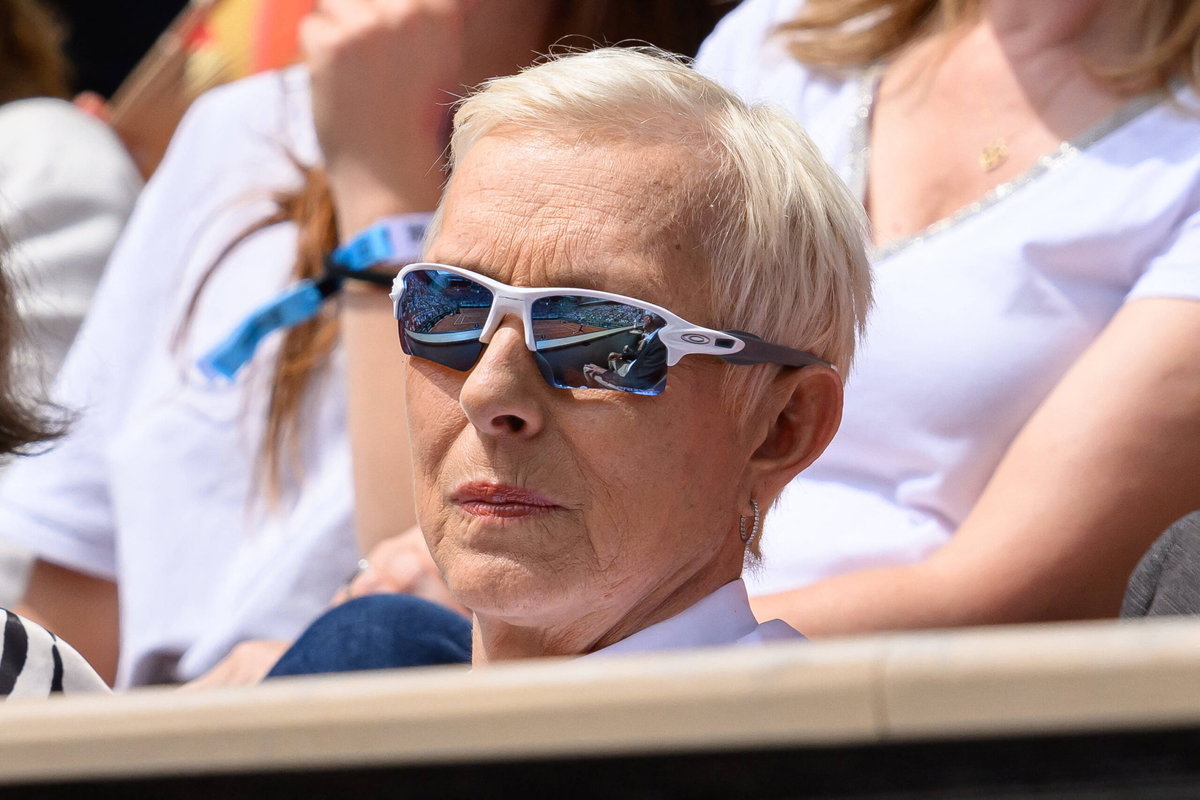
Late nights are nothing new at Flushing Meadows, but the frequency this year is becoming difficult to ignore. Alcaraz and Sinner famously played until a record 2:50 a.m. in their 2022 US Open quarterfinal, the latest finish in tournament history. But that was one extraordinary match. Through the first six night sessions this year, Arthur Ashe has already finished after 1 a.m. four times and after 2 a.m. three times. The problem is no longer one marathon match. It is becoming the schedule itself, and now former champions Martina Navratilova and Boris Becker are backing the players calling it out.
Watch What’s Trending Now!
“This is not sustainable,” posted the 18-time Grand Slam champion after another late finish. Boris Becker also backed this and said, “That’s simply too late to play tennis… tell me another sport like that?!?”
- Night 1, Aug. 30: Sofia Kenin defeated Venus Williams 6-2, 7-6(6). The match lasted 1 hour, 48 minutes and finished at 2:01 a.m.
- Night 2, Aug. 31: Naomi Osaka defeated Anastasia Zakharova 7-6(6), 7-6(3). The match lasted 2 hours, 2 minutes and finished at 12:26 a.m.
- Night 3, Sept. 1: Alexander Zverev defeated Lorenzo Sonego 6-4, 3-6, 6-7(7), 7-5, 6-4. The five-set match lasted 4 hours, 53 minutes and finished at 1:55 a.m.
- Night 4, Sept. 2: Carlos Alcaraz defeated Jaime Faria 4-6, 6-0, 6-3, 6-2. The match lasted 2 hours, 40 minutes and finished at 11:15 p.m.
- Night 5, Sept. 3: Alexander Zverev defeated Quentin Halys 6-4, 4-6, 7-6(3), 6-7(3), 6-3. The match lasted 4 hours, 33 minutes and finished at 2:15 a.m.
- Night 6, Sept. 4: Ben Shelton defeated Denis Shapovalov 7-6(3), 6-7(5), 6-3, 6-4. The match lasted 3 hours, 22 minutes and finished at 2:07 a.m.
The US Open has dealt with extreme late finishes before. In 2024, Alexander Zverev and Tomas Martin Etcheverry played until 2:35 a.m., the second-latest finish in tournament history, while Zheng Qinwen and Donna Vekic finished at 2:15 a.m., setting the record for the latest women’s match at the US Open.
For players, the concern now turns to recovery.
Jessica Pegula questioned whether these late finishes are fair on players.
“It’s tough. Almost every single night, the matches are finishing really late. I think it’s difficult, and I don’t think any of the players really like it.”
Aryna Sabalenka also explained that the problem does not end when the match does.
“Of course, I would prefer to finish earlier, so I can have my easy evening… When you finish late, it’s just like the whole next day shifts a lot. You still need to get hours of sleep, so you start later, and it can really mess with your schedule.”
Venus Williams experienced the most extreme version of that problem when her first-round match against Sofia Kenin did not even start until 12:13 a.m.
“It was extremely late. I’ve never played a match that late before. It’s not ideal… I just don’t know any other sport where you have to start that late… there’s room for improvement there,” said the seven-time Grand Slam champion.
And late finishes are not the only thing disrupting recovery. Rain has made the scheduling problem even harder to manage.
Rain Is Not Helping the US Open Either
Rain delays left 11 matches affected, and Jose Morgado questioned why the US Open did not use Arthur Ashe Stadium more aggressively when it had a 3-hour, 20-minute gap before its next scheduled match.
“3h20 hours till the next match on Arthur Ashe Stadium and the US Open decided not to move any match there,” Morgado wrote on X, calling it an “absolutely remarkable decision” with more rain already in the forecast.
Paula Badosa was leading Daria Kasatkina 6-1, 5-4, with the game at deuce, when rain suspended play for the night. Iva Jovic and Magdalena Frech were also eventually stopped at 4-4 in the opening set, while Juan Manuel Cerundolo led Arthur Gea two sets to one but trailed 2-5 in the fourth when their match was halted.
Badosa eventually needed only 10 minutes the next day to finish Kasatkina, but the wider concern was the uncertainty around when players would return and how much recovery time they would have.
There were logistical limits. Coco Gauff was scheduled to play Zeynep Sonmez on Ashe, while Gael Monfils faced Adolfo Daniel Vallejo on Armstrong, meaning both covered stadiums already had commitments.
The rain itself was unavoidable. Morgado’s criticism was that the US Open still had a window to reduce the backlog and chose not to use it.