
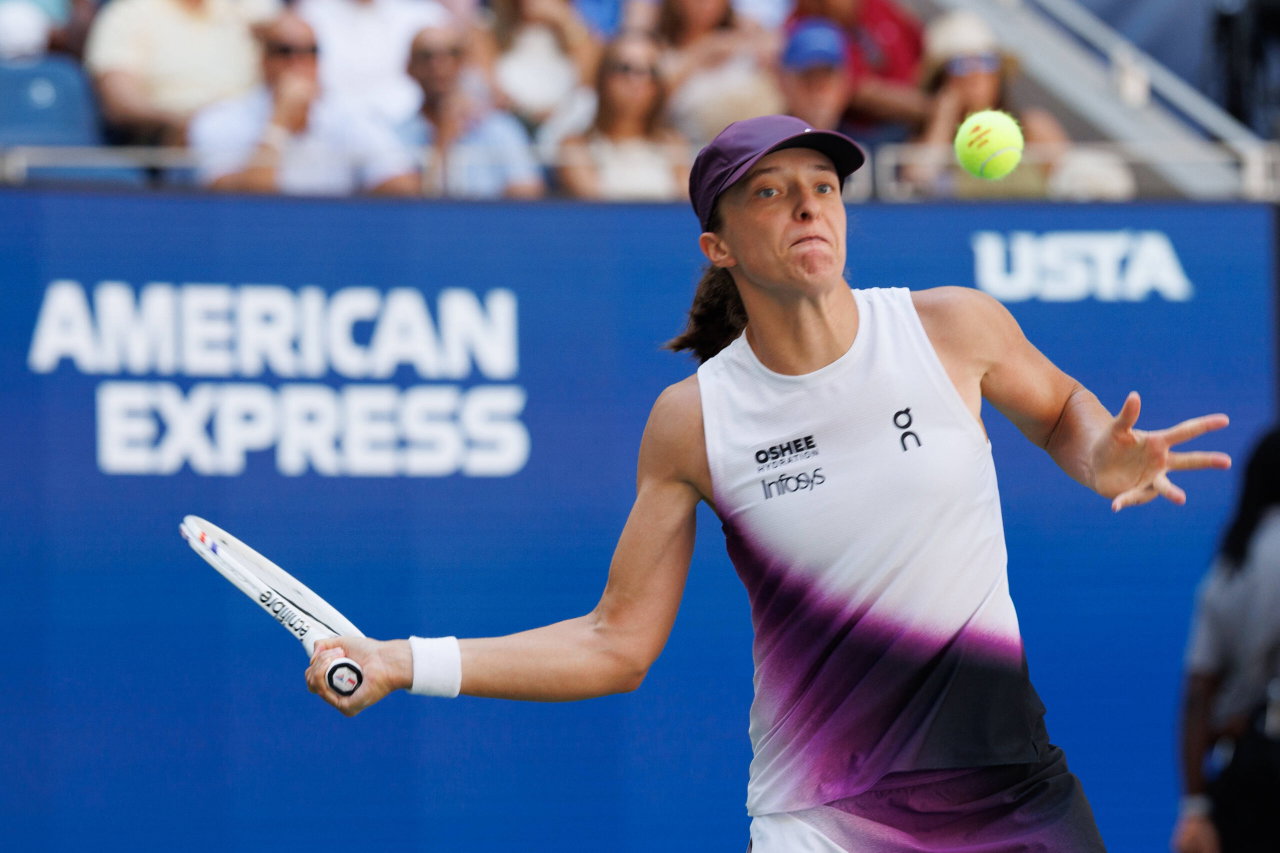
Iga Swiatek‘s US Open campaign ended in a dramatic collapse, and she was in no mood to revisit the moments right after. The six-time Grand Slam champion raced out to a 5-0 lead in the first set against Qinwen Zheng in the fourth round, only to watch it slip away entirely as Zheng reeled off seven straight games to steal the set 7-5. The second set was leveled till the world No. 121 closed out the match 7-5, 6-3.
Watch What’s Trending Now!
In the press conference, when Swiatek was asked how she is going to deal with the collapse, she pushed back on the question instead of offering any real introspection.
“It’s just a match. I’ll try to play the same way I always do,” she said. “What do you mean? Do you think it’s something crazy? You can lose a set from any score, so there’s nothing special about that. It simply was what happened and that’s it.”
It is far from the first time this year Swiatek has bristled at how reporters have framed her season. After her first-round win at Wimbledon against Karolina Pliskova, the Pole was a little emotional after the victory, and reporters had suggested in the press conference that those tears somehow unlocked a new freedom in her game. She shut that down immediately.
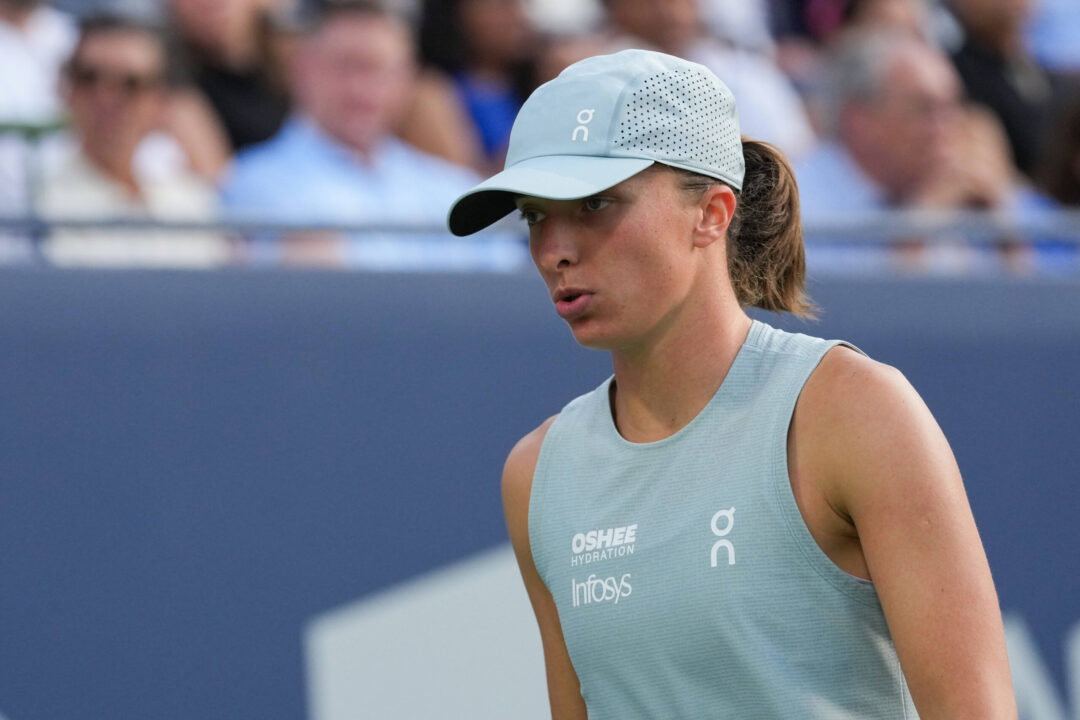
“I think you guys are approaching this a bit too philosophically,” she said, “so that kind of analysis would be too deep.”
A similar exchange played out in Toronto last month. After a dominant win over Diana Shnaider in the quarterfinal, a Tennis Channel interviewer described her level as “vintage,” and the Pole did not appreciate the label.
“Why vintage? Everybody keeps saying vintage, but what the hell, it’s been like, what, two or three years?” she said. “It must be nine years old that people keep calling it vintage, you know. There have been many people coming to me like, ‘vintage Iga’ and I’m like, I’m still 25.”
The former World No. 1 has grown increasingly resistant to the narratives built around her results, whether it’s analytical or emotional. It has been an unusual season by her standards regardless of how she wants it discussed, with Swiatek failing to reach a Grand Slam semifinal all season, for the first time since 2021.
Swiatek has been working for years now with her sports psychologist, Daria Abramowicz, to process the results on the court with ease. That has been reflected in the way she has dealt with questions in the press conferences, reacting to losses results and not letting them have a lasting impact on her performance.
This will play a crucial role in the coming days when she starts preparing for the next season. While this season might have ended in a Grand Slam drought, her dominant win at the National Bank Open this year against Elena Rybakina is proof that her story isn’t over yet.