Novak Djokovic Announces His Former Doubles Partner as New Coach Ahead of Roland Garros

Add us on Google
Novak Djokovic Announces His Former Doubles Partner as New Coach Ahead of Roland Garros
Add us on Google
Imago
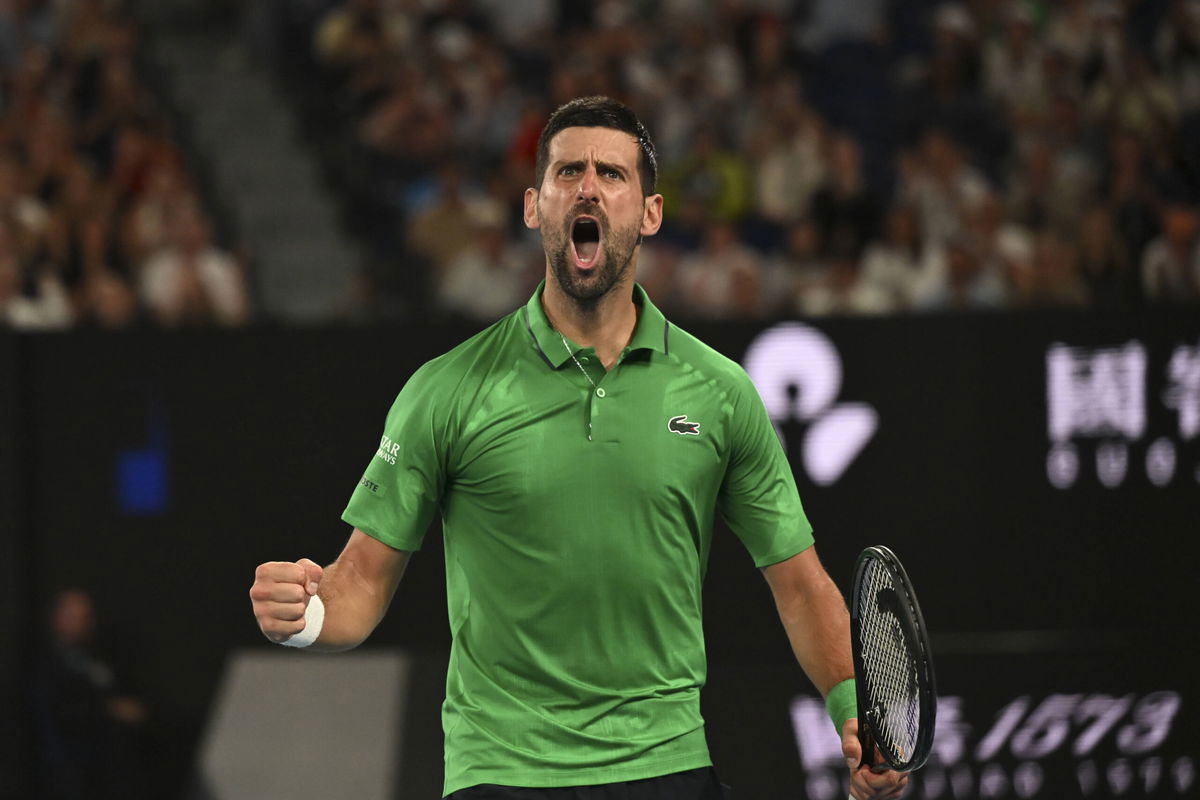
AUSTRALIAN OPEN 2026 MELBOURNE, AUSTRALIA – JANUARY 30: Novak Djokovic SRB reaction after winning the set against Jannik Sinner ITA NOT SEEN during the Semifinals match at the Australian Open grand slam tennis tournament at Melbourne Park in Melbourne, Australia on January 30, 2026 Mark Avellino / Anadolu Melbourne Australia. Editorial use only. Please get in touch for any other usage. PUBLICATIONxNOTxINxTURxUSAxCANxUKxJPNxITAxFRAxAUSxESPxBELxKORxRSAxHKGxNZL Copyright: x2026xAnadoluxMarkxAvellinox
Imago
AUSTRALIAN OPEN 2026 MELBOURNE, AUSTRALIA – JANUARY 30: Novak Djokovic SRB reaction after winning the set against Jannik Sinner ITA NOT SEEN during the Semifinals match at the Australian Open grand slam tennis tournament at Melbourne Park in Melbourne, Australia on January 30, 2026 Mark Avellino / Anadolu Melbourne Australia. Editorial use only. Please get in touch for any other usage. PUBLICATIONxNOTxINxTURxUSAxCANxUKxJPNxITAxFRAxAUSxESPxBELxKORxRSAxHKGxNZL Copyright: x2026xAnadoluxMarkxAvellinox
Last year, when Novak Djokovic brought in Andy Murray as coach, his singular goal was clear: claim a 25th Grand Slam and surpass Margaret Court’s legendary tally. That dream faltered after six months, leaving Djokovic’s quest paused following his 2023 US Open triumph. Yet, on the eve of the French Open this year, hope rekindles as a fellow Serb joins his coaching team, reigniting the fire to chase the ultimate milestone.
Watch What’s Trending Now!
“Welcome, my friend, teammate, and now coach… Viktor Troicki 🇷🇸,” Djokovic wrote on Instagram.
The 38-year-old has known Troicki since their junior days. Over the years, they played doubles together and helped Serbia capture ATP Cup glory in 2020.
In H2H matches, Djokovic leads 13-1 over Troicki, with Troicki’s lone win coming in their first tour-level meeting in Umag in 2007. This new development strengthens Djokovic’s already flexible coaching structure, which has evolved significantly over the past two seasons.
Troicki’s presence was already visible during practice sessions on Court Philippe Chatrier. He worked alongside Boris Bošnjaković and other members of the Serbian support team, observing high-intensity training blocks.
View this post on Instagram
The clay-court season has often prompted adjustments in Djokovic’s coaching team, especially since the post-Goran Ivanišević era. Troicki’s experience and familiarity with Djokovic offer additional strategic insight.
The 40-year-old reached a career-high ranking of world No. 12 in 2011, the same year Djokovic began his first dominant spell at No. 1. Their paths have intersected frequently, particularly in Davis Cup competitions, including Serbia’s 2010 title-winning squad.
However, things have not always been smooth for Viktor Troicki. Back in 2013, the Serbian was handed an 18-month suspension after violating the tennis anti-doping programme, a decision announced by the International Tennis Federation.
The controversy stemmed from the Monte-Carlo Masters, where Troicki failed to provide a blood sample during in-competition testing. Troicki later explained that he had asked to be excused from the test because he was feeling unwell, but the explanation was ultimately rejected by the governing body.
However, seven years later in 2021, after retiring from professional tennis, Viktor Troicki rebuilt his place in the sport through coaching and leadership roles. He went on to become captain of the Serbia Davis Cup Team and steadily established himself as a respected figure in Serbian tennis.
His coaching journey has included:
2022-2024: Coaching Hamad Medjedovic
2024: Joining Novak Djokovic’s coaching setup during his Olympic gold-medal campaign
2025: Coaching fellow Serbian Miomir Kecmanovic
May 2026: Being appointed as Djokovic’s head coach
Djokovic’s coaching team remains dynamic. Boris Bošnjaković continues his role, supported by Dušan Vemić and other long-time collaborators. Troicki’s role complements the existing structure rather than replacing anyone.
This approach reflects Djokovic’s history of adapting his team according to surface-specific demands. After parting ways with Ivanišević in 2024, he briefly collaborated with Nenad Zimonjić during Olympic preparations.
With the new coaching setup, preparations for the French Open have become smoother, providing Djokovic with strategic and emotional support.
Novak Djokovic acknowledged that his physical challenges are now part of his everyday reality
Novak Djokovic heads to this year’s French Open confronting a familiar and inevitable opponent: time. At 38, the Serbian is no longer the unshakable figure he once was, and his renowned durability is now a growing concern in a sport dominated by younger, explosive athletes.
The challenge is not just about winning another Roland Garros title, but about adapting his game and mindset to counter the physical decline that naturally comes with age.
Imago
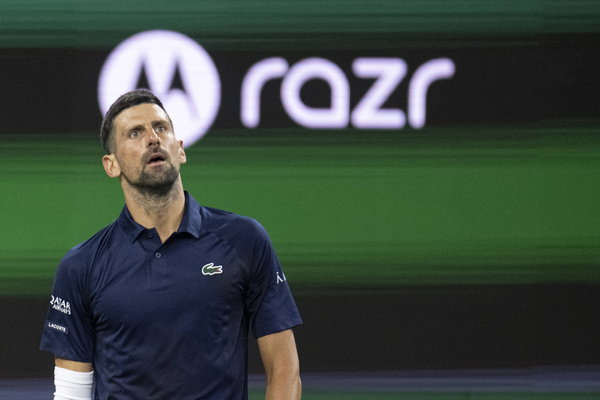
March 11, 2026, Indian Wells, California, USA: NOVAK DJOKOVIC of Serbia stops play because of a flash in the crowd while serving against Jack Draper of Great Britain during their round of 16 match at the BNP Paribas Open at Indian Wells Tennis Garden on March 11, 2026 in Indian Wells, CA. Tennis 2026: BNP Paribas Open – March 11, 2026 PUBLICATIONxINxGERxSUIxAUTxONLY – ZUMAl140 20260311_aap_l140_081 Copyright: xShelleyxLiptonx
Djokovic has become more selective with his schedule and pragmatic in his approach. Yet, he admitted that he wished he had spent more time on clay before arriving in Paris.
So far in 2026, Djokovic has played only three tournaments. He suffered a loss to Croatian qualifier Dino Prizmic at the Italian Open, his only clay-court match this year. In addition, Djokovic withdrew from Miami, Monte Carlo, and Madrid due to a shoulder injury, even appearing with a strapping during his brief time in Rome.
“It’s not ideal preparation, to be honest,” Djokovic said. “I don’t recall the last time I had, in the last couple of years, a preparation where I didn’t have any kind of physical issues or health issues coming into the tournament. There’s always something. Kind of a new reality that I have to deal with.”
Clay courts demand extraordinary physical endurance, and Djokovic feels the marginal losses that come with aging.
“I see what I’m missing,” he admitted. “Late half a step. I’m not definitely where I want to be for the highest level, to compete at the highest level, and to be able to get far.”
Despite the challenges, Djokovic remains determined to compete at the highest level. His mental resilience and strategic adjustments are now key components of his preparation.
Written by

Edited by

Deepali Verma