
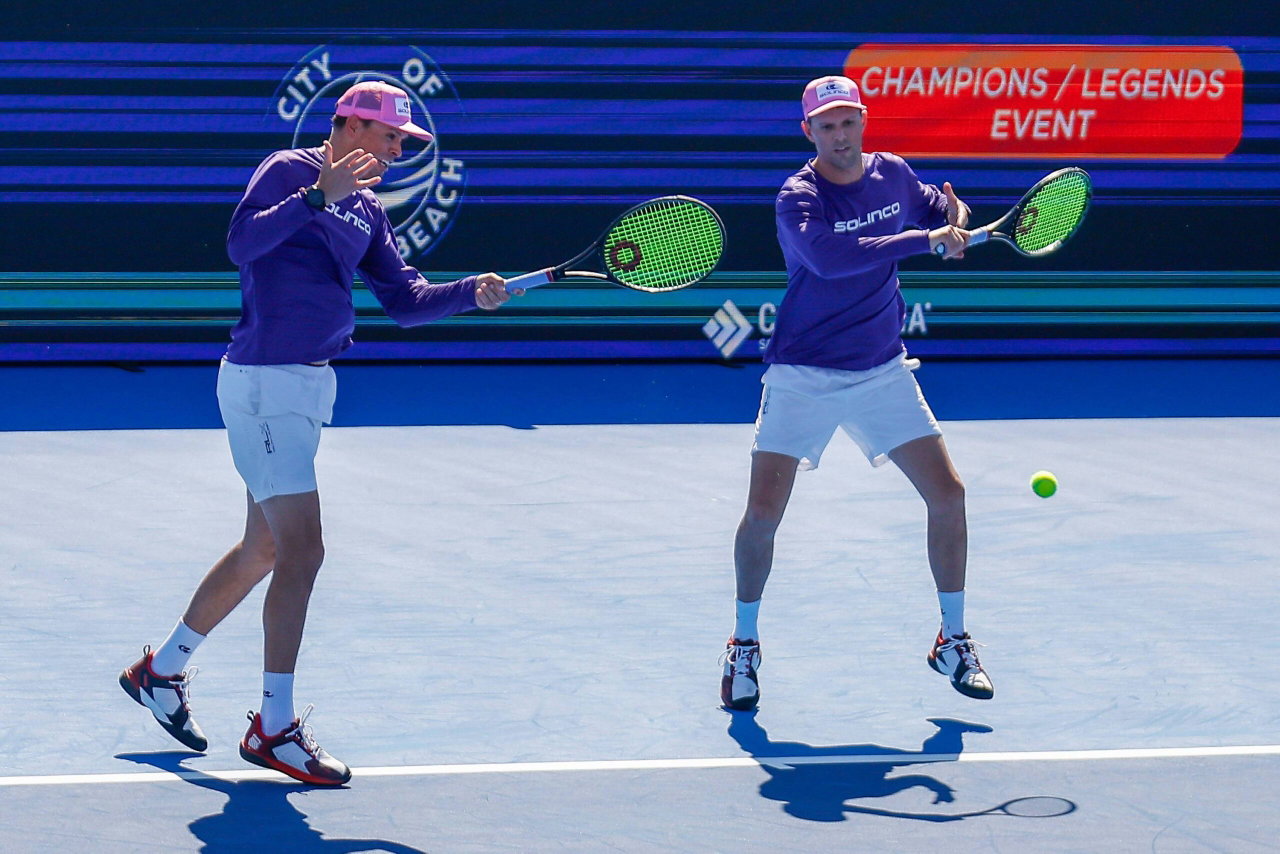
While singles matches have long been regarded as tennis’ marquee format, doubles has also left an undeniable mark on the sport. Few players understand that better than legendary twins Bob and Mike Bryan. Having built an incredibly successful career in doubles, it’s not a surprise that the two are completely against the ATP for their latest move regarding the format.
Watch What’s Trending Now!
Turns out ATP wants to reduce prize money and tournament sizes for doubles starting in 2028. The proposal goes beyond simply cutting the number of doubles teams in half. It also calls for the prize money allocated to doubles players to be reduced from 20% to 10% at all tournaments.
Bob feels that this proposal would severely affect the younger generation of doubles players, and they may want to shift formats.
“If it passes, this will kill the doubles dream for any young players or college players that want to pursue doubles,” Bob had said during a press interview at Wimbledon earlier in July. “The pathway will be blocked to come up and make a living. The tour, from a financial standpoint, it looks like it’s the healthiest it’s ever been. They should be creating more opportunities for doubles players.”
According to the controversial move, the doubles draw will be cut to just 16 teams in Masters events, and smaller tournaments like the 500 and 250 events will consist of just eight pairs. Though this proposal doesn’t affect Grand Slams, it can still turn out to be detrimental to doubles tennis, as many would be uncertain about pursuing it if the new policies are implemented.
It is safe to say that doubles has always taken a back seat to singles tournaments in terms of popularity. The difference only seems to be getting wider as the years pass by. The drop in popularity was one of the main reasons why Wimbledon joined the other Grand Slams in 2023 and shortened doubles matches from five sets to three.
There is also a huge difference when it comes to the prize money that is at stake in the singles and doubles events. For context, winning pairs in both the men’s and women’s draws split £760,000 between them. On the other hand, the winners of both the men’s and women’s singles draws received £3.6 million ($4.8 million) each.
The doubles format was already getting overshadowed by singles, but now the ATP is thinking about a move that could shake its foundation. The Bryan brothers aren’t the only ones to have expressed their frustration about the move, as a collection of leading doubles players had issued a strong statement against the ATP’s plan earlier on July 3.
Doubles players openly condemn the ATP for their questionable proposal
They argued that it would become very difficult for even top doubles pairs to earn substantial money from the tour if the ATP implements its controversial plan.
“The ATP is proposing to slash doubles draws, gut doubles prize money, and hand Challenger entry to singles players ahead of specialists who have built their careers in this discipline,” the players’ statement read. “Do the math on what that means for anyone outside the top 30: it will be impossible to make a living.
“This is not a minor adjustment. It is a plan to end doubles as a viable profession, dressed up as a cost-saving measure — and it is being pushed through with almost no transparency and almost no consultation with the players whose careers and livelihoods are on the line.”
The ATP was quick to play down the concerns regarding the new doubles model. They instead argued that their doubles plan could help increase the early-round singles prize money. They also feel that this model would help more professional players at the highest level to build more “sustainable” careers.
With both the ATP and the doubles players sticking to their respective arguments so far, it appears that a standoff between the two could very well be on the cards. It could even see players stage media protests against the ATP, just like how the singles players have been doing against Grand Slams in their fight for a substantial increase in the sum of prize money that is on offer in all four tournaments.