
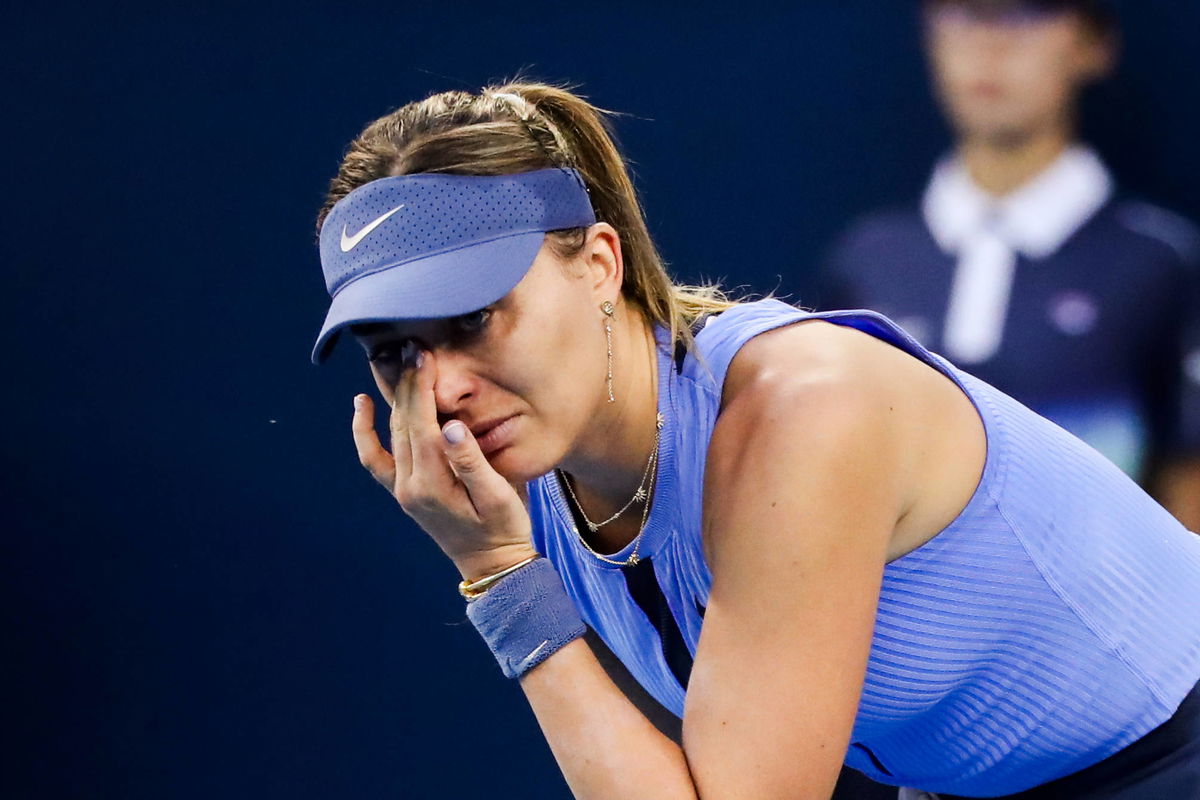
If there’s one tournament that means a little extra to Paula Badosa, it’s the Mutua Madrid Open. She loves returning to the clay at Caja Magica, it’s one of her favorite places in the world to play. But Madrid has also brought her some of her toughest moments. As she admitted last year, “It’s a shame that it’s always in Madrid I go through difficult times.” And sadly, this year was no different. Her campaign ended with a first-round loss at her home tournament.
Watch What’s Trending Now!
Only this time, the disappointment ran even deeper. It wasn’t just about an early exit, it was emotional, personal, and so overwhelming that Badosa admitted retirement had crossed her mind.
In an interview with journalist Mario Suárez the Spaniard admitted she is currently going through the most difficult period of her career. “I think this is the toughest moment of my career. It’s perhaps the moment I have the most fears and where I’m suffering the most,” she said. “I’m afraid of whether I’ll be able to come back, whether I still have the same abilities, whether perhaps my career ends here.”
She even confessed that she is not even sure if she will be able to play the French Open, where she is scheduled to play qualifying.
The break she has announced is open-ended. “We’ve decided to have a little rest, though I don’t know if it will be three, four or two weeks.” But it is not so much physical as more intangible – “the mental state that I was reaching Madrid,” she says.
The conversation with her coaching team after that defeat was the moment the decision crystallised. “Right after that I had a conversation with my team. I told my coach, crying at that moment, that I don’t know if I’d ever lost four matches in a row in my career.”
Losing four matches in a row, for a player of Badosa’s calibre – someone who has been as high as World No. 2, who has played in some major matches in the WTA Tour – is not the same as losing one match. It does not just affect form. It starts to affect identity. And Badosa, admirable, put that on the table.
The comments ring with a lot of significance for a player who is already on her third attempt at returning from a torn labrum (which ended her 2025 season), and her second period out of the top 50 before the comeback. To hear her describe the fear that this time, the comeback might not happen, is to realise how serious this is.
Imago
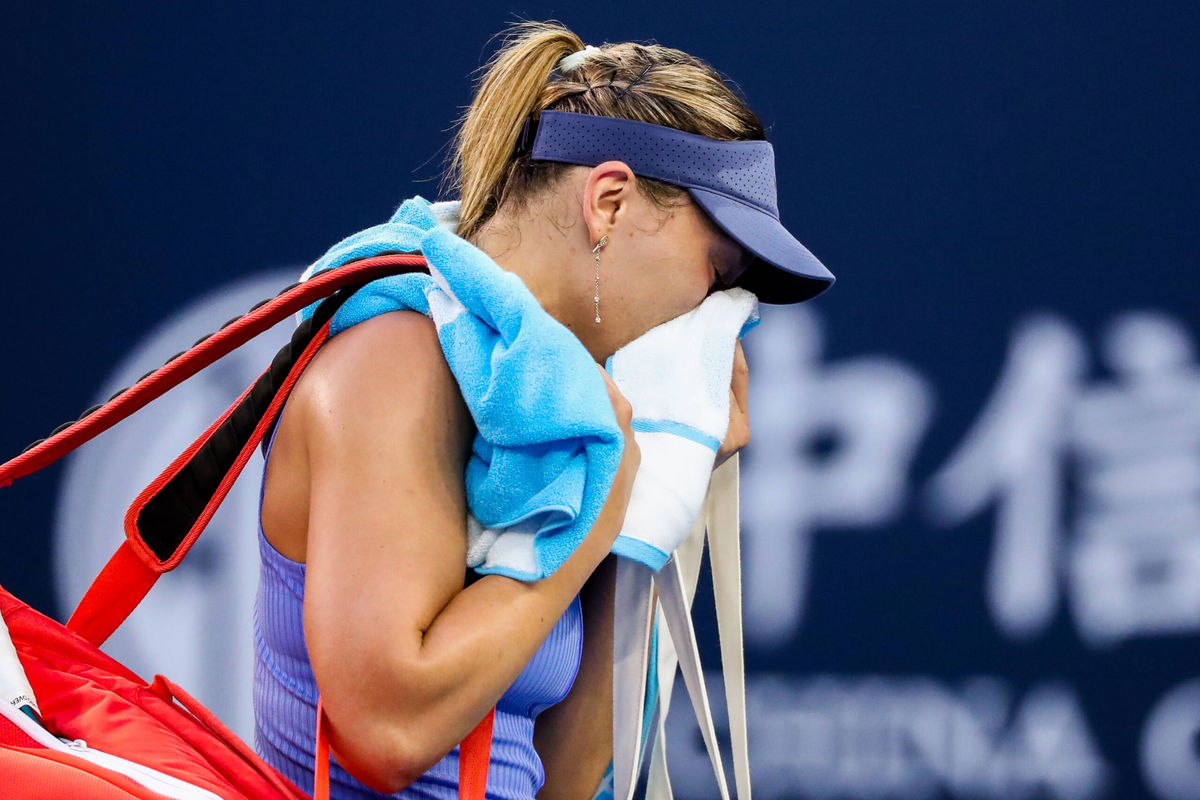
BEIJING, CHINA – SEPTEMBER 28: Paula Badosa of Spain reacts in the Women s Singles Round of 32 match against Karolina Muchova of the Czech Republic on day 7 of the 2025 China Open at National Tennis Center on September 28, 2025 in Beijing, China. PUBLICATIONxNOTxINxCHN Copyright: xVCGx 111593744483
She was quick to push back on any suggestion that retirement is imminent, however. “Not a chance. I always say four or five more years for sure.” But the fact that the thought is present — that she is “afraid” it might end here — tells its own story about where she is mentally right now.
“I think I also need some time to mentally stop, see what’s going on, and regain some strength. Because I’m someone who loves to come back and fight, but there’s a point where I’m getting a little exhausted,” she admitted. “I need some time to mentally clear my head.”
The 2026 season has been one of the more disheartening seasons for her. Nine wins in twelve tournaments, a round of 16 run in the Charleston Open that felt like a glimmer of hope, and then the return to the results that make a comeback seem impossible. The home crowd, Madrid, should have been a haven, a place where she could relax. Instead, it became the moment the wall finally arrived.
Roland Garros starts on May 18. Whether Badosa is there, she says, depends entirely on what she finds in the weeks between now and then.
Why is this moment different from everything she has already survived
What makes this latest setback even tougher for Paula Badosa is everything she’s already fought through to get here.
She’s been down this road before: dropping outside the top 100, rebuilding her ranking, and battling physical issues that could have easily ended her career. The labrum tear she managed through in 2024 and into 2025 was the kind of injury that makes any player wonder whether they’ll ever get back to their best. But Badosa did. She put in the work, rebuilt her game, climbed back into the top 50, and started winning again.
In fact, she said earlier this year that her body feels better than it has in a long time. Twelve tournaments without a major physical setback is no small thing for her. That alone is a huge step forward.
But while her body is finally cooperating, the mental side has been a different battle. It’s not about whether she can play, it’s about finishing matches, handling the big moments, and quieting the doubts that can creep in when the pressure rises. Right now, that seems to be the toughest opponent she’s facing.
That is more difficult to overcome. There is a schedule for physical rehabilitation. The sort of fatigue that Badosa is describing – five months of battling her brain, sobbing in front of her coach, wondering whether she has lost her skills- does not come with a prescribed recovery timeline.
“I’ve been struggling a lot these past five months. And I think what happened to me here in Madrid is that I was spending so much energy fighting against my own mind that in the third set, my mind just shut down. I was completely empty,” she said.
What she is trying to do, in taking the break, is find out. Her earlier stated goal of gaining 1% per day has not changed.
Four or five more years, she says. The body is willing. The mind, right now, needs time.