
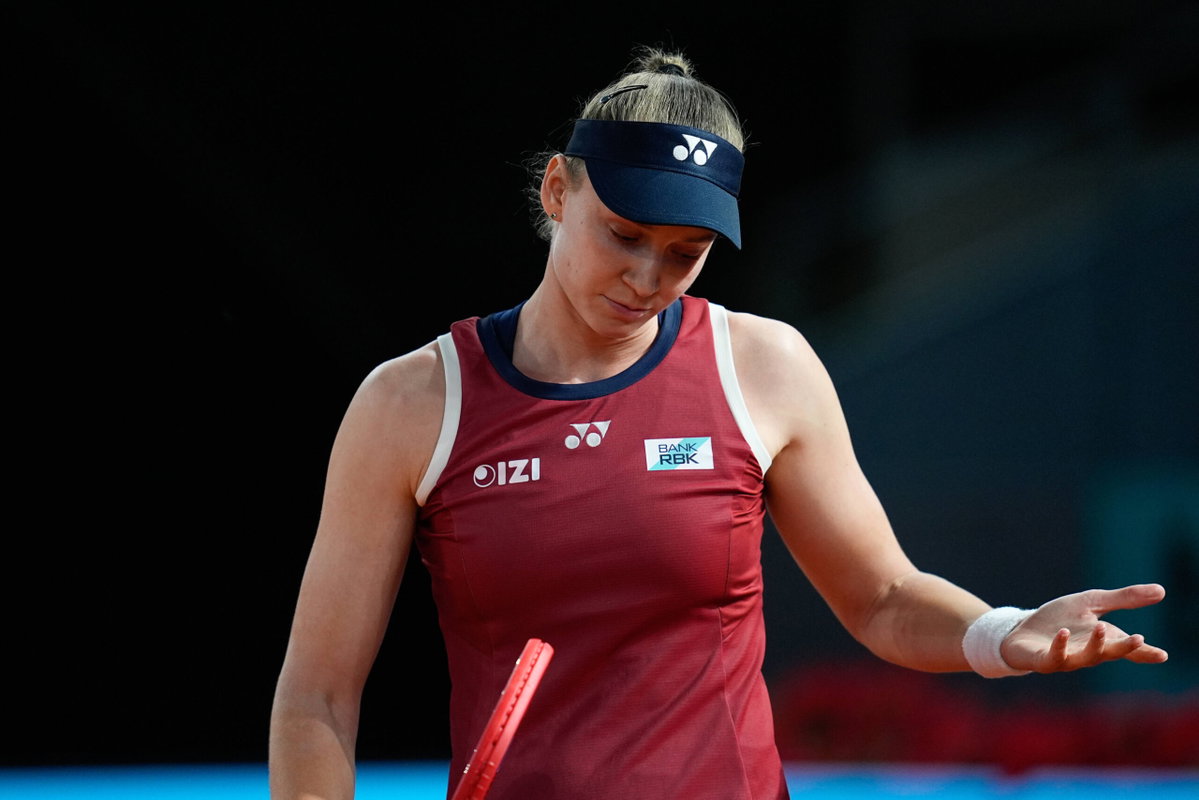
Elena Rybakina lost more than a tennis match on Friday. She lost a bruising battle between two exhausting encounters on a rain-disrupted day at Queen’s Club, fell to a quarterfinal defeat at the hands of wildcard Katie Boulter, and then, within minutes of walking off Andy Murray Arena, her Instagram account went dark.
Watch What’s Trending Now!
The context matters. Shortly after she took the comments off her posts after exiting the second round of Roland Garros, the 26-year-old deactivated her Instagram account. The trend is obvious: two consecutive defeats and two increasing public social media withdrawals. The world No. 2 gave no official explanation for this sudden disappearance from social media, but several fans believe it is linked to the numerous negative messages that players regularly receive after defeats, especially from disgruntled bettors. Most of the discussion online has been based on the assumption that the harassment, in many instances, gambling-driven, had simply gotten too much to handle.
It was a difficult day for Rybakina even before Boulter delivered the knockout blow. Due to Thursday’s complete washout at Queen’s Club, she was required to play two matches on Friday. Surviving the first, she came through a shaky opening to beat Tatjana Maria 6-7(4), 7-5, 6-0. The second match came with a different outcome.
British wildcard Katie Boulter produced the biggest upset of the Queen’s Club Championships, defeating top seed Elena Rybakina 7-5, 2-6, 7-5, securing what was by some measure the most significant victory of Boulter’s career. The world No. 73 secured her maiden win over Rybakina, having lost to the Kazakh in their previous meetings at the 2023 Wimbledon and 2025 Indian Wells.
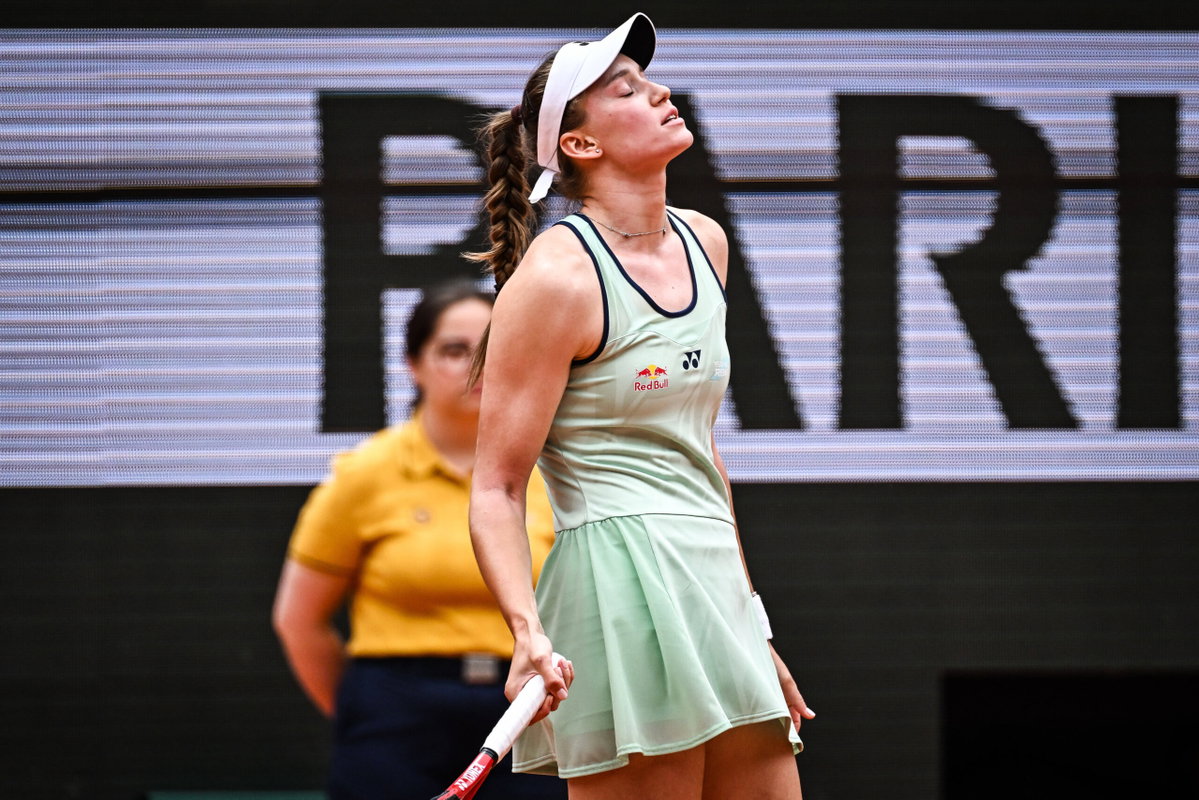
Imago
June 1, 2025, Paris, France, France: Elena RYBAKINA of Kazakhstan looks dejected during the eighth day of Roland-Garros 2025, French Open 2025, Grand Slam tennis tournament at Roland-Garros Stadium on June 01, 2025 in Paris, France. Paris France – ZUMAm308 20250601_zsp_m308_017 Copyright: xMatthieuxMirvillex
The loss comes at a tough time for two Grand Slam champions. She came to the grass-court swing on the back of a second-round exit at Roland Garros and needed a strong run to put pressure on world No. 1 Aryna Sabalenka. Rybakina is still the world No. 2, but falls to 32-9 after today’s defeat, and the Wimbledon preparation picture now looks considerably less settled than she would have hoped. It was all the more disappointing given that she had just reached the pinnacle of her success in 2026 by winning the Australian Open and reaching the Indian Wells final.
The social media withdrawal follows a pattern that has been building across women’s tennis for some time. Last June, the WTA and ITF issued a report revealing that gambling-related anger fueled a majority of online threats. Although players have discussed it openly, it persists with each improbable defeat. The severity of the situation is evident in Rybakina’s decision to withdraw entirely, not merely to remain silent or filter content. What her fans said about it speaks for itself.
Fans are divided as Rybakina’s move draws strong reactions
There was a lot of reaction online, with a few voices focusing specifically on the fanbase. One fan picked up on a toxicity that has nothing to do with the matches:
“Rybakina has many toxic fans, let’s be honest. You can see them here too. Not just about tennis, I’ve seen these so-called fans criticising her personality, style, and off-court activities. Who needs enemies with fans like these. Then they be yapping about Vukov. Lol.”

After disabled comments after RG loss, next step: Elena Rybakina Instagram account is disabled.....

The Vukov reference is to former coach Stefano Vukov, who was suspended by the WTA for undisclosed actions following a controversial two-year spat with the women’s tennis star. A part of the Vukov fanbase has few, generally strong and divisive thoughts on how Rybakina handled that ordeal.
A second fan added to the criticisms of bettors and directed them at the general tenor of the community surrounding Rybakina:
“Her own fans are weirdos. She’s one of the best players right now but they treat her like a child. So much negativity here and there, as if they know better than her and her team. Bunch of losers in real life. Of course bettors are the worst.”
The pointed addition at the end represents a sentiment that is shared by many in the thread. The whole fanbase may have its woes, but the abuse caused by gambling is on a different level.
A third reaction added a layer of unease that went beyond the Queen’s Club result itself:
“Disabling comments is usually enough to handle batshit insane gamblers. This seems like something different. The last time she was this weird on IG was around the 2024 US Open.”
The 2024 US Open window marked one of the most turbulent periods in Rybakina’s career off the court as her relationship with Vukov came to a close. Whether this latest withdrawal signals something deeper than post-match frustration remains unclear, but the concern among her supporters was evident.
The harshest verdict came from a fan with no patience for those crossing the line from criticism into abuse:
“There is one thing to criticise your favourite player, but abuse? You people are sick and utterly stupid. This is why you lot don’t deserve these players’ attention for even a minute. Pathetic loser behaviour.”
It’s the kind of reaction that is indicative of a massive section of the tennis world that sees this cycle repeat itself after every big upset.
The final word on the structural problem came from a fan who framed the issue in its broadest terms:
“It’s a known issue that female athletes are harassed for losses by bettors who think they can call them 50 million different names and threaten them. I honestly wonder when any governing tennis body will step in, because what will it have to take?”
The report by WTA and ITF last June prompted discussion but no concrete enforcement mechanism. With Rybakina now the latest high-profile name to go dark after a loss, the question of when that changes feels more pressing than ever.