Imago
Image Credits: Qinwen Zheng/Instagram
Imago
Image Credits: Qinwen Zheng/Instagram
Imago
Image Credits: Qinwen Zheng/Instagram
Imago
Image Credits: Qinwen Zheng/Instagram
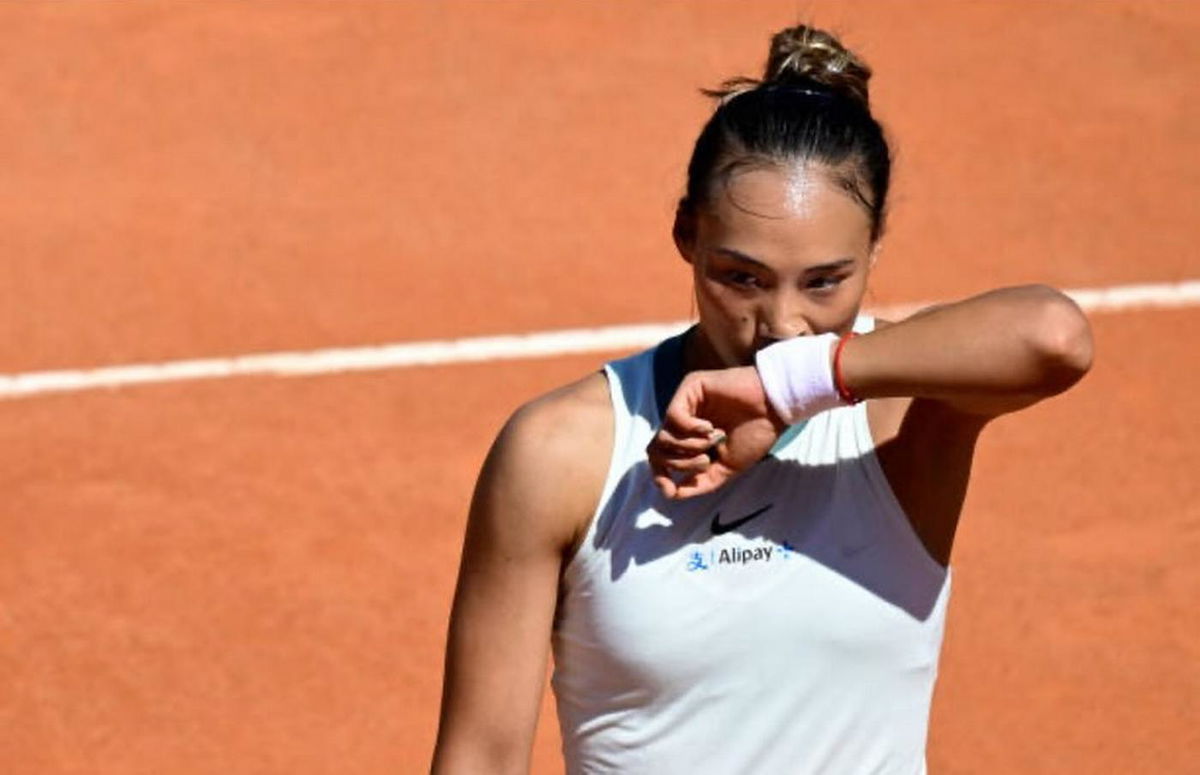
Pronouncing athletes’ names has quietly become a bigger issue in global sports, and this time it involved Qinwen Zheng at the Indian Wells Open. With tennis bringing together players from all over the world, it’s not unusual for fans to struggle with certain names. After all, English has around 1.53 billion total speakers compared to roughly 1.18 billion for Mandarin Chinese as of 2025. Still, that didn’t stop fans from calling out what they saw as a major blunder.
Watch What’s Trending Now!
“It should be Qinwen Zheng not xiyu wang😂 @BNPPARIBASOPEN,” one fan wrote on X, sharing a clip from the tournament’s official website. The site’s pronunciation feature reportedly played the name of Xiyu Wang instead of Qinwen Zheng, two completely different players.
Wang, who is a year older, has yet to begin her 2026 season after last competing in women’s doubles at the Hong Kong Open. Meanwhile, the 23-year-old Zheng famously reached the Indian Wells quarterfinals last year before falling 3-6, 3-6 to Iga Swiatek.
What made the mistake stand out even more is that the correct pronunciation is readily available elsewhere. On the official Women’s Tennis Association website, players record their own names to avoid confusion. If you click the speaker icon on Zheng’s profile, you can hear her clearly say, “Hello, my name is Qinwen Zheng,” followed by a precise repetition of her name, leaving little room for error.
it should be qinwen zheng not xiyu wang😂@BNPPARIBASOPEN pic.twitter.com/E24NTqmZDy
— 元气豆沙包 (@hoppang121) March 1, 2026
Qinwen Zheng, the 2024 Paris Olympics gold medalist, spent the latter half of last season and the start of 2026 focused on recovering from elbow surgery. Even with that setback, she still managed to close out 2025 ranked No. 24 in the PIF WTA Singles Rankings. Once she returned to full health, her goal was clear: rediscover the form that made 2024 such a standout year. But in the end, she had to withdraw. The reason, you ask?


Back in January, Zheng announced she would not compete at the 2026 Australian Open. “Although my recovery is progressing well and my offseason has gone smoothly, to play a Grand Slam requires players to maintain an extreme competitive condition,” she explained. “Currently, I have not yet reached my best condition that I have set for myself,” she further added.
That decision carried extra weight because Melbourne was where she made her Grand Slam breakthrough in 2024, finishing runner-up to Aryna Sabalenka. She capped that impressive season with another deep run at the WTA Finals, where she once again finished runner-up, this time to Coco Gauff.
Since then, though, injuries have made consistency difficult. In 2025, she exited early in two of her three Grand Slam appearances and ultimately withdrew from the US Open altogether to focus on healing her lingering elbow issue.
A former world No. 4, Qinwen Zheng now sits at No. 24 in the rankings. She has played just one tournament since Wimbledon – the Qatar Open, where she fell to Elena Rybakina in the round of 16 last month. She also withdrew from the Dubai Tennis Championships due to illness, where she had been scheduled to face Peyton Stearns.
After Qinwen Zheng’s controversy, spotlight falls on widespread name errors
Stefanos Tsitsipas may be one of tennis’ biggest stars, but for many fans and broadcasters, even saying his name correctly can be a challenge. In fact, he landed on a 2021 list of the most mispronounced words. The list was put together by the US Captioning Company and commissioned by language-learning platform Babbel, based on feedback from captioning professionals who tracked words newscasters often struggled with on air.
And Tsitsipas isn’t the only one. A few years ago, former tennis pro Rennae Stubbs spoke out after repeatedly hearing Maria Sakkari’s name said incorrectly. The issue clearly struck a nerve, and she didn’t hold back when addressing it publicly.
Sakkari, like Tsitsipas, is Greek, and Greek isn’t as widely spoken today as English. Stubbs eventually took to X to vent her frustration. “Can the world feed call @mariasakkari by her correct name! It’s NOT SACK, go to the @WTA website and listen! Pass it on!” she wrote, urging people to check the official pronunciation and get it right.
The mix-up involving Qinwen Zheng at the Indian Wells Open highlights a broader issue in global tennis. In a sport that prides itself on international representation, getting a player’s name right is a basic sign of respect. When official platforms make mistakes, especially when correct pronunciations are readily available, it raises fair questions about attention to detail and cultural awareness.
So do you think mispronouncing an athlete’s name is harmless? And should tournaments face accountability for repeated errors on official platforms? Share your thoughts with us in the comments below.
Related Newsletters