

The year was 2022, and Rafael Nadal had just scripted history by winning his 22nd Grand Slam at the French Open and 14th Roland Garros title. But what was even more impressive was the fact that Nadal’s dominance on clay this time came with unbearable pain. This reality left even former American tennis star John McEnroe baffled.
Watch What’s Trending Now!
“He doesn’t feel his foot, and he’s winning this? What are you gonna tell me next? He’s gonna play blindfolded and he’s going to win it also? It’s like, come on!” McEnroe said in Nadal’s Netflix documentary titled ‘Rafa‘.
Having been diagnosed with the Muller-Weiss syndrome back in 2005, the pain in Nadal’s foot had suddenly aggravated by mid 2021. This resulted in him pulling out of the season in August itself and forced him to withdraw from events like Wimbledon, Tokyo Olympics, and US Open. Though Nadal eventually returned to action at the 2022 Australian Open and ended up winning the Grand Slam, the pain only became worse in the months that followed.
His poor fitness led to a decline in results heading into the 2022 French Open. Nadal was eliminated by a 19-year-old Carlos Alcaraz in the quarterfinals of the Madrid Open and then suffered a second-round exit against Denis Shapovalov in Rome. Describing his physical condition at the time, Nadal admitted that he was suffering from excruciating pain in the foot and the people around him had started to wonder if his career was done and dusted.
“I was in constant pain. I think that for all of us, we were at a point where it seemed like my career was over,” he said.
His doctor at the time, Ángel Ruiz Cotorro, revealed that Nadal wasn’t sure if he would be able to play his first-round clash against Jordan Thompson.
“Before the match, I gave him a little anesthesia to play. But then he told me, ‘Listen, I really don’t know how we’re going to be able to finish this tournament. I’m in pain.’ The reality was that the foot no longer responded to those treatments,” Cotorro explained.
Though Nadal recorded a comprehensive 6-2, 6-2, 6-2 win in the first match, it was clear that his foot’s condition would deteriorate further if he kept on playing. Desperate to continue his campaign in Paris, Nadal decided to take a drastic step to ensure that he didn’t have to withdraw from the tournament.
“First thing in the morning, I called Angel. I asked him, ‘Is there any way to numb the sensory nerve without affecting the motor nerve?’ And he said, ‘Yes, we can give it a try,'” Nadal stated.
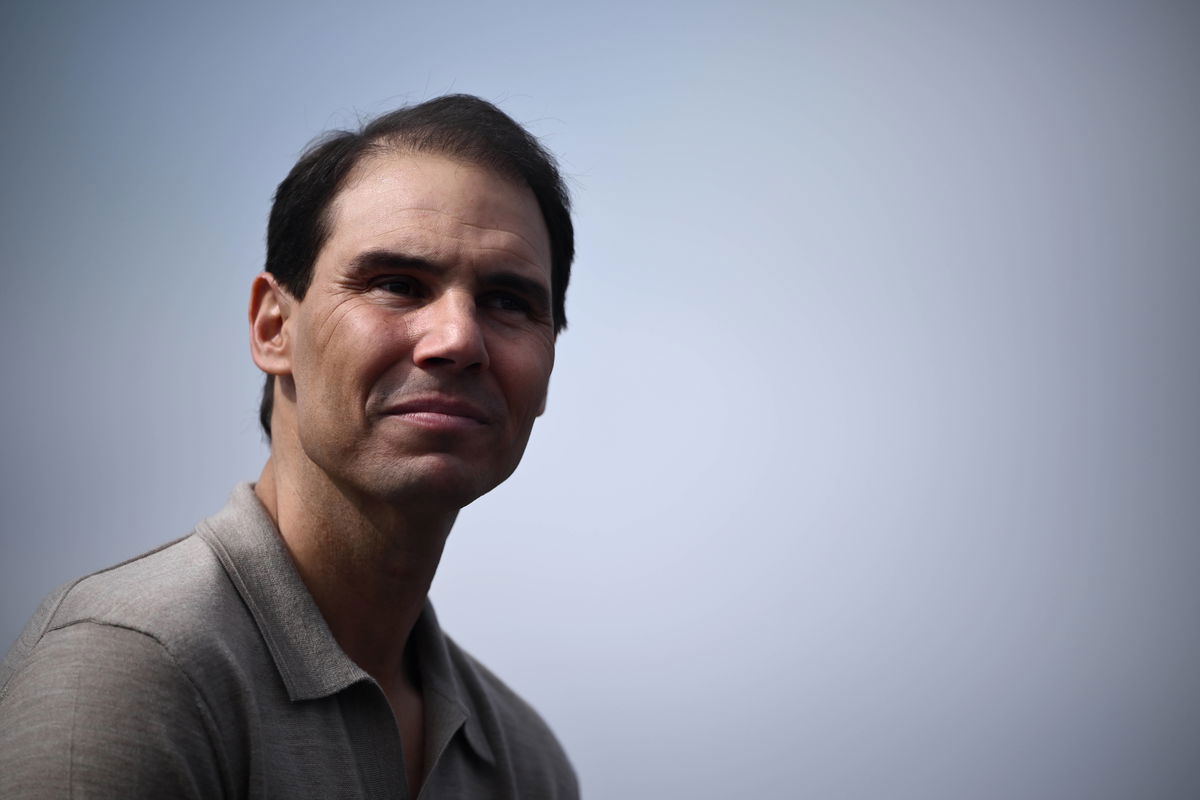
Imago
TENNIS AUSTRALIAN OPEN, Spanish former tennis player Rafael Nadal speaks during a branding partnership event during Day 14 of the 2026 Australian Open tennis tournament at Melbourne Park in Melbourne, Saturday, January 31, 2026. NO ARCHIVING MELBOURNE VICTORIA AUSTRALIA PUBLICATIONxNOTxINxAUSxNZLxPNGxFIJxVANxSOLxTGA Copyright: xJOELxCARRETTx 20260131166489562820
This treatment resulted in his left foot going numb at times while he was playing. But Nadal was built different and was ready to push through the pain to win. He won the next two rounds in straight-sets before encountering his first major challenge in the tournament with Felix Auger-Aliassime.
The two met in the fourth round and played out an all-time five-set classic at the Philippe-Chatrier. Despite losing the opening set, Nadal made a brilliant comeback to win the next two before Auger-Aliassime leveled the match by winning the fourth set. The Spaniard put in an exceptional effort in the decider and clinched it to win the match 3-6, 6-3, 6-2, 3-6, 6-3.
He advanced to the quarterfinals with this win, where he met none other than the mighty Novak Djokovic, who hadn’t dropped a set on his road to the top-8. But he was completely outclassed by Nadal. The Spaniard racked up a 6-2, 4-6, 6-2, 7-6 victory to reach the semis. He met Alexander Zverev in the next match, and though the German was expected to be a very tough opponent, a severe ankle injury forced him to retire from the semi clash at 6-7, 6-6.
This led to Nadal reaching his 14th final at the French Open, where he locked horns against Casper Ruud. While the match was expected to be a close affair at first, Nadal showed his class on clay and recorded a one-sided 6-3, 6-3, 6-0 triumph. Though the win may have seemed to be comfortable at first, the condition that Nadal was in at the time makes it one of the most remarkable Grand Slam triumphs of his career.
This would be the final Grand Slam title that Nadal would win as he decided to bid goodbye to tennis in November of 2024. Despite not having played competitively for well over a year now, the issue with his foot persists. But his journey is a testament to the heights that can be achieved if one sets their mind on it.
Rafael Nadal opens up on the huge impact that injuries had on his career
Though fitness issues had become a major part of his life during his time as a tennis player, Nadal was able to live through them all due to his incredibly strong mindset. He simply refused to give up, even in the tensest situations, and pushed his body to its absolute limit to win.
” I went through, a couple of times in my career, a long process of injuries, but I think I was ready to accept that moment, to tolerate the frustration, and to keep working with hope and passion. So, for me the key was the suffering was less than my passion and my happiness for what I was doing,” Nadal had said in a recent interview with the BBC.
Rafael Nadal’s career was repeatedly shaped by injury, most notably a chronic left-foot problem diagnosed after a 2005 fracture as Mueller-Weiss syndrome, which he later said forced him to play “with limitation” for much of his career. That foot issue also cascaded into other physical problems, including knee tendinitis and additional body strain, while separate injuries to his wrist, knee, back, hip and abdomen caused him to miss multiple Grand Slams and withdraw from tournaments over the years.
It won’t be wrong to say that Nadal has become a role model for players around the world due to the sheer grit and determination that he showed on the court. If he had given up due to the fitness issues, then he wouldn’t have been able to achieve a lot in his career. But an aspect that made Nadal the legend that he is was that he took all the challenges head-on and never knew when to give up.