
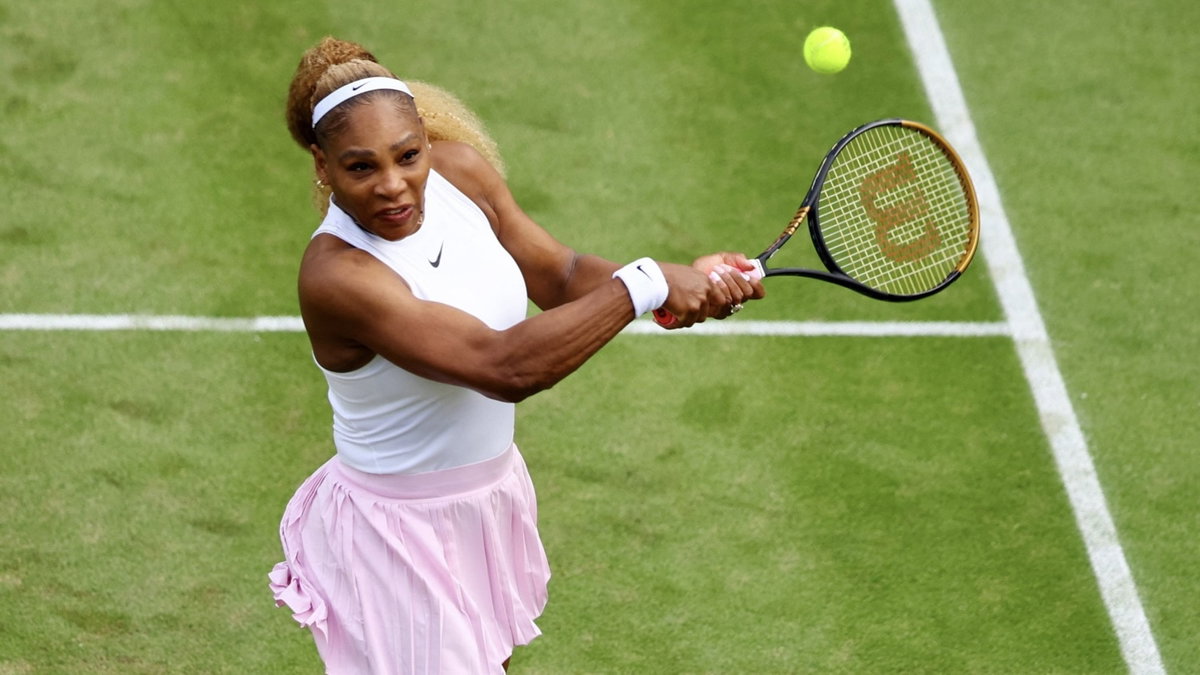
After staying away from the action for nearly 4 years, Serena Williams returned to the sport, claiming she had nothing to prove and nothing to lose—and she is right in her own accord. 23 Grand Slam titles, 14 Grand Slam doubles titles, 4 Olympic gold medals, and 319 weeks of dominance. Her coach, Rick Macci, who trained her for 4 years, agrees. He was the man who put a racket in her hands at nine years old and watched her build the most dominant career in women’s tennis. He recently predicted Williams, and his tweet showed that his assessment is balanced but blunt.
Watch What’s Trending Now!
“Can Serena win Wimbledon? No. Can she beat top-ten players? Yes.”
It’s in the movement where he perceives the restriction. Even though Macci feels the footwork patterns required on grass are not the same as what she can replicate now, at this age, he knows that Williams, who has seven Wimbledon championships on grass courts, will give her opponents a run for their money because on grass, she can hurt people and gain points quickly.
“The X factor is movement and being nimble on the grass. The footwork patterns are totally different than playing with kids in your back yard on grass. But she has enough game even though not the same because she still launch a flame and many opponents she can still box in and tame.”
Macci is a seven-time USPTA national coach of the year who has trained five players who reached world No. 1. He coached Serena from 1991 until 1995, when Richard Williams took over coaching duties entirely. His read on her game comes from years of watching her build every element of it from scratch. At 44, having sat out the professional game for almost four years, Serena is playing against time and biology, and not even her super athleticism can keep her from the reality of it.

Can Serena win Wimbledon? No. Can she beat top ten players? Yes. The X factor is movement and being nimble on the grass. The footwork patterns are totally different than playing with kids in your back yard on grass. But she has enough game even though not the same because she Show more
Even Serena understands that, which is why she made it clear to reporters before Queen’s Club that she did not need to win.
“I’ve won more than most people have in their whole lives, so it’s not that important to me, and it’s important that I keep reminding myself of that, because I don’t have anything to prove. I don’t have anything to lose, and everything here is just to gain.”
That attitude does not scream defeatism. It is the freedom of someone who has already achieved everything the sport can offer, returning on her own terms. However, it is also a reflection of her motivation on the court at Wimbledon, unlike any of the others in the draw. She is not there to grind through a fortnight. She’s there to find out whether she still fits in and to give her children an opportunity to watch her compete.
Williams is a seven-time Wimbledon singles champion, last winning the Venus Rosewater Dish in 2016. She knows the surface well and has navigated its rhythms across multiple decades and eras in the women’s game. Grass rewards experience over pure athleticism in ways that clay and hard courts do not, and Williams has more of that surface-specific knowledge than virtually anyone she could face in the draw.
Macci’s concern is legitimate, but offset by the experience of this depth. Williams knows where to stand, when to come forward, and how to neutralize pace on a surface that can make returns feel like a lottery. Having been away from professional tennis for 1,375 days at Queen’s, she was already serving up to 120 mph. The power that defined her career has not evaporated. Her trainer, Derek, whom Williams described as very intense, has put her through an intensive preparation block to get her to this point.
Her wildcard status adds another dimension entirely. On 21 June, Wimbledon announced Williams’ participation in the singles tournament as a wildcard, allowing the draw to pair her with any competitor. It’s a definite possibility that a first-round battle could take place with a top seed. This also threatens the player facing her, as she’ll be fresh in the early rounds and at her peak, able to beat anyone on that surface and in front of that crowd. The pressure will fall on the opponent, not on her, since she mentioned she has nothing to lose and everything to gain.
Serena and Venus return to contest doubles at Wimbledon
The sisters return to the grass courts of the All England Club, their first time together in a decade. They have won 6 Wimbledon doubles titles together, a combined 21 trophies, and medals there. The reunion has its own significance, apart from anything Serena does in her singles. Both had their last doubles match together in 2022 at the US Open, where they dropped their first encounter, and their lives have been quite different since then.
Imago
Image credit: HSBC Championship
Venus, at 46, has been the one keeping the flag flying on tour while Serena stepped away. The results, however, have been unsparing. She had lost all eight of her singles matches heading into the grass season, with four coming in three sets, suggesting she has remained competitive even as the wins have dried up. On the doubles front, she won one out of the six matches she has played this season. She had even reached the quarterfinals of the US Open in 2025 alongside Leylah Fernandez, losing to top seeds Taylor Townsend and Katerina Siniakova. Therefore, it’s obvious she now mainly operates on the doubles side.
In that same tournament, she came agonizingly close against 11th seed Karolina Muchova. Venus won the first set, but her fitness level dropped, and she ultimately lost in three sets. She has managed six total match victories since returning to the tour, with five in doubles and one in singles. Currently, she has paired with Alexandra Eala at the Bad Homburg Open. The duo will take on Alexandra Osborne and Catherine Harrison on June 24.
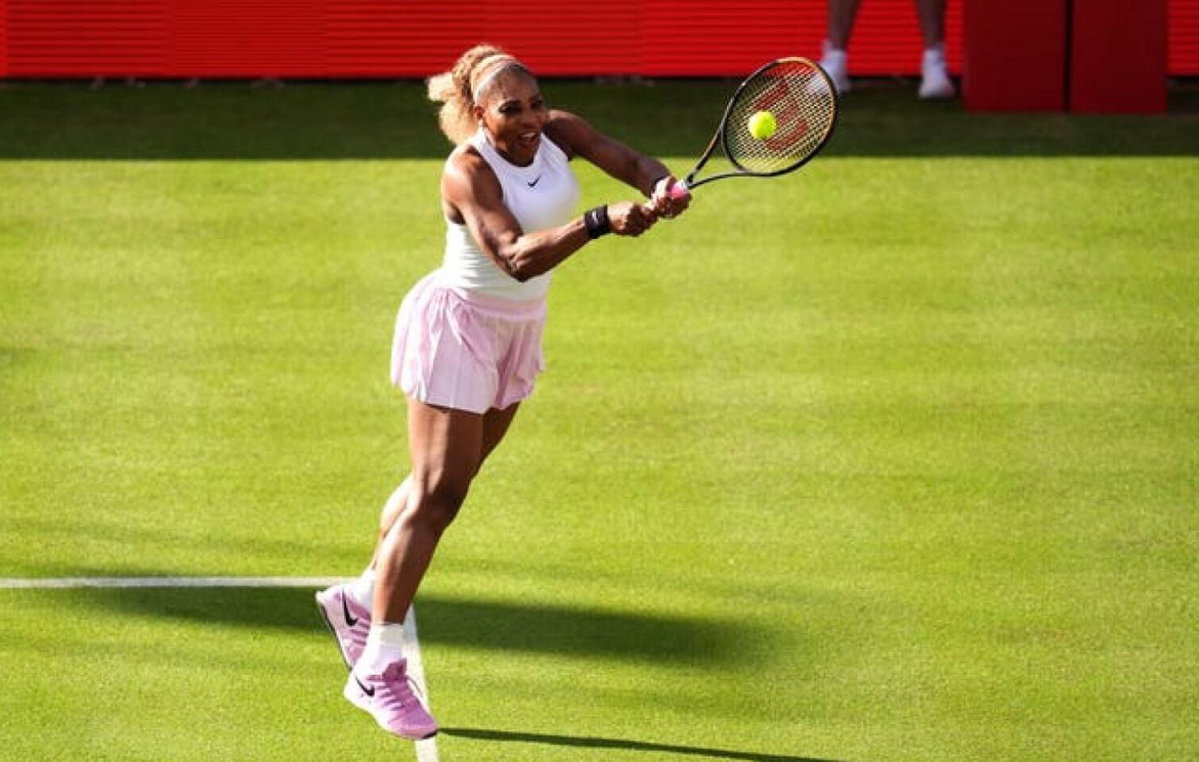
The grass-court build-up for Serena was mixed. At Queen’s, she and Mboko beat the No. 3 seeds Nicole Melichar-Martinez and Erin Routliffe in straight sets before Mboko’s knee injury ended their run prematurely. She next played in Berlin the following week, pairing up with Karolina Muchova and losing 6-4, 6-4 to Giuliana Olmos and Erin Routliffe in the first round. The loss was significant, but so was what Serena said to reporters afterwards.
“I felt more nimble, more sturdy and quicker than the first match. I felt pretty good just physically.”
The scoreline did not reflect how she felt on court, and at this stage of a comeback, that distinction matters.
What the build-up has shown is that the body is reacting, the power is there, and the motivation is not going away. After four years away, two losses and one win in three games is not a disaster. It is a warm-up. The Williams sisters bring a lot more to the table than just a certain amount of nostalgia when they come to Wimbledon this week. It will be interesting to see if that is enough to get deep in the draw, but there have only been a few other pairings that have ever walked on with more knowledge of what it takes to win on that grass.