Serena Williams Joins an Elite Club: The Greatest Women’s Tennis Comebacks in History

Add us on Google
Serena Williams Joins an Elite Club: The Greatest Women’s Tennis Comebacks in History
Add us on Google
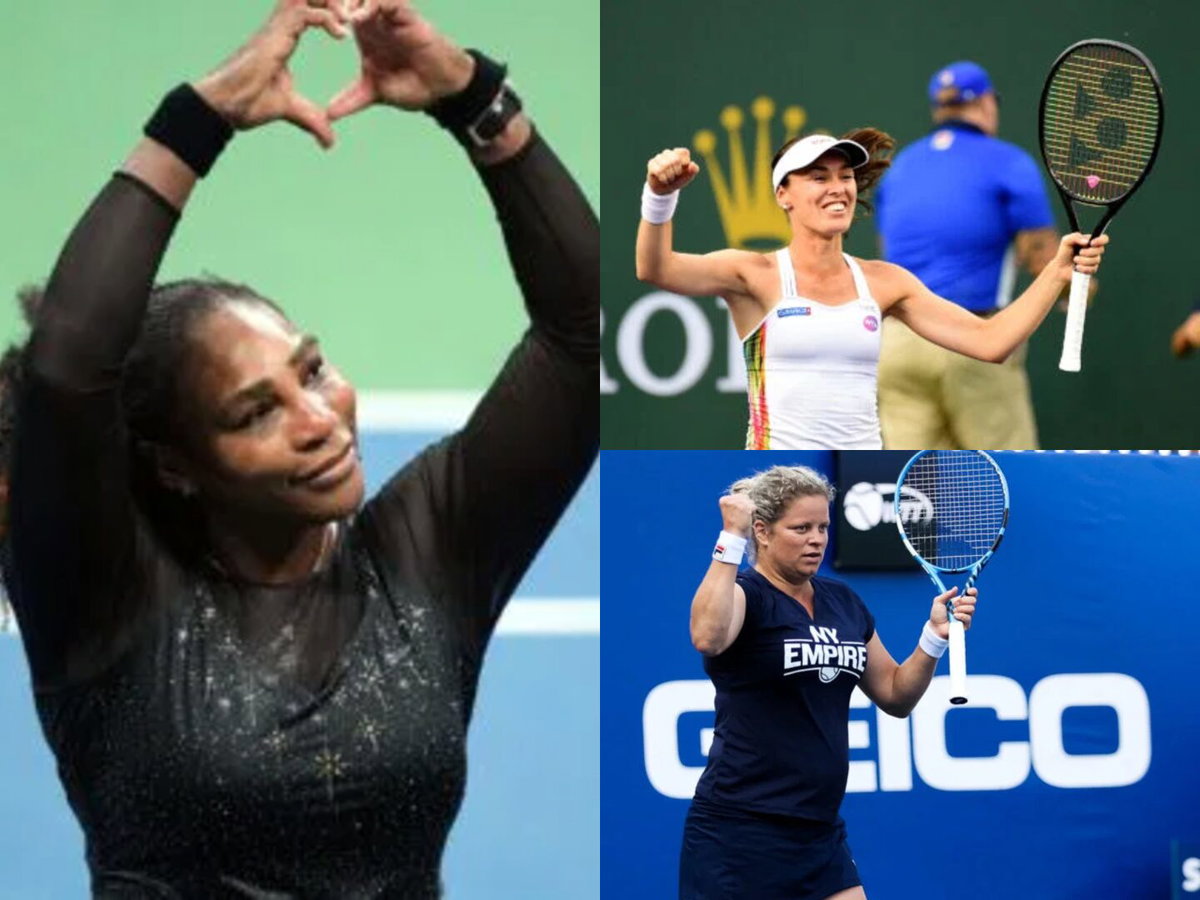
This week, Serena Williams returned to professional tennis at Queen’s Club following her retirement from the 2022 US Open, over three and a half years ago. She won her first match back. The reaction of the sport has been consistent in size and can’t be ignored: the greatest women’s tennis player of all time is back on a court, and everyone is watching.
Watch What’s Trending Now!
What has been slightly less discussed is the context around that return. Williams is not the first champion to walk away and find her way back. She joins a string of players who have announced the end of their careers and then come back for more. Some comebacks set new benchmarks; others proved tennis moves on without you. But they are all stories that are worth revisiting, as the 44-year-old continues to script the next chapter in a tale that the sport has experienced before, but not quite this way.
As it should, the story starts with Williams herself. She announced at the 2022 US Open that she was “evolving away from tennis”, a careful choice of words that left enough room for exactly what happened this month. For almost four years, she was out. She had another daughter with Alexis Ohanian, launched business ventures, and in December 2025 insisted she was “definitely not” coming back.
Then she changed her mind. A wildcard to play doubles at the HSBC Championships at Queen’s Club followed. She has already said she is not ruling out a return to singles either. At 44, she is older than any player on this list was when they returned, and she beat the third seeds in her first match back. Serena has set a standard that is more important than what most players can accomplish for a full season upon their return.
Now, let’s look at who the some of the other greatest comebacks: five women are who made a U-turn after they retired from the sport.
Kim Clijsters
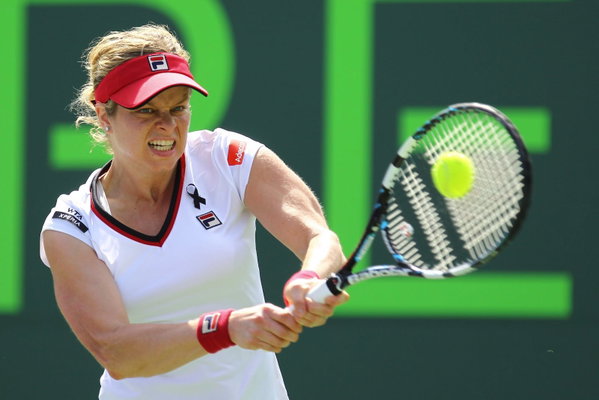
If there is a gold standard for women’s tennis comebacks, it is Kim Clijsters. The Belgian retired in May 2007 at just 23 years old to marry American basketball player Brian Lynch and start a family. She had been world No. 1 and had won the 2005 US Open, but she walked away at the peak of her powers.
Imago
Kim Clijsters
She came back in 2009 as an unranked wild card and captured the US Open in her third tournament back, defeating Caroline Wozniacki in the final. She followed that with a second US Open title in 2010 and her first Australian Open crown in 2011, retiring for a second time in 2012 with four Grand Slam singles titles.
A third comeback effort in 2020, however, did not bring the fairy tale; injuries kept her out of the game, and she could only play a few matches before retiring again in 2022. The first return, however, is one of the most amazing runs in women’s tennis history.
Martina Hingis
Martina Hingis has played through more different stages in her career than anyone on this list. She won five Grand Slam singles titles before her 19th birthday, reaching world No. 1 at 16 and winning three consecutive Australian Open titles.
She first retired at 22 in 2003 due to injuries. In 2006, her singles comeback was short-lived, as she was caught with cocaine in her system in a positive doping test that she denied and challenged, only to be banned for two years.
In 2013, at the age of 32, her third act was the most extraordinary of all. She gave up singles and turned to doubles, winning another 10 Grand Slams and eventually retiring for good in 2017 at 37 years old after winning an Olympic silver medal at Rio 2016.
Hingis returned with a new game, a new objective, and managed to add to a resume that already seemed complete.
Justine Henin
Justine Henin’s retirement is one of the most surprising in women’s tennis history. The Belgian, ranked world No.1 and a seven-time Grand Slam champion, walked away at the age of 25 in May 2008, with no injury and no apparent reason other than a personal desire to step away. She was at her best when she left the sport.
USA Today via Reuters
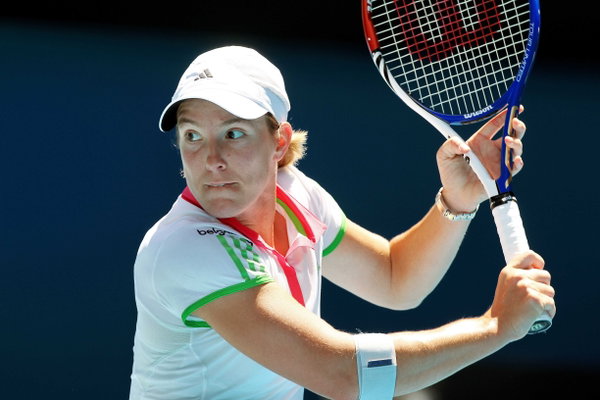
Jan 21, 2011; Melbourne, AUSTRALIA; Justine Henin (BEL) returns a shot against Svetlana Kuznetsova (RUS) on day five of the 2011 Australian Open in Melbourne Park. Mandatory Credit: Matthias Hauer/GEPA via USA TODAY Sports
Upon her return in 2009, the results were instant. In her debut major back, she made it to the Australian Open final, where she lost to Serena Williams. Her comeback lasted just 14 months before an elbow injury forced retirement. It was extraordinary, yet tragically brief.
What Henin’s story demonstrates here is likely to be the purest form of what can happen when a player is returning before the competitive fires are actually out.
Caroline Wozniacki
Williams will know this story better than most. Wozniacki is one of her closest friends on tour, and the Dane’s comeback serves as both an inspiration and a cautionary tale in one. Wozniacki won her first and only Grand Slam title at the 2018 Australian Open and retired two years later, having had two children.
She returned at the 2023 Canadian Open, going on to reach the fourth round at the US Open that year, where she fell to eventual champion Coco Gauff. She made her last appearance at the 2024 US Open, where she got to the fourth round again, but after becoming pregnant with her second son, Max, she stepped away for a second time in July 2025.
She has not formally retired and has not ruled out another return, but with three young children and a continuing struggle with rheumatoid arthritis, the road back now looks a little more uphill. Wozniacki’s return brought out some competitive and genuine results. It also showed that, no matter how good the player is, the second chapter does not always play like the first.
Jennifer Capriati
The Capriati story is something else and probably one of the most human among them all. She never retired during her career. Rather, she just vanished from the tour between August 1993 and 1996, the time she was arrested for shoplifting and charged with drug possession, both of which were publicly witnessed by the world that had followed her career since she reached her first Grand Slam semifinal at 14.
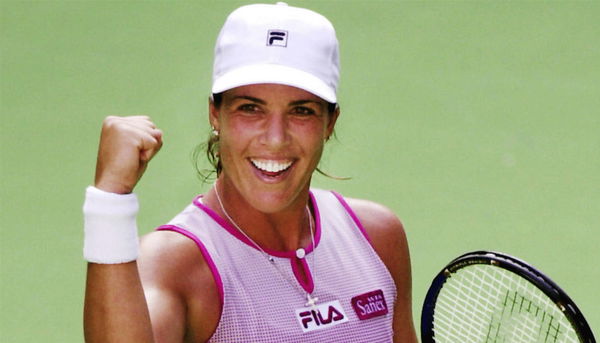
Being a teenage prodigy was an intense experience for her, even by the standards of a sport that has always been a voracious consumer of youth. Her return was slow; she was gradually improving her rankings and her game over the years. She won her first Grand Slam at the 2001 Australian Open, her second at the 2001 French Open, and her third by defending her Australian Open title in 2002.
Three major titles after many people thought her career might have been curtailed. Capriati’s return wasn’t a flashy re-entry into the limelight. It was a sluggish and arduous process to reclaim something that had been taken from her far too early, and it is perhaps also the most underrated rehabilitation tale in the history of tennis.
Unlike Clijsters’ immediate Grand Slam success, Serena’s path mirrors Capriati’s gradual rebuild, and we’re all watching to see what she does next.
