
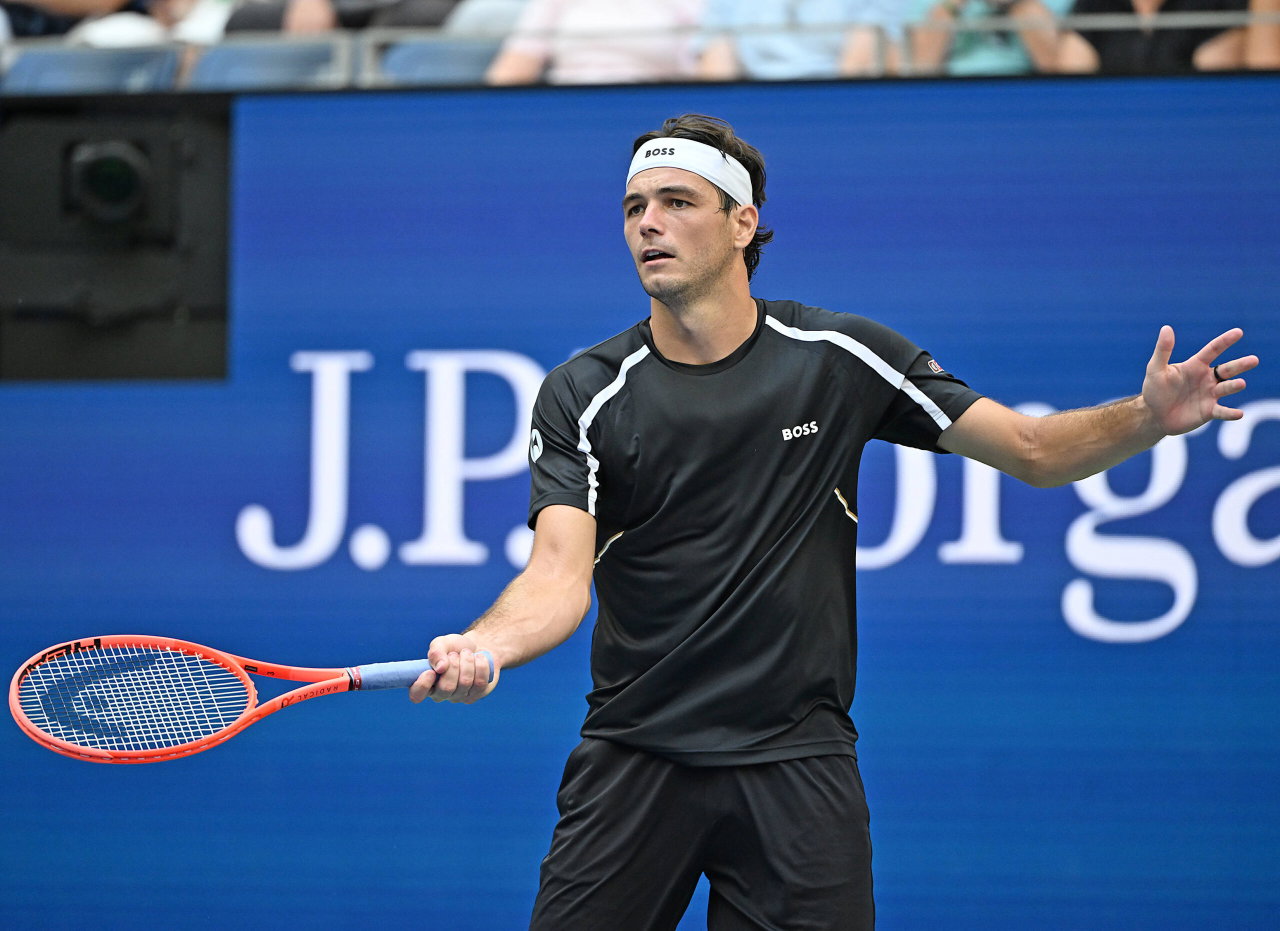
Taylor Fritz is someone who loves playing long schedules, as the American loves playing as many events as possible in a season. Rather than having rest and training blocks, the American relies on getting match practice by playing more tournaments, having played more than 70 matches in the last three seasons. That is why, when it’s Fritz talking about playing a shorter schedule, one is bound to listen.
“You need to play mandatory 1000s if you if you want to miss um like the mandatory 1000s then and like take the penalties for not playing the 500s then I mean you’re putting yourself at a at a I’d say a pretty serious disadvantage,” said Fritz on the Big T podcast. “Mm. So, it’s tough. Like, at the end of the day, like my schedule’s long, but I’m kind of only playing my mandatory 500s, my mandatory 1000s, and then like a couple, like a 250, like two or three 250s throughout the year. Like, it’s very tough to shorten it more, to be honest.”
As it stands, top ATP players are obligated to play 16 mandatory events throughout the year, including the four Grand Slams, eight Masters events (excluding the Monte Carlo Masters), and four ATP 500 events. Players do have the discretion to play a few ATP 250 events of their choice to make up for the 18 events in a year that are included in the ranking.
While the top 18 results are included in determining a player’s ranking, missing one of the mandatory events, such as a Slam or Masters, has serious repercussions. If the player cannot provide a plausible medical explanation for their absence, they receive zero points and are not allowed to make up for that loss by playing in more ATP 500 or ATP 250 events. Grand Slams and Masters have massive points attached to them, and getting a zero in those slots harms the ranking of the player.
Calls to shorten the tennis schedule have been the theme across both the ATP and WTA Tours over the last few years. However, one of the most notable headlines came from Carlos Alcaraz at the US Open, who announced that he would be playing a limited number of events starting next season. Top players have started to prioritize their health over mandatory events, with the likes of Alcaraz and Sinner missing Grand Slam events this year to recover from injuries.
Fritz himself has played only 49 matches so far this year. The American skipped the European clay-court season before the French Open, focusing on the grass and hard-court seasons, a decision he had to make because of the chronic knee condition he has been suffering from.
Aside from the schedule, Fritz has cited ball conditions and speeds as a major reason for injuries among players, going on a passionate rant about balls after the US Open.
Taylor Fritz Had a Rant About Tennis Balls After US Open Exit
Having made his early US Open exit, Fritz had a passionate rant about the tennis balls he had to practice with after the Open. The American pointed out that although the balls were branded and marketed as the same ones used in New York, they were heavier and slower, making his training sessions less than satisfactory.
Fritz is not the only player to complain about the slowness of tennis balls, with the likes of Daniil Medvedev and Stefanos Tsitsipas also drawing attention to the fact in the past. Coupled with slower courts, players face the added risk of injury while playing with heavier balls, as they need to put more effort behind their shots and get engaged in long baseline rallies, rather than getting some purchase on their serve.
With the issues of slow balls and courts, the troubles with the hectic scheduling are accentuated, prompting players like Fritz to pick and choose their tournaments. Even after having played fourteen events this year, Fritz still needs to play four more events to meet the standard quota of eightteen events required for ranking purposes, including two Mandatory Masters events in Shanghai and Paris.