Reuters
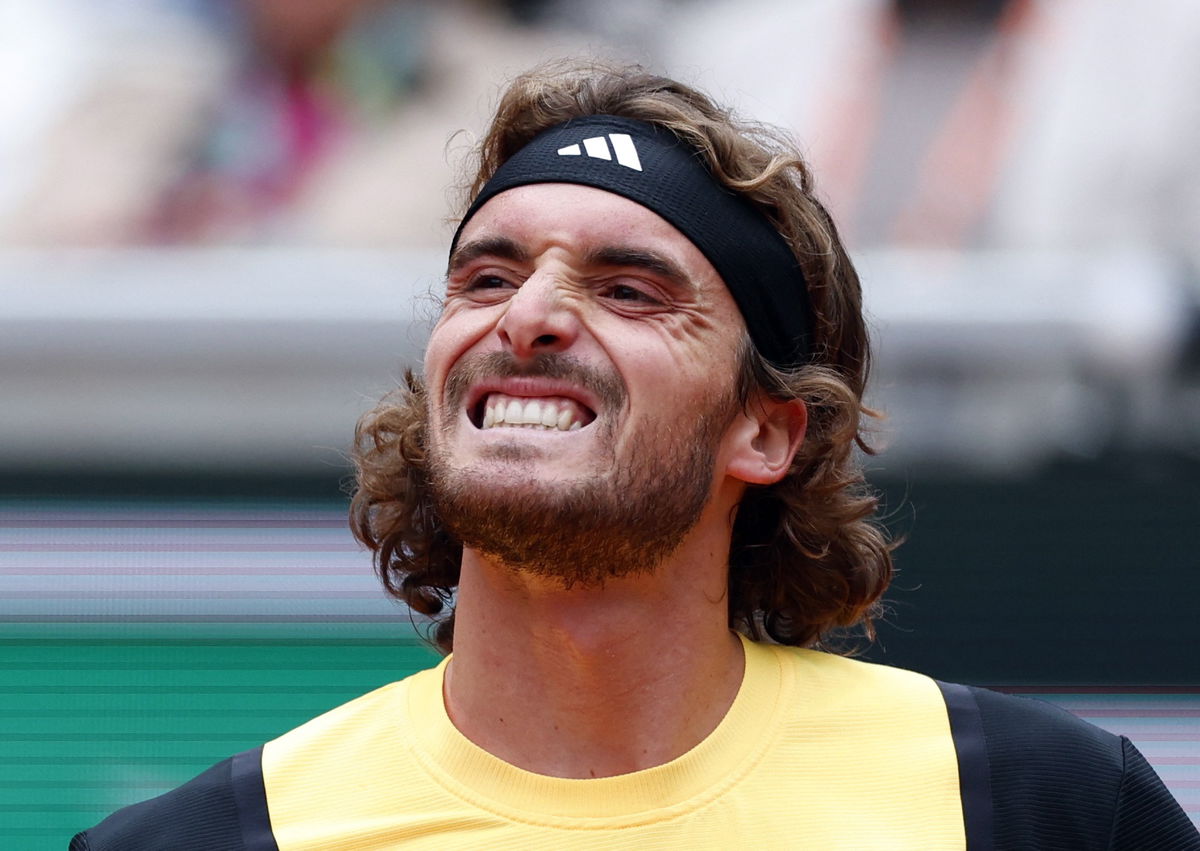
Tennis – French Open – Roland Garros, Paris, France – June 2, 2024 Greece’s Stefanos Tsitsipas reacts during his fourth round match against Italy’s Matteo Arnaldi REUTERS/Gonzalo Fuentes
Reuters
Tennis – French Open – Roland Garros, Paris, France – June 2, 2024 Greece’s Stefanos Tsitsipas reacts during his fourth round match against Italy’s Matteo Arnaldi REUTERS/Gonzalo Fuentes
Reuters
Tennis – French Open – Roland Garros, Paris, France – June 2, 2024 Greece’s Stefanos Tsitsipas reacts during his fourth round match against Italy’s Matteo Arnaldi REUTERS/Gonzalo Fuentes
Reuters
Tennis – French Open – Roland Garros, Paris, France – June 2, 2024 Greece’s Stefanos Tsitsipas reacts during his fourth round match against Italy’s Matteo Arnaldi REUTERS/Gonzalo Fuentes
Stefanos Tsitsipas recently explained his decision to bypass the South American clay swing for the Middle Eastern circuit, citing a clear disparity in financial incentives and choosing the path he believes best sustains his career. As criticism intensified, he moved swiftly to clarify his stance, seeking to reframe remarks that stirred backlash.
Watch What’s Trending Now!
In a recent Instagram story, Stefanos Tsitsipas addressed the growing debate. He wrote, “Over the last days I’ve seen a lot of discussion around comments. I made about scheduling tournaments and appearance fees, so I want to clarify things in a simple and honest way.” He aimed to calm the reaction.
He stressed that he enjoys playing in South America. He said his “comments were never a complaint and never meant as criticism.” He wanted to remove any misunderstanding.
Speaking about finances, he explained the structure of the tour. “On the ATP Tour, players outside of prize money have very limited ways to support their careers financially. The reality is that ATP 250 and ATP 500 events are often the only opportunities where appearance fees exist.”

Imago
TORONTO, ON – AUGUST 09: Stefanos Tsitsipas of Greece reacts after a missed shot during his second round match of the Na
He continued his explanation clearly. “Because of that, scheduling decisions are sometimes influenced by those factors. This is not unique to me. It is a standard model followed by many players, especially those competing at the top level,” he added.


Tsitsipas said he was simply responding to a question. He insisted he was “not expressing negativity toward any country or tournament.” Still, the debate intensified online.
The reaction surprised some fans. Tsitsipas has strong results on clay. He has won three titles at the Monte-Carlo Masters and finished runner-up at the French Open in 2021.
Despite that success, financial factors influenced his recent decision. A stronger appearance package from Middle Eastern events made the difference. He spoke openly about it.
“I’ve never received good offers to go there; when the financial gap is big, you really have no option but to stick with what supports your career. I’ll be direct and honest: from a financial standpoint, it’s understandable that I choose other destinations instead of South America. All players choose tournaments based on guarantees as well. That’s how tennis works,” he recently told CLAY.
The 27-year-old admitted that money plays a major role. He said appearance fees in the Middle East and Europe are stronger. That reality shapes scheduling choices.
“South America has never offered me a deal good enough to seriously consider it. The Middle East has always been much better in terms of appearance fees. The European swing has also provided strong financial incentives. That makes a difference,” he added.
After recently claiming that the ATP misleads players about prize money, Tsitsipas entered the Qatar Open in Doha unseeded. He defeated Tunisian player Moez Echargui in the first round. It was a confident start to his campaign.
In the next round, he faced fourth seed Daniil Medvedev. Tsitsipas won 6-3, 6-4. The victory sent him into the quarterfinals.
His run ended there. Fifth seed Andrey Rublev beat him 6-3, 7-6(2). Tsitsipas bowed out after a competitive match.
He then traveled to Dubai. At the Dubai Tennis Championships, he suffered a first-round exit. French player Ugo Humbert defeated him early.
Because he lost in the Round of 32, he earned no ranking points in Dubai. However, he received an appearance fee of $25,825. His Doha quarterfinal brought him 100 ranking points and $77,625.
In total, he made just over $100,000 from the two Middle Eastern events. The numbers highlighted the financial difference between circuits. That gap fueled the debate.
If he had played the Rio Open and reached the quarterfinals, he would have earned $67,655. The appearance fees at the Chile Open or the Argentina Open would have been lower. Financially, the Middle Eastern swing offered more.
However, as soon as his remarks about low appearance fees surfaced, it was his fellow players who responded first, sparking the controversy before fans joined the debate.
Francisco Cerúndolo reacts to Tsitsipas’ low appearance fee remarks
Soon after his comments about lower appearance fees surfaced, reactions followed. Argentine player Francisco Cerúndolo spoke first. He shared a firm response.
“If you don’t want to come here, don’t come. All those who want to play on clay, discover South American cities, and play a different style of tennis will be more inclined to join us,” he added.
South America has a proud tennis history. Many believe the region deserves a bigger tournament. The debate quickly expanded beyond one player.
Among those supporting the region is Matteo Berrettini. He has competed in Santiago, Rio, and Buenos Aires this season. He praised the passion of the fans.
“Personally, I think South America deserves to have a top-level tournament on the tour. People here are passionate about the sport, and there are top players as well. The stadiums in Buenos Aires and Rio were packed, and I know Santiago can offer the same,” Berrettini said during an interview with Chilean newspaper El Mercurio.
The Association of Tennis Professionals has promised to protect the South American swing. The region holds a historic place on the calendar. Yet new challenges are approaching.
Saudi Arabia plans to host a Masters 1000 event from 2028. Reports suggest it could take place in the same month. Although it may be non-mandatory, the prize money could influence player choices.
Scheduling decisions may shift in the coming years. Players will weigh ranking points and financial rewards carefully. The debate around Tsitsipas’ comments has only intensified that discussion.
What do you think about his remarks?
Related Newsletters