

Jannik Sinner’s long wait to get back on a tennis court may be about to get longer. Reports in Italy suggest the former world No. 1 is increasingly likely to need surgery on the troublesome right knee that has sidelined him since Wimbledon, a step that would push his comeback deep into 2027 and throw the Australian Open into serious doubt. His camp has not confirmed anything yet, but the buzz surrounding a procedure is increasing by the day.
Watch What’s Trending Now!
Libero reports that the issue could be the meniscus, and a normal arthroscopy for a meniscus injury is expected to take six to eight weeks. At that time scale, he would be barred from Melbourne altogether if he had to go under the knife. Were he to have the operation before the end of the year, he might not be seen on tour again until close to spring.
The medical picture being painted is a delicate one. The problem is the iliotibial band, the thickened fascia that is the key to the knee’s stability, and one surgical procedure is more extensive than a simple clean-up of the tendon. The worry, as reported, is that operating on such a crucial structure could subtly alter Sinner’s biomechanics and range of motion, the very physical traits that underpin his tennis.
A consultation with Finnish specialist Lasse Lempainen, regarded as one of the world’s leading experts in sports-trauma surgery, is said to be pivotal to the final decision, and the reports stress that no choice has yet been made.
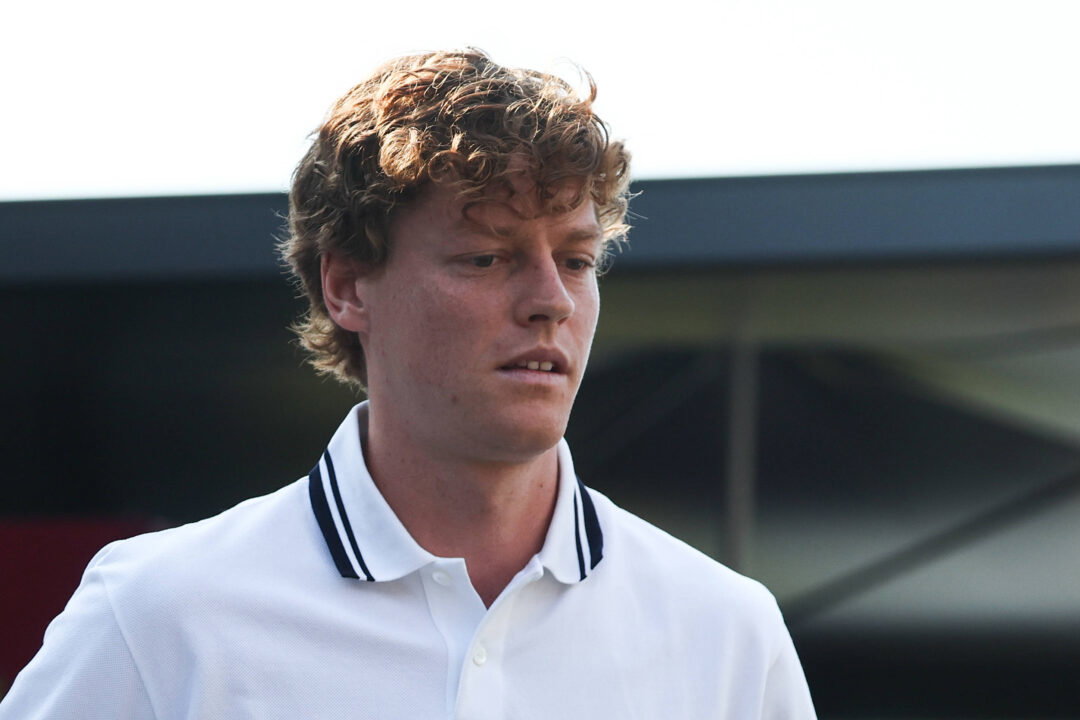
Imago
F1 Italian Grand Prix 2026 Jannik Sinner ahead of the Formula 1 Italian Grand Prix at Autodromo Nazionale di Monza in Monza, Italy on September 6, 2026. Monza Italy PUBLICATIONxNOTxINxFRA Copyright: xJakubxPorzyckix originalFilename:porzycki-f1italia260906_nphei.jpg
The continued use of conservative treatment would mean putting up with any pain while playing at the highest level of the game, which is hard for anyone to do. Sinner has been cautious this time. Asked recently about the Australian Open, he offered only a cautious “I hope so,” before adding that while “the goal is to go to Australia and play a few tournaments beforehand,” he has “to respect the protocols right now.”
Pushing too hard, he warned, could invite “slightly more serious problems,” with his stated priority being to safeguard “the next 15 years” of his career. It is important to remember how much time this process has already cost, and even Sinner is hesitant to rush.
Four months on the sidelines and counting
The last time Sinner struck a competitive ball was the Wimbledon final on 12 July, when he beat Alexander Zverev to lift the title. He withdrew from Montreal in late July, then withdrew from Cincinnati in early August, followed by the worst of all possible news: turning down the US Open that he had every right to pursue. A knee that had appeared insignificant was quickly turning into a season-ending one.
An attempted return during the Asian swing never came. He pulled out of the China Open in late September, when the knee issue persisted, and from the Shanghai Masters before announcing on 6 October that the season was over due to ongoing treatment for what his team referred to as ‘inflammation’. Vienna, the Paris Masters and the ATP Finals were all added to the list of absences. During the enforced break, he even surrendered the world No. 1 ranking he had held since April, with Zverev climbing above him through nothing more than being able to play.

Zuma
April 26, 2026, Madrid, Madrid, Spain: Jannik Sinner of Italy plays against Elmer Moller of Denmark during the Mutua Madrid Open 2026, ATP, Tennis Herren Masters 1000 and WTA, Tennis Damen 1000, at La Caja Magica on April 26, 2026 in Madrid, Spain. Madrid Spain – ZUMAa181 20260426_zaa_a181_317 Copyright: xOscarxJ.xBarrosox
The one glimmer had been the rescheduled Six Kings Slam. The lucrative Riyadh exhibition, moved to 27 to 30 December after being postponed in October, was lined up as his comeback stage, a low-stakes tune-up before Melbourne at an event he has won for the past two years. That’s still dependent on his treatment trajectory. He did make a brief appearance at the ATP Finals in Turin, telling the crowd he was sorry he could not play.
The biggest decision of his winter looks set to be taken in a consulting room rather than on a practice court. His next season will depend on whether he decides to undergo surgery and reset for a longer period of time or takes a chance to deal with the pain.