Imago
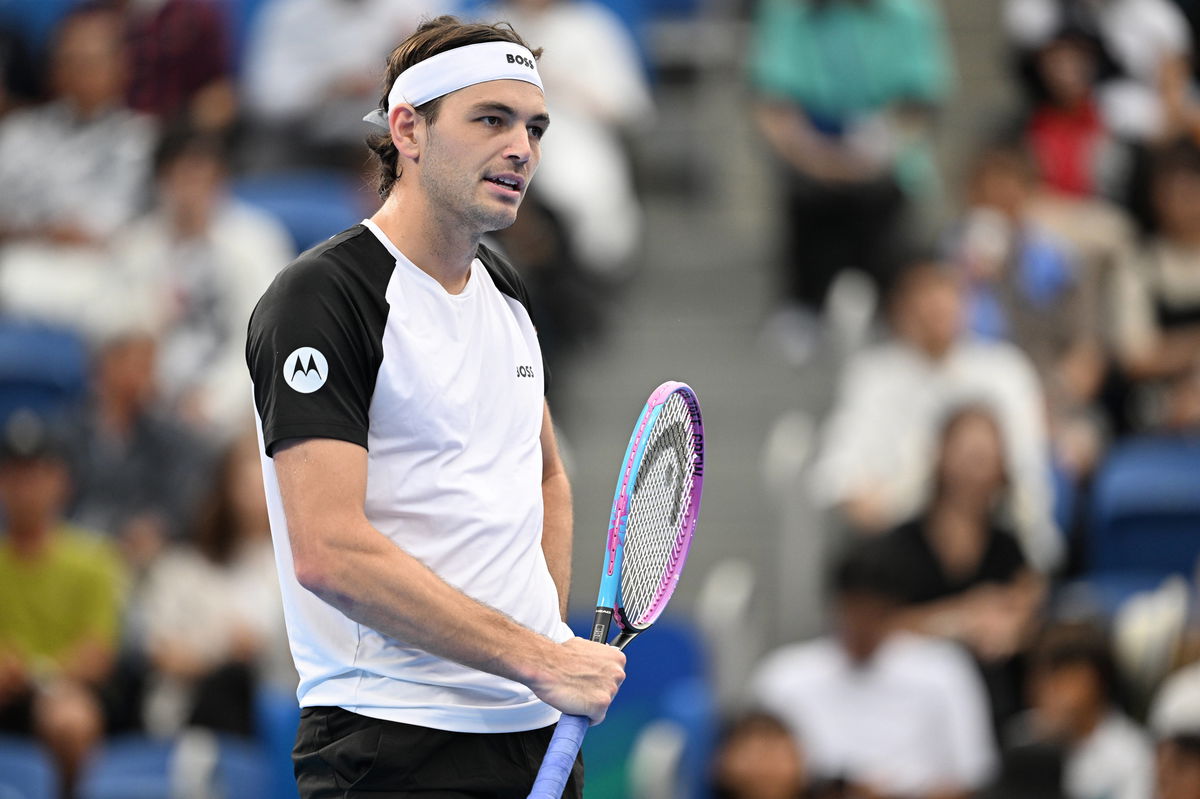
Taylor FRITZ USA, SEPTEMBER 29, 2025 – Tennis : Kinoshita Group Japan Open Tennis Championships 2025 Men s Singles Semi-final at Ariake Coliseum, Tokyo, Japan. Noxthirdxpartyxsales PUBLICATIONxNOTxINxJPN aflo_305231982
Imago
Taylor FRITZ USA, SEPTEMBER 29, 2025 – Tennis : Kinoshita Group Japan Open Tennis Championships 2025 Men s Singles Semi-final at Ariake Coliseum, Tokyo, Japan. Noxthirdxpartyxsales PUBLICATIONxNOTxINxJPN aflo_305231982
Imago
Taylor FRITZ USA, SEPTEMBER 29, 2025 – Tennis : Kinoshita Group Japan Open Tennis Championships 2025 Men s Singles Semi-final at Ariake Coliseum, Tokyo, Japan. Noxthirdxpartyxsales PUBLICATIONxNOTxINxJPN aflo_305231982
Imago
Taylor FRITZ USA, SEPTEMBER 29, 2025 – Tennis : Kinoshita Group Japan Open Tennis Championships 2025 Men s Singles Semi-final at Ariake Coliseum, Tokyo, Japan. Noxthirdxpartyxsales PUBLICATIONxNOTxINxJPN aflo_305231982
During a recent Twitch livestream while playing World of Warcraft, Taylor Fritz pulled back the curtain on how match scheduling truly works at the elite level, bluntly stating that superstars like Carlos Alcaraz, Jannik Sinner, and Novak Djokovic rule the hierarchy. When backlash followed, Fritz didn’t retreat. He doubled down, firing straight at the haters without flinching.
Watch What’s Trending Now!
Taylor Fritz addressed the controversy after a fan account on X shared a clip of his comments. He made it clear that he was not complaining. He felt his words had been taken out of context.
He wrote, “I’m not sure why you are acting like I am complaining about this? I got asked about how this stuff works by a fan on my stream and answered accordingly.” He stressed that he was only explaining the system.
Later, he added, “The better and more decorated players will usually have more say in when they play, as they should, they have earned that right. Me getting on stream and thoughtfully answering questions for fans isn’t something I am doing me, but for the fans that support me enough to want to come in and ask me questions live.” He emphasized that top players deserve that privilege. He also said he streams for fans, not for himself.
Taylor Fritz on scheduling :
“If I play Novak, Carlos or Sinner and they want to play at night, I’ll be put in the night session”
Better players who sell tickets gets prime time, ig that’s how the world works
— SK (@Djoko_UTD) February 28, 2026
Fritz then addressed the criticism directly. “If people want to misinterpret and turn the things I say against me and turn it into unwarranted hate towards me, then maybe it’s not worth it 🤷🏻♂️” He showed frustration but stayed firm.


He even reposted another fan’s message. It quoted him saying, “I don’t understand how you can watch this and think that I’m complaining… ur last name seems to make a lot of sense😂” That post was later deleted. Still, it showed he was willing to push back.
The debate began because match timing matters a lot in tennis. The time of day affects recovery and rhythm. It can influence performance. Players care deeply about when they compete.
During his livestream, Fritz explained how scheduling works. “Mostly the higher-ranked ones. It’s the priority matches,” he said when asked about the rules. He pointed to ranking and star power as key factors.
He was even more direct about the biggest names. “At the end of the day, Carlos, Jannik, and Novak, if they’re playing, they’re going to get the time slots they want.” He acknowledged their influence openly. He treated it as reality, not injustice.
He also broke down how the draw impacts decisions. “You’re separated in the draw. Carlos and Jannik are going to be split. So one day Carlos is going to get his pick. The next day Jannik is going to get his pick. Then whoever the next highest seeds are will probably get a say.”
So where does Fritz stand? He placed himself below the elite trio. He sees his position clearly within that hierarchy.
“I probably fall around priority number three on the day that I play,” he said. “Three or four people will have priority one day over the top eight. Because like I said, the draw is split in half. I won’t have to compete with the requests of people on the opposite side of the draw, because they’re not playing on the same day as me.” He explained the limits and the logic.
Even then, he admitted his control is small. “I won’t get to pick the time that I play on center court. But if I want to pick the time that I play on court two, I might be able to say, ‘Hey, don’t put me first, but also don’t put me in the night match.’ That’s about it.”
And against the sport’s giants, he has no leverage. “At any point, if I play one of those top guys, then it’s like, forget that. Whatever I want to do is completely out of the question. We do what they want to do. If I play Novak and he wants to play at night, they’re going to put me at night against him. That’s kind of just how it is.” He accepted that reality without resentment.
Concerns about scheduling are not new in tennis. Players have spoken about it before. The system favors ranking and marquee value, and Fritz simply stated that fact.
Concerns surrounding match scheduling are nothing new, as different players have already voiced similar issues in the past.
Anna Kalinskaya slams WTA over late-night match scheduling
A similar situation happened a few years ago when players repeatedly objected to late-night matches. Many argued that extreme scheduling was unfair and harmful to recovery. The debate gained traction across both tours.
Anna Kalinskaya voiced strong frustration at the Cincinnati Open last year. She defeated Ekaterina Alexandrova in a late-night fourth-round battle. The match lasted two hours and 18 minutes.
The contest finished very late. Kalinskaya said she returned home at 2:40 a.m. She did not sleep until 4 a.m.
The next day brought more frustration. She learned her quarterfinal against reigning Wimbledon champion Iga Swiatek was scheduled for 11 a.m. Friday. That quick turnaround felt unfair to her.
Kalinskaya publicly criticised the WTA and tournament organisers. She expressed her disappointment on Instagram. She questioned how athletes could perform under such conditions.
She wrote, “How can the WTA and tournament expect athletes to perform their best when the scheduling is unfair?” she wrote. “After my match against Alexandrova, I got home from the site at 2:40 am and didn’t go to bed until 4 am. I slept a bit and came to the site to practice.”
A similar concern surfaced recently at the Australian Open. Emma Raducanu criticised the difficult timing after being placed in a late-night opening match. She admitted the schedule made preparation challenging.
“It’s very difficult,” she said. “You would love to have more time in the environment, more time practising, but I guess I was pretty much handed the schedule to try and turn it around and make the most out of what is in front of me. I think it’s easy to get down and complain about it, but it’s not going to help. So I’m just trying to focus and turn it around for tomorrow.”
Now Taylor Fritz has raised concerns from the men’s side. He explained that higher-ranked and marquee players often receive priority for preferred time slots. His remarks have reignited the debate about fairness.
Many players believe elite stars receive favorable scheduling because of ranking and broadcast value. Others argue it is part of the sport’s commercial structure.
The question remains whether competitive balance and player welfare should carry more weight.
Related Newsletters