WTA Representative’s Heartwarming Gesture Toward Mirra Andreeva Moments After Madrid Defeat

Add us on Google
WTA Representative’s Heartwarming Gesture Toward Mirra Andreeva Moments After Madrid Defeat
Add us on Google
Imago
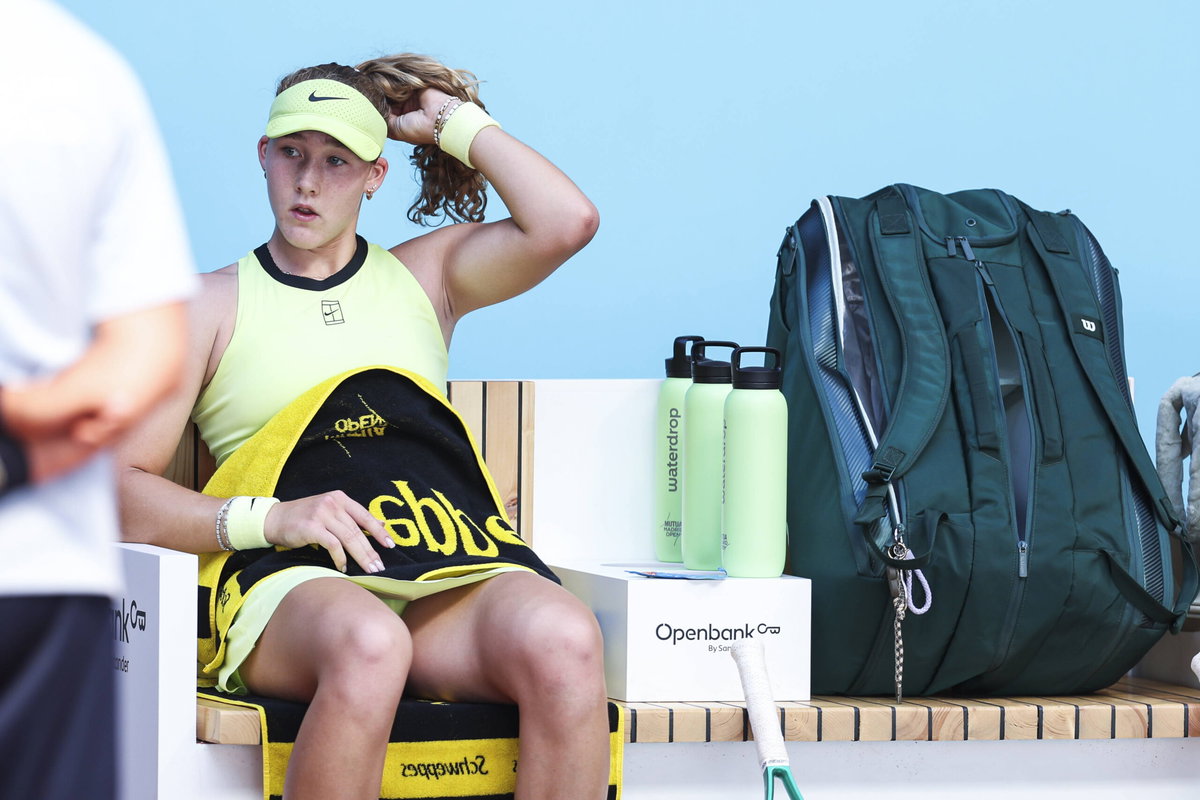
April 27, 2026, Madrid, Madrid, Spain: Mirra Andreeva of Russia plays against Anna Bondar of Hungary during the Mutua Madrid Open 2026, ATP, Tennis Herren Masters 1000 and WTA, Tennis Damen 1000, at La Caja Magica on April 27, 2026 in Madrid, Spain. Madrid Spain – ZUMAa181 20260427_zaa_a181_745 Copyright: xIrinaxR.xHipolitox
Imago
April 27, 2026, Madrid, Madrid, Spain: Mirra Andreeva of Russia plays against Anna Bondar of Hungary during the Mutua Madrid Open 2026, ATP, Tennis Herren Masters 1000 and WTA, Tennis Damen 1000, at La Caja Magica on April 27, 2026 in Madrid, Spain. Madrid Spain – ZUMAa181 20260427_zaa_a181_745 Copyright: xIrinaxR.xHipolitox
When Mirra Andreeva arrived in Madrid, she put together a terrific run, playing some outstanding tennis over two impressive weeks. Match after match, she looked in complete control. But the final didn’t go the way she had hoped. After falling to Marta Kostyuk, the 19-year-old was understandably heartbroken.
Watch What’s Trending Now!
She returned to her bench, sat in stunned silence, and eventually broke down in tears, hiding her face beneath a towel. It was a tough ending to what had otherwise been a remarkable tournament for the young Russian.
A WTA communications manager then walked over and sat beside Mirra Andreeva, offering some much-needed comfort. She checked in to see if Andreeva wanted to step away from the court for a bit of privacy and also reassured her, praising the teenager for the incredible tournament she had put together.
As the emotions poured out, Mirra Andreeva was brutally honest about how hard losses hit her. “Every time I lose, it’s like the end of the world for me. When I lose, I can’t be happy. I see some smiling after a defeat. I don’t understand how they do it. I’d like to handle it better,” she admitted through tears.
Later, after accepting her runners-up trophy on the podium, the Russian teen fought through her tears and thanked her team and coaches for their help with her remarkable run. She stated, “I’m sorry. I promised myself I wouldn’t cry.”
Hiding behind her trophy, she further added, “Thanks to my team for always being there for me. Supporting me all the time, when it’s easy and when it’s hard.”
🗣️ Mirra Andreeva : «Chaque fois que je perds, c’est comme la fin du monde pour moi. Quand je perds, je ne peux pas être heureuse. Je vois certaines sourire après une défaite… je ne comprends pas comment elles font. J’aimerais gérer ça mieux.»
Il FAUT qu’elle y arrive. pic.twitter.com/XrqfeZQ2xR
— Benoit Maylin (@BenoitMaylin) May 3, 2026
Andreeva also took a moment to congratulate Kostyuk and added, “I would like to congratulate Marta and your team for your amazing win today, and for how your clay season is going so far as well. You’ve won two tournaments in a row, so you’re playing well, so congrats on the win today as well.”
Riding a 10-match clay-court winning streak, Kostyuk looked right at home on the big stage. She took the opening set 6-3, then weathered an early surge from Andreeva in the second before rallying back to close it out 7-5.
Following this, Kostyuk refused to shake hands with Andreeva after the match, and had long held the view of refusing to shake hands with Russian and Belarusian players in the ongoing conflict in Ukraine. Andreeva respected her opponent’s wishes without comment and walked straight to the chair umpire after the final point. It was handled with dignity by both – the burden of something far bigger than tennis, and carried silently through a tennis match.
Mirra Andreeva wipes her tears and focuses on doubles
For the Russian, the defeat was her second in a WTA 1000 final. She is 19. The runner-up finish will move her one place up to world No. 7 in the world rankings on Monday and two places up to No. 4 in the race to the WTA finals. By any objective standard, the week was a success – deep runs, memorable wins, a final appearance on the largest clay court event outside Roland Garros.
“The tournament is still not over,” she said. “So I’m going to try to go for it in doubles tomorrow as well.” She and partner Diana Shnaider were scheduled to contest the doubles final against Katerina Siniaková and Taylor Townsend on Sunday.
The image of the ninth seed crying, texting, and internalizing a trophy-ceremony briefing at the same time will be washed away. What will be left is the image of a 19-year-old who reached a Masters 1000 final, handled an emotional loss calmly, and immediately shifted her attention to the next opportunity. The WTA’s communications protocol, in its turn, could use a sixty-second review.
Written by

Edited by

Pranav Venkatesh