
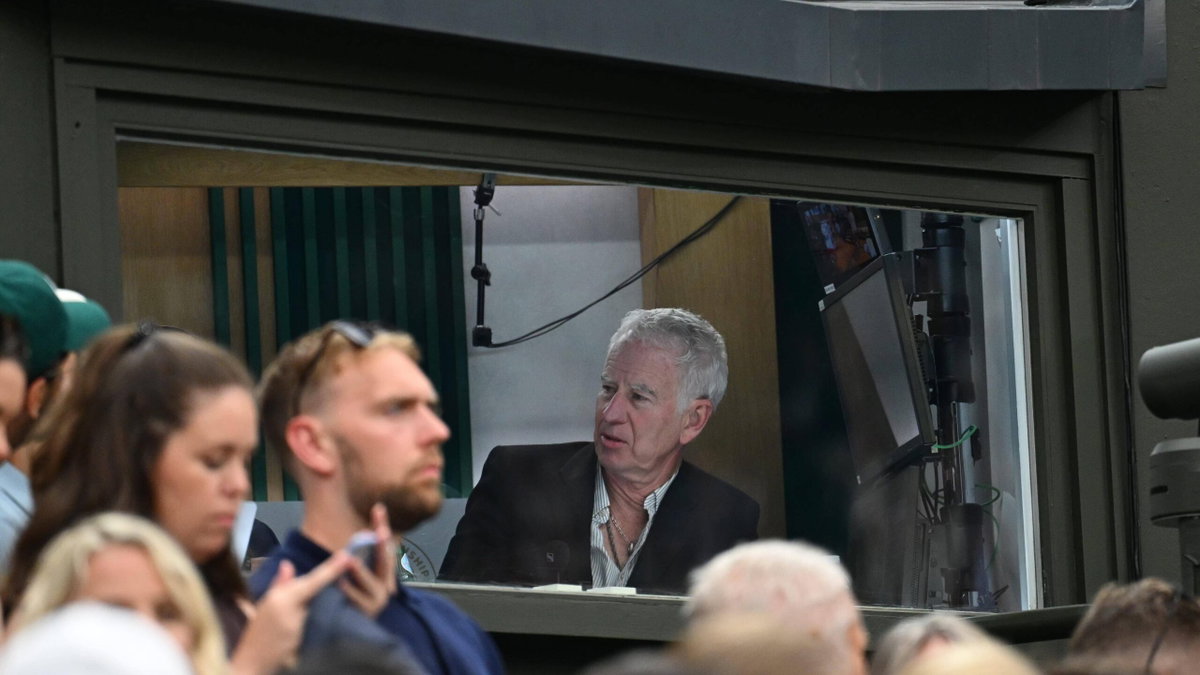
Alexander Zverev finally had his US Open moment. But as the celebrations began in New York, John McEnroe once again somehow managed to steal some of the limelight with his commentary.
Zverev had just beaten Ben Shelton 6-3, 7-6(2), 5-7, 6-2 to claim his first US Open title and second Grand Slam of 2026. Yet as ESPN’s coverage wrapped up, McEnroe left viewers with a remark that immediately rubbed some fans the wrong way. “Get healthy, Carlos [Alcaraz] and Jannik [Sinner] … please.”
On the surface, it was simply a wish to see tennis’ two biggest stars back on the court. But coming immediately after Zverev had just won a second major of the season, the comment struck some viewers as an odd way to end the tournament. The German had earned his moment, while Shelton had just played the biggest match of his career. Instead, the final words seemed to point toward the two stars who weren’t even there.
And that absence has been impossible to ignore.
Alcaraz was eliminated by Shelton in the quarterfinals after returning from a wrist injury, while Sinner missed the entire tournament with a knee problem. Between them, the two had dominated the Grand Slam landscape in recent years. Their absence opened the door, and Zverev walked straight through it.
The German made sure there was no confusion about who deserved the trophy. After losing three previous Grand Slam finals, Zverev finally broke through at the French Open earlier this year. Now, just months later, he has two majors to his name.
For Shelton, meanwhile, the wait continues. The 23-year-old was attempting to become the first American man to win a Grand Slam since Andy Roddick’s 2003 US Open triumph. A partisan Arthur Ashe Stadium crowd desperately wanted the drought to end, but Zverev had other plans.
The No. 1 seed immediately pounced on Shelton’s nerves, breaking in the opening game after a double fault. He controlled the first two sets, using his serve and patient baseline play to keep the American from finding his rhythm. Shelton finally fought his way back in the third, but another shaky service game at the start of the fourth handed Zverev the momentum again.
Even the championship point produced a bizarre little moment. Shelton sent the final return long, but Zverev initially seemed unaware that the match was over. He moved back as if preparing for another point before his team signaled the result. Then came the realization, and the celebration. But…
What are the fans saying about John McEnroe’s bizarre post-match comment?
Six years after letting a two-set lead slip away against Dominic Thiem in the 2020 US Open final, Zverev was finally holding the trophy in New York. His own words summed up the journey. “We went 30 years without winning a Grand Slam title and now won two in the span of three months,” Zverev told his team. “I think 2026 is the outcome of all the years that happened before.”
Yet some fans felt McEnroe’s closing comment shifted attention away from what Zverev had just achieved. One fan concluded, “John definitely doesn’t like zverev.”
Zverev himself was far more measured when asked whether he was now the best player in the world. “With Jannik Sinner being injured and Carlos coming back from injury… right now, this moment, probably yes,” he said. “Both of them healthy and both at the top of their game, maybe not.”
Still, the timing of McEnroe’s remark did not sit well with everyone. One fan simply called it “so rude.”
And this was hardly the first time McEnroe’s commentary had attracted attention at this year’s US Open.
His bluntness has always been part of his appeal, first as a player and later as one of tennis’ most recognizable voices. But some viewers have increasingly questioned whether that delivery sometimes becomes unnecessarily dismissive.
During Zverev’s quarterfinal against Botic van de Zandschulp, McEnroe remarked that the Dutchman “looks a little pained, even though he just hit a winner.”
Canadian tennis journalist Stephanie Myles pushed back, noting that it was simply Van de Zandschulp’s normal expression. Following McEnroe’s comment after the final, another fan wrote, “McEnroe is so pathetic. Makes every moment about himself, shows bias when his guy isn’t winning and is proven wrong predictions wise. Why ESPN includes him in every big match I don’t know.”
Earlier in the tournament, McEnroe described Lorenzo Sonego as “not very well known,” despite the Italian having reached No. 21 in the rankings and owning a victory over Novak Djokovic. He also referred to Mariano Navone playing on “Court 21,” prompting criticism because no such court exists at the US Open.
His commentary during Learner Tien’s comeback victory over Jakub Mensik also drew scrutiny, with some viewers believing McEnroe leaned too heavily toward Mensik before Tien completed the five-set turnaround.
That pattern made his remark after Zverev’s title even more noticeable. Another fan wrote, “Embarrassing to end it that way. Yes we all want everyone to be healthy but that was tasteless.”
The criticism has extended beyond this year’s tournament. McEnroe’s comments involving players such as Radu Albot, Nicolas Jarry and Stefanos Tsitsipas have previously sparked debate over his approach behind the microphone.
Last year’s US Open brought an even more personal backlash. During Novak Djokovic’s quarterfinal against Taylor Fritz, McEnroe referred to racket-delivery staffer Susan Perkins as “grandma” and made an age-related joke. Perkins later said the remarks were hurtful and dismissive.
For some viewers, the issue now extends beyond McEnroe himself. One fan blamed the network as well, writing, “ESPN the worst commentators in sports. Biased, constantly trying to sound impressive.”
McEnroe has never been known for filtering every opinion before voicing it. That unpredictability has long been part of his appeal.
But after Zverev finally conquered the US Open, fans wanted the night to belong to the champion.
Instead, McEnroe’s final words once again made the commentary booth part of the story.