Imago
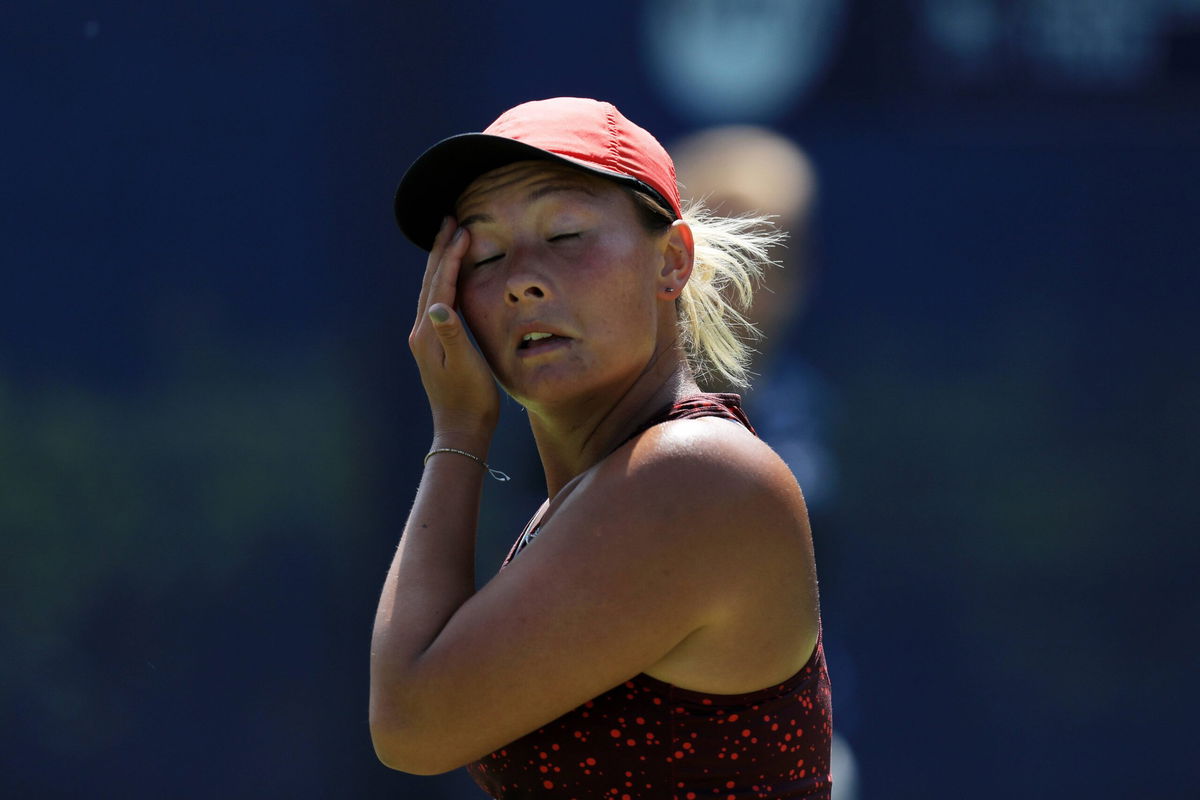
10th June 2018, Nottingham Tennis Centre, Nottingham, England; The Nature Valley Open Tennis Tournament; A dejected Tara Moore of Great Britain misses a forehand against Elena-Gabriela Ruse of Romania PUBLICATIONxINxGERxSUIxAUTxHUNxSWExNORxDENxFINxONLY ActionPlus12035321 ShaunxBrooks
Imago
10th June 2018, Nottingham Tennis Centre, Nottingham, England; The Nature Valley Open Tennis Tournament; A dejected Tara Moore of Great Britain misses a forehand against Elena-Gabriela Ruse of Romania PUBLICATIONxINxGERxSUIxAUTxHUNxSWExNORxDENxFINxONLY ActionPlus12035321 ShaunxBrooks
The tennis world was stunned last year when British player Tara Moore received a four-year ban from the Court of Arbitration for Sport after testing positive for nandrolone and boldenone at a Colombian event. Although authorities later reduced the suspension to 19 months, the damage had already cut deep. Now, Moore holds the WTA responsible, claiming the ordeal derailed her career and reputation.
Watch What’s Trending Now!
Her attorney, Daniel Weiss, said she is pursuing action over “the negligence that ruined her career.” She has demanded $20 million in damages, according to a recent court filing.
Her legal team has taken the fight to federal court. The athlete’s attorney said, “All this petition asks is for a federal court to ensure Tara gets what she was always promised: a fair hearing based on evidence, not a presumption of guilt.”
Top Stories





Weiss went further in his criticism of the system.
Imago
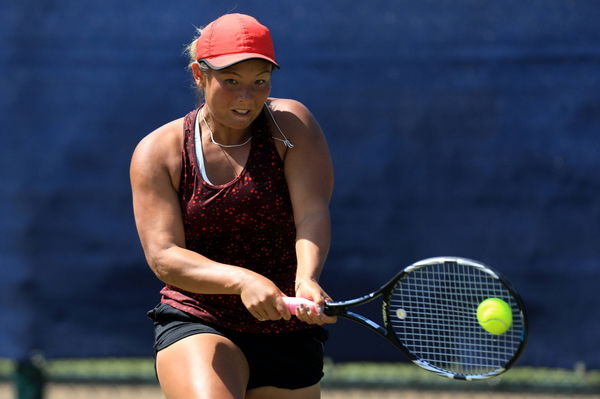
10th June 2018, Nottingham Tennis Centre, Nottingham, England; The Nature Valley Open Tennis Tournament; Tara Moore of Great Britain plays a forehand shot to Elena-Gabriela Ruse of Romania PUBLICATIONxINxGERxSUIxAUTxHUNxSWExNORxDENxFINxONLY ActionPlus12035325 ShaunxBrooks
“Tara Moore is a victim twice over: first of the WTA’s negligence, and then of a fundamentally flawed anti-doping system that presumed she was guilty without any evidence of wrongdoing,” he added.
The ITIA and CAS declined to comment on the filing.
The WTA released a formal statement: “The arbitration was conducted by a neutral arbitrator, and there is no basis to vacate the arbitrator’s award.”
The organization also made its position clear: “We respect the judicial process and will not comment further while the matter is pending.”
Moore first tested positive in April 2022. She was competing on the WTA Tour during an event in Bogota, Colombia. The test revealed steroids in her system.
She argued that officials failed to warn players about local meat. According to her Manhattan federal court filing, authorities allegedly knew the meat could be contaminated with steroids used in cattle farming. She claims no warning was issued to players.
Two other players also tested positive in Bogota at the same time. However, Moore, now 33, received an immediate suspension under the strict anti-doping rules supported by CAS. She says the punishment was swift and harsh.
An independent tribunal cleared her of wrongdoing in December 2023. Yet her ordeal did not end there. The International Tennis Integrity Agency appealed the ruling.
The ITIA argued that Moore had not proven where the substances came from. The appeal prolonged the uncertainty. In July 2025, she was ultimately barred from competing.
Moore later spoke about her emotional reaction: “I remember just having this out-of-body experience, being like, ‘What do you mean I failed the doping test?’ I remember feeling like something just had collapsed…Suddenly, I was just blacklisted from everything.”
She appealed again and went to arbitration. She sought significant financial compensation. Now she claims the arbitrator dismissed her case by relying on CAS’ legal framework, which assumes guilt.
Moore also pointed to another example. She alleged that Robert Farah tested positive in Bogota months earlier but was cleared after authorities acknowledged contaminated meat.
She says the WTA fact sheet did not warn players about the risk, and even before filing for damages, she had already begun speaking publicly about her fight against the authorities.
Tara Moore proclaims innocence after tennis ban ruling
On February 18, the ITIA shared an important update. Three South American players were cleared to return to competition. Their cases were linked to contaminated meat.
Imago
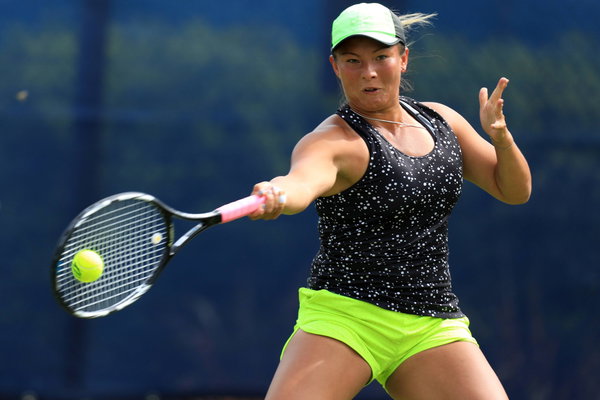
9th June 2018, Nottingham Tennis Centre, Nottingham, England; Tara Moore of Great Britain plays a forehand during the ladies singles Qualifying match against Miharu Imanishi of Japan PUBLICATIONxINxGERxSUIxAUTxHUNxSWExNORxDENxFINxONLY ActionPlus12034776 ShaunxBrooks
Peru’s Conner Huertas del Pino, Brazil’s Mateo Barreiros Reyes, and Colombia’s Andrés Urrea were investigated. Each had tested positive for boldenone. After a detailed review, the ITIA accepted their explanations.
The agency found that the substance entered their bodies through contaminated meat. Their evidence satisfied the investigators. As a result, all three players were allowed to compete again.
However, Tara Moore’s case followed a different path. Authorities did not accept her defense at an early stage. This difference has raised questions about consistency.
Contaminated meat has become a growing concern in tennis. Some tournaments have taken preventive steps. This year, ATP Acapulco removed meat from player meals before the event.
The move aimed to reduce the risk of accidental doping cases. But Moore’s situation developed long before such measures became common. The British player has continued to maintain her innocence.
Last year, after getting her 19-month provisional suspension, Moore spoke publicly for the first time. She described the emotional and mental toll of the process.
“To be innocent and to have to prove that is an incredibly gruelling process. Firstly, you’re trying to figure out what these things are, secondly, you are figuring out how and why these things got into your system,” she wrote.
“If you are innocent, you don’t just know straight away. You have to go through everything you’ve done and eliminate what it can’t be, until you settle on something it most likely is. Even then, you are presumed guilty and have fight for your life against someone that has more money and resources than you.”
Now that the case is in the public eye, the bigger question remains. What would true justice look like for the British tennis player? Share your thoughts below.
Written by

Edited by

Deepali Verma