
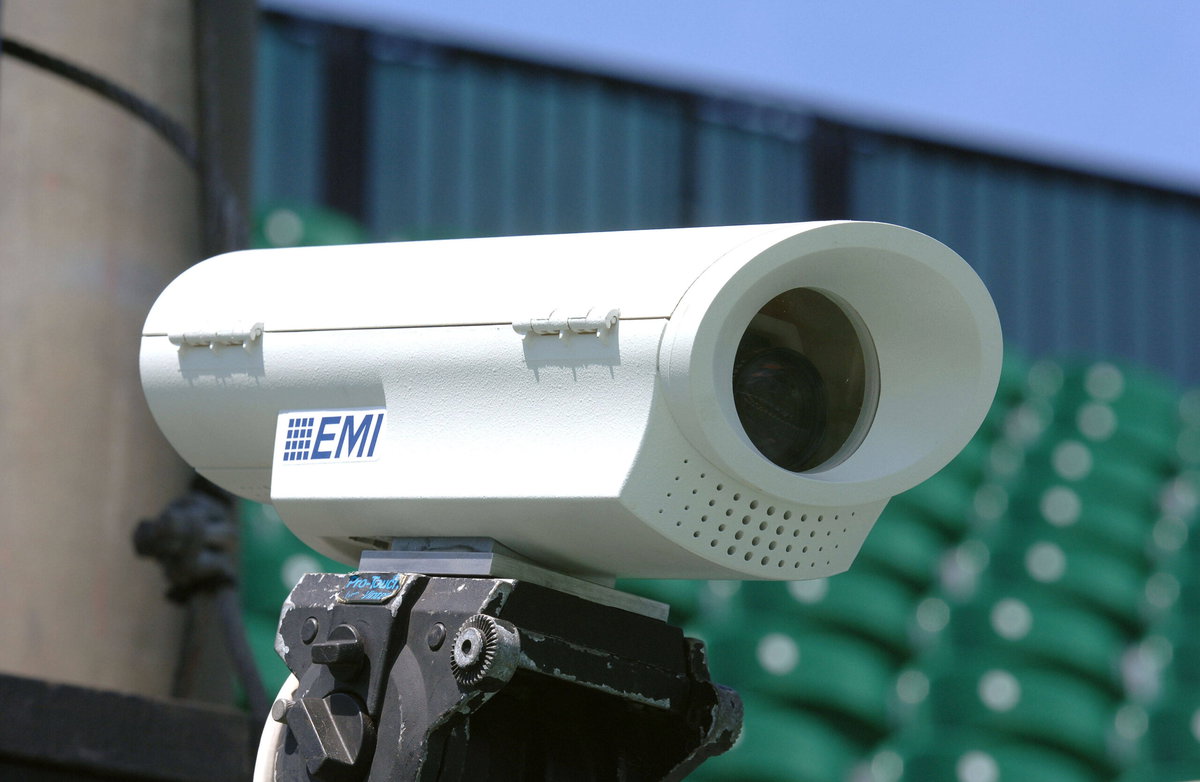
For decades, line judges served as tennis’s silent guardians, delivering precise calls on razor-close shots while keeping the rhythm and fairness of the game intact. However, I still remember ATP chairman Andrea Gaudenzi saying three years ago that “we have a responsibility to embrace innovation and new technologies.” In 2025, those words fully materialized with the rise of Electronic Line Calling (ELC) across tennis. And when tennis announced the removal of line judges, my first thought was clear. Accuracy was the goal, wasn’t it?
Watch What’s Trending Now!
For the most part, yes.
Hawk-Eye made its official debut in 2006 for player challenges at the Hopman Cup and the US Open. By 2017, the Next Gen ATP Finals used Hawk-Eye Live, replacing all line judges. The system detects player movement and ball bounces, announcing “Out,” “Fault,” and “Foot fault” with a pre-recorded voice.
The 2020 US Open and ATP Finals used electronic line judges to reduce staff. In 2021, the Australian Open became the first Grand Slam to go fully electronic. The pandemic pushed things faster.
Hawk-Eye Live became permanent at the US Open in 2022, and the ATP later confirmed that every event would transition to the system by 2025. Except one. The French Open has opted out.
The reason was simple. In tennis, even the smallest technological error can completely alter the outcome of a match. Back in February at the ATP 250 event in Santiago, Nicolás Jarry was left furious after claiming the electronic system incorrectly called a ball out during his first-round defeat to Dino Prižmić; a moment Jarry believed ultimately cost him the match.
You see, some decisions can be a double-edged sword. Accuracy is great, but the disruption it brings to the flow of play cannot be ignored. Sometimes tradition has a point.
And now, instead of simplifying tennis, ELC seems to be dragging the sport into a deeper maze of confusion and controversy.
Fault lines exposed: how electronic line-calling is disrupting matches and trust
“Gets the call right every time,” Patrick McEnroe said back in 2020 when ELC was just putting itself on the map. Little did he know how much chaos it could stir. Technology that promises perfection often trips over the human element, and tennis has felt that tug-of-war firsthand.
Take 2025 as an example. Alex Eala, fresh off a tough loss to Iga Świątek at the Madrid Open, asked in frustration, “Can you make it make sense?” The issue was not the match itself but a tiny ball mark on the tournament’s red clay.
Early in the match, Świątek hit a serve that the mark clearly showed as out. Yet the ELC system overruled it and called it in. The mark was the physical proof, Eala, too, argued.
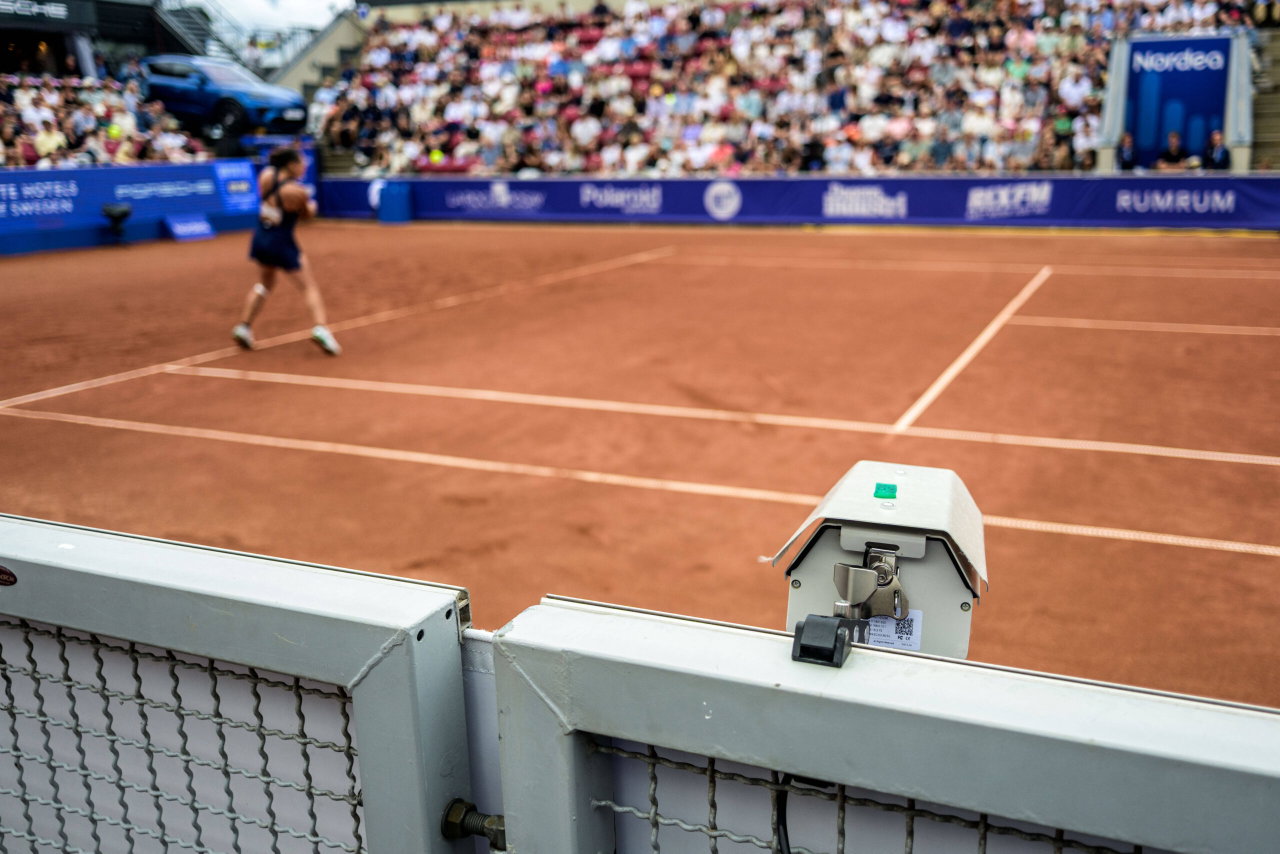
Imago
250712 Cameras for Electronic line calling live ELC during the double final of Nordea Open on July 12, 2025 in Bastad. Photo: Mathilda Schuler / BILDBYRAN / kod MA / MA0844 tennis WTA, Tennis Damen 125 nordea open dubbelfinal dam bbeng genre Electronic line calling live ELC elektronisk linjebedömning *** 250712 Cameras for Electronic line calling live ELC during the double final of Nordea Open on July 12, 2025 in Bastad Photo Mathilda Schuler BILDBYRAN kod MA MA0844 tennis wta 125 nordea open dubbelfinal dam bbeng genre Electronic line calling live ELC elektronisk linjebedömning PUBLICATIONxNOTxINxSWExNORxFINxDEN Copyright: MATHILDAxSCHULER BB250712MA132
The tension lies in the technical quirks of the game.
Tennis balls leave marks on all surfaces, but most of the time, they are invisible to the naked eye. Hard courts swallow the mark, and grass can sometimes betray it if chalk flies up, but clay tells a different story.
ELC systems have a margin of error of a few millimeters. Clay courts, however, are living surfaces. Red brick dust shifts, weather changes, and the angle of the shot all alter how a ball compresses and leaves a mark.
The result is that marks on the clay courts can be misleading. They do not always match up with what cameras see, no matter how sophisticated the system is.
Even systems billed as foolproof, like Foxtenn, which uses cameras to display the ball’s bounce, can get caught out. Before rolling out ELC on clay, the ATP, with some help from the WTA, produced a video to explain these illusions to players and spectators.
Players were sent the video, the WTA shared it on their channels, and briefings were done to manage expectations. Yet one year later, frustration still bubbles. The clash between what players see and what the system calls keeps tempers simmering.
Broadcasts do not help matters. Television still relies on the top-down Hawk-Eye replay used on grass and hard courts. Players staring at a mark that does not match the machine’s decision are left shaking their heads.
Technology is supposed to take the guesswork out of the game, but in this case, it sometimes fans the flames instead. It is a reminder that even the most advanced tools cannot replace instinct, experience, and the occasional human judgment.
The game is evolving, but the heart of tennis, the unpredictability, the disputes, and the drama, still beats strong.
Clay Court Resistance: The Tradition
The stubbornness of the French Tennis Federation (FFT) stands out in a world where every other tournament has embraced the latest AI-driven technology. On first glance, it seems backward.
But look closer, and you realize Roland Garros is playing its cards carefully. Tradition is more than a word at Roland Garros. It remains the only Grand Slam where line judges still hold sway, and players cannot challenge calls with electronic replays.
This is a tournament that has been steeped in history for 135 years, and it is determined not to let machines take the wheel.
Gilles Moretton, president of the FFT, sums it up simply: “I think we are right to keep our referees and line judges at Roland Garros. The federation wants to keep our referees for as long as we can. I hope we’ll be able to maintain it in our tournaments in the future.”
A ball can travel a few millimeters past the line before leaving a mark. The trace left on the clay is not always where the ball actually landed. The human eye sees one thing, and the machine sees another.
Hawkins even suggests that Roland Garros might be better off without electronic line calling. Players have been reading ball marks for over a century. If everyone accepts that method, he argues, the game remains fair.
The old-school approach keeps the rhythm and spirit of the clay intact. Technology might remove errors, but it can also take away the soul of the match.
The difference between Roland Garros and the rest of the tour is striking. Everywhere else, AI dominates, leaving no room for debate. At Roland Garros, the human element still matters. Players must adjust to judgment calls, just like generations before them.
It raises an interesting question: do players experience a kind of duality with electronic line calling elsewhere? They trust the machine, yet often look at the marks and wonder if what they see aligns with reality.
Players are divided between precision and tradition in the ELC debate
Despite the chatter and controversies surrounding ELC, several players have thrown their weight behind the system.
Taylor Fritz is one of them. For someone like him, clay courts have always been tricky. “For someone like me, who’s not a clay-court player, stopping points and looking at marks mid-point, trying to see if it’s in or out, is so much tougher to do than someone who’s played on clay forever,” he said last year in Madrid.
He likes the clarity the system provides. “So I really like how we can just play until we hear the call. If we don’t hear the calls, we know we’re playing the point. There’s no grey area, and whether it might miss a call or not, I don’t care; at least it’s consistent.”
In many ways, that is the heart of the modern tennis debate: players are no longer asking for perfection, only consistency.
Aryna Sabalenka is another who welcomes the technology. She sees it as a safeguard against human frailty. “When it’s a little mistake or not even a mistake, I prefer to have the Hawk-Eye system than the referee because sometimes referees can be very weak and would rather not go there and confirm that they made a mistake,” she explained. For her, the machine takes the emotion out of the equation.
And perhaps that is exactly why some players love it while others quietly resent it. Tennis has always thrived on human tension, not robotic certainty.
Madison Keys, Alex de Minaur, and Elina Svitolina all share similar views. They acknowledge that frustrations can arise with ELC, but the headaches do not compare to arguing with a human umpire over a mark.
Keys described the old system vividly: “I always hated when they came out and their fingers would swirl around. This isn’t going to go how I want it to.” That uncertainty, she implies, often robbed players of their rhythm.
Rhythm in tennis is fragile. One disputed call can change not just a point, but the emotional direction of an entire match. Still, not everyone is on board. The critics remain vocal, and a line of players seems ready to return to tradition at the first chance.
The frustration with ELC is real, and for many players, it cuts deeper than a simple disagreement over a ball. Tennis is as much a mental game as a physical one, and for decades, players have relied on their instincts and the tiny marks left on clay to guide them.
Now, they are being asked to trust a machine, to erase years of muscle memory not in their strokes, but in their brains. It is like learning a new language mid-match. The evidence is right in front of them, but the system asks them to look elsewhere.
Spectators have been watching this tension unfold for years. A high watermark of ELC controversy came as far back as the 2004 US Open quarterfinal between Serena Williams and Jennifer Capriati.
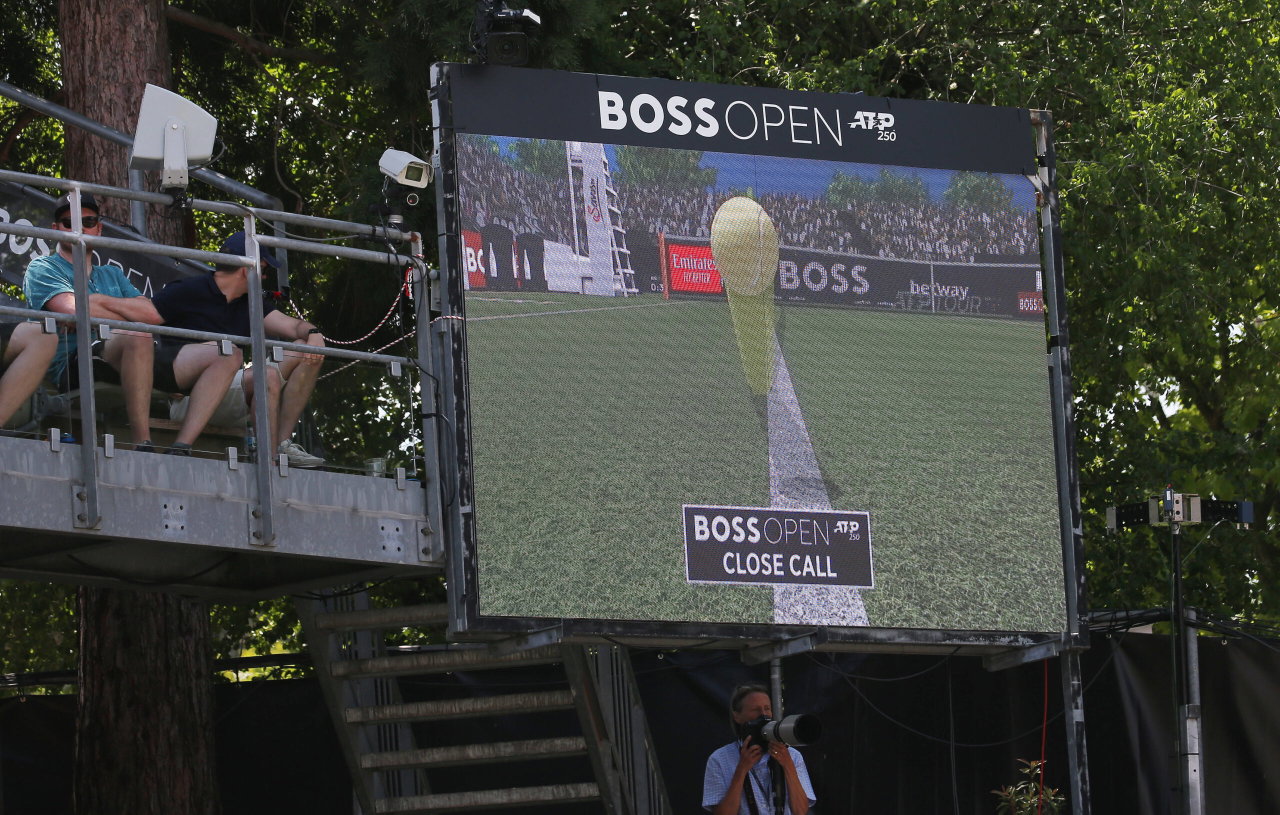
Imago
16.06.2023 Stuttgart, Tennis BOSS OPEN 2023 , Feature Electronic Line Calling System *** 16 06 2023 Stuttgart, Tennis BOSS OPEN 2023 , Feature Electronic Line Calling System
Williams had multiple shots called out that television viewers saw were clearly in. The technology existed for broadcast purposes, but it was not used to judge the match. The seeds of doubt were planted, and players quickly realized that their eyes could no longer be trusted entirely.
Fast forward to 2024, and the frustrations had not waned.
Alexander Zverev did not mince words during a tirade in Shanghai, blaming umpires for his Grand Slam final defeats. A telling moment occurred during the decisive fifth set of that year’s French Open final.
Carlos Alcaraz’s second serve was called out by a line judge, only for the chair umpire to overrule. The Hawk-Eye television replay showed it as out, but it fell within the system’s small margin of error. Players quickly saw that a few millimeters could make the difference between victory and despair.
In elite tennis, careers, rankings, and legacies often swing on margins invisible to the naked eye. That reality only intensifies the obsession with precision. Emma Raducanu has had her own battles with ELC. During her narrow loss to Aryna Sabalenka at Wimbledon, she questioned a line call that the system ruled in. On TV, it appeared out. “That call was, like, for sure out,” she told reporters, a tearful admission of disbelief.
Raducanu’s frustration encapsulated a broader dilemma. Players are being asked to recalibrate decades of understanding in an instant. It is one thing to trust your instincts; it is another to ignore them completely.
Zverev faced a similar dilemma last year on the Madrid clay courts. He believed a backhand from his opponent had gone wide, only for the system to rule it in. Arguments with the chair umpire proved fruitless, so Zverev did something unusual.
He pulled his “phone” from his bag and photographed the disputed ball mark. It was a gesture of defiance, but also a testament to how human intuition clashes with cold technology.
Elena Rybakina echoed that sentiment recently at the Madrid Open. “This is not a joke. The system is wrong,” she told chair umpire Julie Kjendlie after a frustrating call. Similarly, Anastasia Pavlyuchenkova claimed a game was stolen during her fourth-round match against Britain’s Sonay Kartal when Wimbledon’s electronic system failed.
In my opinion, ELC will remain one of the hottest topics in modern tennis. It promises consistency, accuracy, and fairness, yet it also brings chaos, frustration, and heated debates. It is a double-edged sword, cutting both ways. Some embrace it, others fight it, and the clash of opinions makes the sport richer and more compelling.
Personally, I still lean toward traditional line judges, because no matter how sharp ELC becomes, technology can never quiet the ache of a player staring at a clay mark that seems to whisper a completely different truth.
And maybe that is why this debate keeps dancing on, rally after rally, refusing to fade quietly into tennis history.