
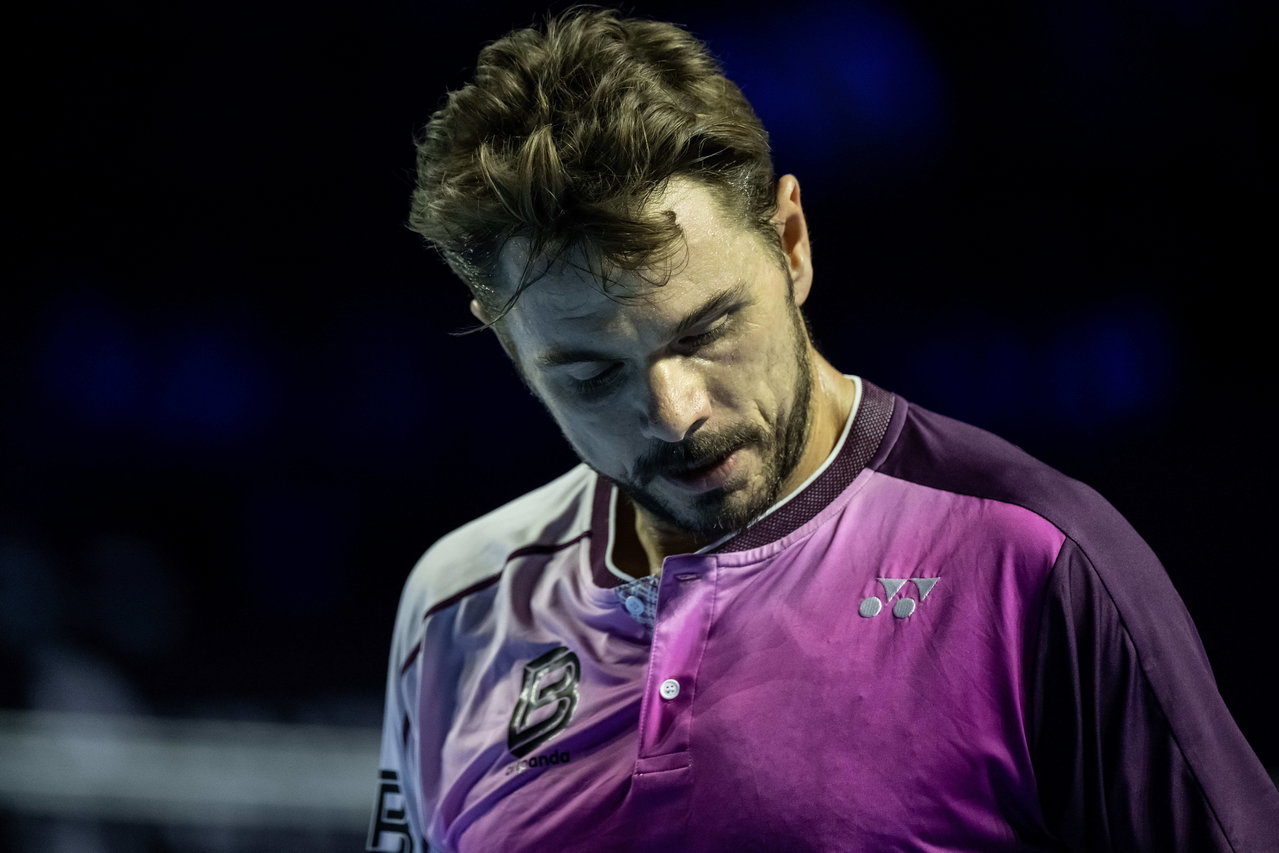
On June 7, 2015, Stan Wawrinka stood on the clay courts of Roland Garros with a chance to do something Novak Djokovic had failed to achieve for years. The Serbian had won 28 matches in a row before the final. He had also beaten Rafael Nadal and Andy Murray during the tournament. Now, he was chasing his first French Open title and a career Grand Slam. Only one player stood between him and history. That was Wawrinka, a Swiss player who had spent much of his career in the shadow of Roger Federer.
Watch What’s Trending Now!
He lost the first set but fought back to beat Djokovic 4-6, 6-4, 6-3, 6-4. He hit 60 winners. His one-handed backhand caused problems for Djokovic again and again. Many expected Djokovic to win, but Wawrinka produced one of the best performances of his career.
After the match, Djokovic accepted the defeat.
“I lost to a better player who played some courageous tennis and deserved to win,” he said, as reported by the BBC.
That day showed the big question behind Wawrinka’s career. He had the power, accuracy and confidence to beat the best players of his time. He won three Grand Slam singles titles while Roger Federer, Rafael Nadal and Novak Djokovic dominated men’s tennis. Yet, he never showed the same level of consistency that placed those three legends in a different category. Andy Murray also joined this group of leading players, often called the Big Four.
Wawrinka’s career had many great moments. But why did those victories not give him the same place in tennis history as the sport’s biggest legends?
Wawrinka won his first Grand Slam title at the 2014 Australian Open. He entered the tournament as the world No. 8. On his way to the title, he beat Djokovic in the quarter-finals before facing Nadal in the final.
Wawrinka won that match 6-3, 6-2, 3-6, 6-3. With this victory, he finally stepped out of the shadow of his more famous Swiss teammate, Roger Federer.
However, Nadal suffered a back problem during the final. The injury affected his serve and movement, and it is an important part of the match’s story. But Wawrinka had already played an excellent tournament. He had beaten Djokovic and then attacked Nadal from the start. Nadal’s injury affected the final, but it does not take away Wawrinka’s achievement.
“I still think that I’m dreaming,” Wawrinka said after the game, reported by BBC. “It’s a strange feeling. I saw so many finals. I always try to watch the finals of Grand Slams because that’s where the best players are playing.”
“Before today, for me it wasn’t a dream. I never expected to play a final. I never expected to win a Grand Slam. And right now I just did it,” he continued.
Wawrinka wasn’t done yet. In 2015, he faced Djokovic again, this time in the French Open final. Djokovic had already beaten Nadal and Murray and looked ready to finally claim the title. But Wawrinka had other plans. His powerful shots broke through Djokovic’s defence, and he won in four sets to deny the Serbian another chance at the trophy.
In 2016, the two met again in the US Open final. Djokovic took the opening set, but Wawrinka refused to gave up. He fought back, won the next three sets and sealed a 6-7(1), 6-4, 7-5, 6-3 victory. Once again, Wawrinka had stopped Djokovic on the biggest stage, proving that his Grand Slam victories were no fluke.
Three Grand Slam titles. Three different major tournaments. Three victories over world No. 1 players in the finals.
According to the ATP Tour’s Grand Slam records, Federer, Nadal and Djokovic won 66 of the 79 men’s singles Grand Slam titles played from Wimbledon 2003 through the 2023 US Open. Wawrinka was among the few players who broke their hold on the sport. He won three of those titles.
His achievement becomes even more special when we look at the era in which he played. Winning even one Grand Slam outside the Big Three’s control was difficult. Wawrinka won three. He did it on hard courts in Melbourne and New York, as well as on clay in Paris.
But these three titles also show the difference between winning big matches and ruling an era. Wawrinka proved that he could beat the best players and win the biggest trophies. However, he could not turn those special performances into regular success.
Wawrinka did not win his titles only because of lucky draws. His game had the weapons to trouble even the best players in tennis history.
His one-handed backhand was his biggest weapon. He could hit the ball with great power, change its direction quickly and find winners from difficult positions. His forehand was also powerful enough to push opponents behind the baseline. His serve helped him control rallies instead of spending most of his time defending.
After the 2015 French Open final, Djokovic said, “He has one of the best one-handed backhands that I have seen in tennis,” reported by Sky Sports.
Djokovic had built his game around speed, defence and turning his opponents’ power against them. But Wawrinka had a weapon that could trouble even him. His powerful backhand helped him hit through Djokovic’s defence and take control of rallies.
The 2015 French Open final showed just how dangerous that weapon could be. Wawrinka hit twice as many winners as Djokovic and attacked whenever he saw an opening. Instead of getting trapped in long rallies, he went for his shots and gave Djokovic little time to react. That day, Wawrinka didn’t just challenge Djokovic’s defence. He broke that down.
Stan Wawrinka also produced big results against Federer. He beat his fellow Swiss player in the 2015 French Open quarter-finals. He also defeated Federer in the 2014 Monte-Carlo Masters final. These wins showed that Wawrinka could beat different types of players on different surfaces.
His coach, Magnus Norman, understood what Wawrinka could achieve on his best day. Speaking to The Guardian in 2015, Norman said: “I think we all know that, if Stan has a good day, he can beat anybody.”
Magnus then pointed out exactly what we’re about to discuss next. He said, “Over 12 months, I think Novak is outstanding.”
It was about consistency.
Anyway, coming back to Wawrinka, he was a player who had what it took to beat the biggest names on the biggest stages. The real challenge was to produce that level often enough to dominate tennis.
Greatness without consistency
Wawrinka’s career numbers show the difference between his best level and his results over time. He reached a career-high ranking of world No. 3 in January 2014. He won 16 ATP singles titles and finished 2014, 2015 and 2016 inside the world’s top four.
Yet, he never reached world No. 1 and never finished a season at the top of the rankings.
His Grand Slam record also tells an interesting story. He won three major titles, but he never reached a Wimbledon final. His best result at the tournament was a quarter-final appearance.
All three of his Grand Slam titles came between 2014 and 2016. This was an outstanding three-year period, but it did not lead to a long period of control over men’s tennis.
Injuries also made life harder for Stan Wawrinka later in his career. He underwent surgery on his left knee in 2017 and had surgery on his left foot in 2021, according to his ATP bio. These problems affected his later years. However, injuries alone cannot explain why he never reached the same level of long-term success as the Big Three. Even before these setbacks, his results showed a gap between his best performances and his consistency.
Norman had noticed this problem during Wawrinka’s breakthrough years. In the same Guardian interview, the coach said, “This is my job: to try to make him a little bit more consistent. If he wants to break into the top four [which he has done again on Monday, jumping five places] and to do well, he has to be more consistent, week in, week out.”
This point is important because consistency means more than avoiding bad days. It means reaching the later rounds of tournaments regularly, recovering after difficult matches, staying fit and finding ways to win even when your game is not at its best.
Federer, Nadal and Djokovic could win Grand Slam titles even when they were not playing their best tennis. Their movement, serve, smart shot selection and experience helped them survive difficult matches.
Wawrinka relied more on his ability to control rallies and hit powerful shots close to the lines. When his timing was right, he could overpower almost anyone. But when his shots missed their targets or his level dropped, he found himself wanting.
When Federer lost to Stan Wawrinka in the 2015 French Open quarter-finals, he pointed out exactly this.
”I made 30-something errors today. He, maybe, made one,” said Federer, reported by Tennis.com.
On his good days, Stan Wawrinka could be extremely good. But on his bad days, he could be equally poor. He struggled to find the balance that could make him more consistent.
For more than a decade, Novak Djokovic, Roger Federer and Rafael Nadal turned Grand Slam success into a habit. Djokovic reached 66 quarterfinals, 55 semifinals and 38 finals, lifting 24 titles.
Federer followed with 58 quarterfinals, 46 semifinals and 31 finals, winning 20 majors, while Nadal converted 47 quarterfinals, 38 semifinals and 30 finals into 22 titles. Andy Murray fought in the same era, reaching 30 quarterfinals, 21 semifinals and 11 finals to win three Grand Slams.
Stan Wawrinka also claimed three majors, but his journey was less consistent: 18 quarterfinals, 9 semifinals and 4 finals. Andy Murray also played in the same era and won three Grand Slam titles. However, he was slightly more consistent than Wawrinka, reaching 30 quarterfinals, 21 semifinals, and 11 finals.
Their numbers tell the story. That is the difference between reaching a great level and maintaining it for years. Stan Wawrinka never ruled tennis like the Big Four, but he made them vulnerable when it mattered most. Three Grand Slams proved his brilliance; his inconsistency limited his legacy. He may never have joined tennis’s inner circle, but he certainly shook it.