
Reuters
Tennis – French Open – Roland Garros, Paris, France – June 8, 2021 Spain’s Paula Badosa reacts during her quarter final match against Slovenia’s Tamara Zidansek REUTERS/Benoit Tessier
Reuters
Tennis – French Open – Roland Garros, Paris, France – June 8, 2021 Spain’s Paula Badosa reacts during her quarter final match against Slovenia’s Tamara Zidansek REUTERS/Benoit Tessier
Paula Badosa is heading into the new season with fresh belief, determined to finally put her recurring injuries behind her. After months defined by injuries, uncertainty, and repeated stops and starts, the Spanish star is now focused on making her return at the WTA 500 in Adelaide. Along the way, Badosa has also found herself back in the spotlight for another reason, ongoing comparisons to former Russian icon Maria Sharapova, a name that has followed her for years.
Watch What’s Trending Now!
Sharapova inspired an entire generation with her blend of glamour and relentless intensity, and those parallels have often come with added pressure. Speaking candidly at the World Sports Summit in Dubai recently, Badosa opened up about the burden of labels, the responsibility that comes with visibility, and the need to normalize conversations around mental health in sports.
“I was 17-18 years old and, at that age, mentally you are not prepared to handle all that weight of expectations, all that pressure,” she said.
Top Stories





Badosa went on to explain how overwhelming early fame became for her. Being labeled as a future star by the media at such a young age only added pressure she wasn’t ready to handle.
“There was also the media part hoping that, being so young, I was a legend… They were comparing me to a legend. I think I didn’t have the maturity at that time… That’s why I went through very difficult times, or let’s say, dark moments at that age,” she admitted.
USA Today via Reuters
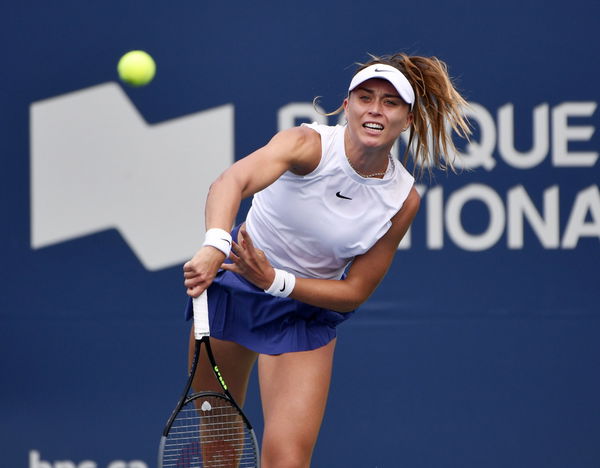
Aug 9, 2021; Montreal, Quebec, Canada; Paula Badosa of Spain serves against Viktorija Golubic of Switzerland (not pictured) during first round play at Stade IGA. Mandatory Credit: Eric Bolte-USA TODAY Sports
That pressure only increased as she moved from a successful junior career into the professional ranks. After winning a junior Grand Slam, expectations skyrocketed, but the reality of the tour was far more demanding. Badosa explained that the transition was tough and isolating, calling tennis “a very lonely sport,” which made coping with those challenges even harder.
Sharapova was one of Badosa’s idols growing up, so it initially felt flattering. Back in 2021, she responded lightheartedly to one of those comparison posts by saying, “I wish I could be as amazing as her,” calling it a “good comparation.”
Ultimately, as Badosa began to break through on tour, many fans and media outlets drew parallels between her and the former world No. 1, both in playing style and presence.
Those comparisons only intensified after Paula Badosa won the French Open junior title in 2015. Much like Sharapova, who famously won Wimbledon at just 17, Badosa was seen as a future superstar. Sharapova’s legacy, on the other hand, went beyond her five Grand Slam titles, as she was also known for her global fame and off-court success.
Because of that, many believed Badosa was destined to follow the same path. But as time went on, the constant comparisons became more of a burden than a compliment, adding unnecessary expectations to her already demanding journey. Interestingly, Badosa has previously acknowledged her mixed feelings about it.
Paula Badosa opens up on why the comparisons became a struggle
Paula Badosa has previously admitted that the constant comparisons early in her career became overwhelming. While she respected being likened to a tennis legend, she explained that the expectations placed on her were difficult to manage.
“It bothered me not because they compared me to a legend who played tennis very well and was also very elegant, but it put pressure on me that I was not used to that and I did not know how to manage it,” she told Marca back in 2023.
Despite that pressure, Badosa enjoyed a rapid rise in 2021. She reached the French Open quarterfinals, made the fourth round at Wimbledon, and capped off the year by winning the biggest title of her career at Indian Wells. That success pushed her into the WTA top 10 and signaled her arrival among the game’s elite.
Her momentum continued briefly in 2022, as early-season results helped her climb to a career-high world No. 2. However, her form dropped later in the year, and a difficult stretch saw her lose eight of her final ten matches, causing her to slip out of the top 10.
Injuries then disrupted her progress in 2023. She missed the Australian Open with an abductor issue and struggled to regain consistency. Badosa admitted it “cost me a lot,” explaining that injuries and illness made it hard to recover physically and to play matches back-to-back.
Regardless of the setbacks, Paula Badosa remains focused on the future. As she works toward her comeback in 2026, her long-term ambition remains clear: she is determined to put her struggles behind her and chase her first Grand Slam title.
Written by

Edited by

Janainah Fazlin Anam