
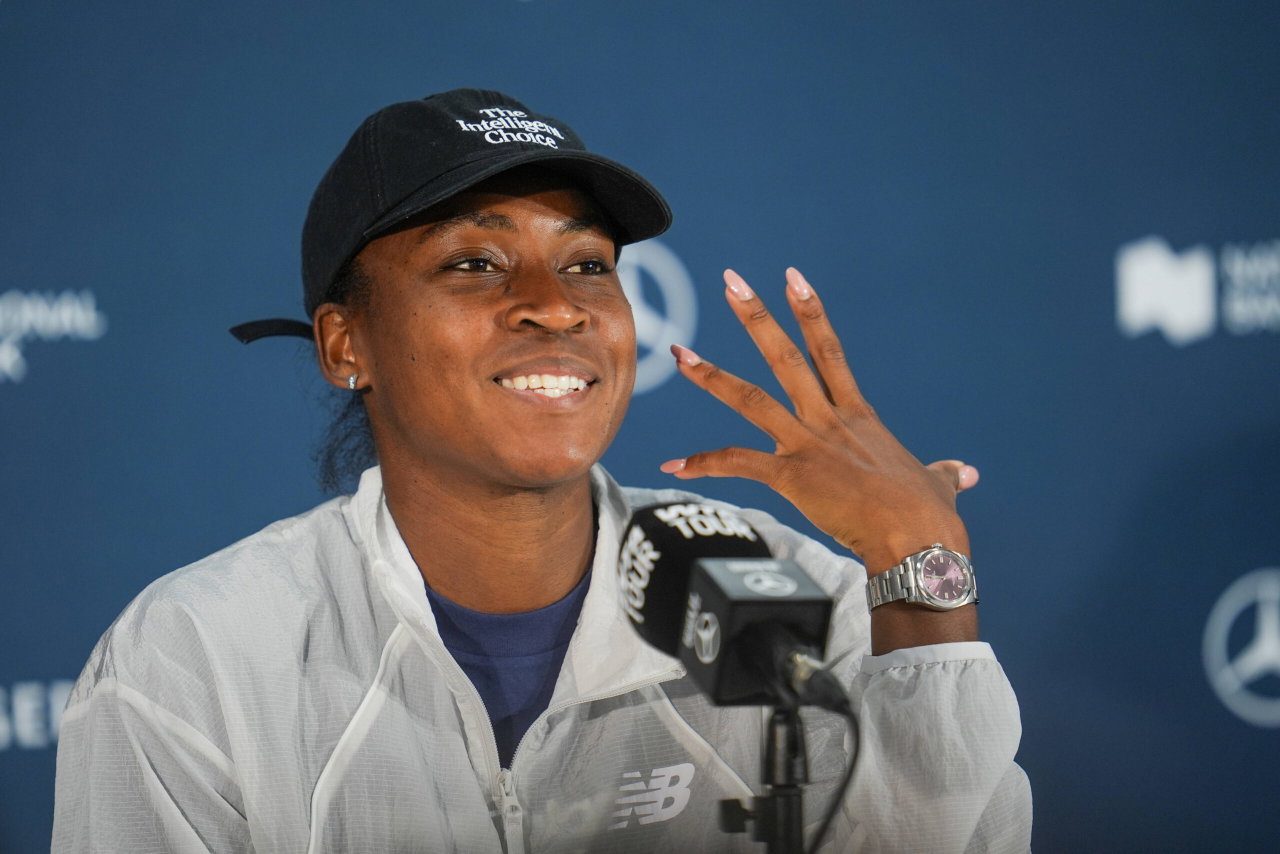
During the 2025 US Open, Jelena Ostapenko’s outburst after her second-round loss to Taylor Townsend was much talked about for all the wrong reasons. And being salty after a loss isn’t something new in tennis. However, Coco Gauff says that what happens after the game is very important to her.
Watch What’s Trending Now!
“It’s just important to show young kids to be gracious in defeat,” said the World No.4 in her US Open media day press conference. “Even if you’re not in sports, you’re gonna experience failure at some point.”
Gauff has made it clear that losing is part of tennis, but taking responsibility and respecting the winner matters more. The American believes that she would rather learn from defeat than blame someone else, and she makes sure to acknowledge the player who beat her, fair and square.
That was once again the case at Wimbledon this year, when Karolina Muchova ended Gauff’s run in the semifinals after an intense three-set battle.
Gauff was expected to have a strong chance against Muchova, especially after winning 6 of their previous 7 meetings. She also started the semifinal well, taking the first set 6-2, but Muchova fought back and won the second set 6-1. The Czech then held her nerve in the deciding tiebreak, eventually winning 12-10 after Gauff had a match point at 9-8.
Gauff’s shot at the final disappeared when her drop shot landed in the net, leaving Muchova to complete the comeback. While that moment could have left Gauff searching for someone to blame, she instead took responsibility for her decision.
She explained that the return came back to a tricky spot and the bounce caught her off guard, causing her to panic. Gauff admitted that the decision may not have been right, but also understood that these moments are part of tennis. She said she left everything on court, had no regrets, and would use the experience to make better decisions in other Slams.
Gauff then turned her attention toward Muchova, making sure the winner received the credit she deserved.
“She’s someone that deserves more success with how talented she is,” she said in the post-match press conference. “We have the head-to-head that’s leaned my way, but she’s not an opponent you want to face at any point in the tournament. I have so much respect for how she plays and how she is off court.”
“It’s a match I’m gonna remember for my career. And it sucks to be on the losing end. But walking off the court I was like…that was a lot of fun,” she added. Fans praised her comments, appreciating how she handled falling short even after getting so close.
This was not the first time that attitude had been shown by Gauff after losing an important match. She praised Naomi Osaka after their 2019 US Open meeting, thanking her for encouraging the emotional teenager to join their interview. She also gave credit to Iga Swiatek after losing in Rome in 2024 and Aryna Sabalenka after their Australian Open semifinal.
Gauff has previously said she wants young players to understand that failure comes to everyone, and that is why it is very important to keep your head high and respect the winner. And next time, try to be better.
Sportsmanship moments that have followed the Coco Gauff way
Coco Gauff has proven why being a good sportsman not only off the court but on the court as well is important; there are others who have followed in her footsteps.
Some of the best moments in tennis this year have come after the game finished and the players shook hands.
Bianca Andreescu showed this at Roland-Garros qualifying, when she consoled 17-year-old Daphnée Mpetshi Perricard after beating her 6-3, 6-2. The French teenager was in tears following the loss, with the result clearly hurting her more as it was in front of her home fans.
Andreescu then encouraged the crowd to applaud the teenager before walking over and offering some comfort.
Months earlier, Aryna Sabalenka found herself in another heartbreaking Australian Open final against Elena Rybakina. Sabalenka led 3-0 in the deciding set, but Rybakina responded by winning five consecutive games.
Rybakina eventually completed a 6-4, 4-6, 6-4 victory, leaving Sabalenka watching another title in Melbourne slip away from her hands. Even after the defeat, Sabalenka congratulated Rybakina and praised her performance during the trophy ceremony.
These moments stood out because both players showed respect when emotions could easily have taken over.
Andreescu focused on a teenager struggling after defeat, while Sabalenka gave Rybakina credit after a painful final loss. Neither gesture changed the result, but both added something meaningful to the world of tennis.