
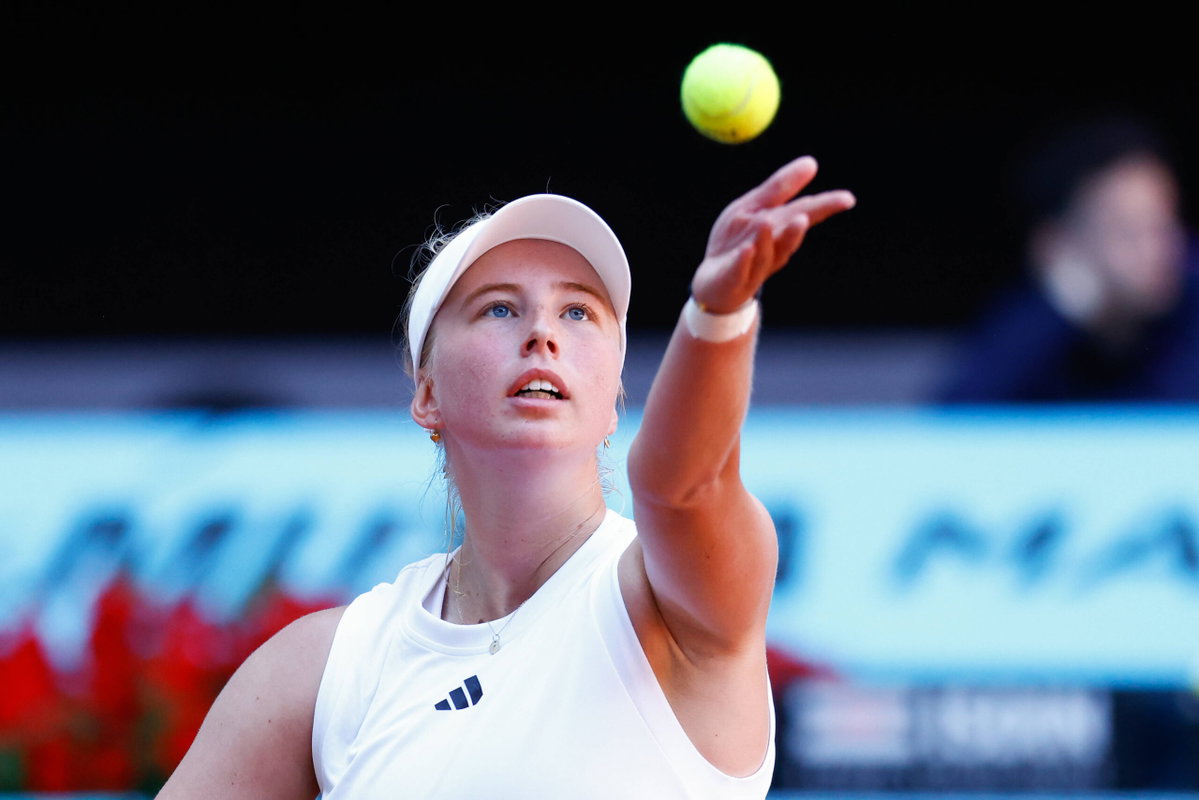
In countries where tennis is woven into the culture like the US or the UK, young talents inherit a pathway built by champions, major academies, and opportunity, but Denmark has rarely offered that same privilege. Overshadowed by soccer, handball, or cycling, the game has often lived on the fringes of the nation’s sporting identity. Now, Clara Tauson has peeled back the curtain on that hard reality, speaking candidly about the sacrifices and hardships of pursuing tennis from a country where the road is far less traveled.
Watch What’s Trending Now!
“Tennis can be brutal,” Clara Tauson wrote in an article published by Ubi Tennis. “Defeats hurt a lot, travel can become exhausting and the pressure overwhelming. Sometimes people underestimate how difficult this path can be. Social media makes everything seem glamorous: the trips, the stadiums, the photos,” she added later.
The Danish ace then shifted focus toward the hidden side of life on the WTA tour. She emphasized that the polished image often presented online rarely reflects the complete picture that players face offline.
“But the reality is very different, at least for most of us. The weeks you exit the tournament early. The days when your body hurts, the weeks when your self-confidence fades.”

Il brutto anatroccolo alla fine si trasformò in un cigno - Clara Tauson ubitennis.com/blog/2026/06/1…
Despite the hardships, the 23-year-old Dane expressed pride in her journey and the country she represents. “I’m proud to be Danish. Proud to have chosen my passion for tennis as a career, even though I come from a country where tennis is by no means the most obvious path.”
For players like Clara Tauson, role models such as Caroline Wozniacki continue to provide inspiration. Wozniacki’s triumph at the 2018 AO beating Simona Halep remains proof that Danish players can succeed on the biggest stages.
Yet, the dream of becoming a professional tennis player often collides with the harsher realities of the sport. The constant battle against opponents is only one part of the challenge that views can see.
There is also an uglier side to tennis that occasionally surfaces among the fans. People whine about the game, complain, throw and smash rackets on and off the court, curse and threaten umpires, and even make derogatory racial remarks, exposing a troubling aspect of the game itself.
These experiences are not limited to players from countries where tennis lacks widespread support as Tauson said. Competitors across the entire tour even from the ATP side as well, often find themselves navigating similar pressures and uncomfortable situations.
Another example emerged recently at the French Open when Ksenia Efremova opened up about feeling isolated within the junior circuit. The 17-year-old French tennis player revealed that fellow junior players had stopped wanting to train with her, particularly after her recent success at the junior level.
And beyond the emotional demands of the sport, financial pressures also remain a significant concern. There is a substantial gap in how easily players can sustain themselves depending on their rankings.
Those inside the top 50 in both the WTA and ATP rankings often earn considerable sums, players ranked between 50 and 100 generally make a comfortable living, but life outside the top 100 can become incredibly difficult.
Added to those challenges is the rise of social media hostility, which many players now describe as one of the most chaotic and mentally exhausting aspects of competing on tour today.
How social media trolling inflicts severe emotional harm on tennis players
Last year, following her 4th-round defeat at the clay court Slam, Jessica Pegula exposed one of the darkest realities of being a professional tennis player. The American ace shared screenshots of abusive messages she allegedly received from bettors after the loss against French wild card Lois Boisson.
“These [bettors] are insane and delusional,” Pegula wrote in her IG. “And I don’t allow dms and try to remember when to shut my comments off during tournament weeks but they always find a way to my timeline,” she continued.
“This stuff has never really bothered me much but does any other sport deal with this to our level? I’d love to know because it seems to be [predominantly] tennis?? It’s so disturbing.”
Pegula’s experience is far from an isolated case on the tennis tour including both the WTA and ATP side. Several players have previously spoken about the emotional burden caused by social media hostility.
Former US Open champion Sloane Stephens once revealed that she had received “2,000-plus messages of abuse/anger” after her exit from the 2021 US Open. Britain’s Katie Boulter has also opened up in 2025 about the darker side of online interactions.
And alongside social media abuse, players continue to raise concerns over disparities in prize money between ATP and WTA tennis.
Now, with Clara Tauson sharing her own perspective on the hardships of being a professional tennis player in the current generation, the conversation has again gained further momentum. And despite the criticism, pressure, and constant scrutiny, the grind of the beautiful game continues for players determined to chase their dreams.