
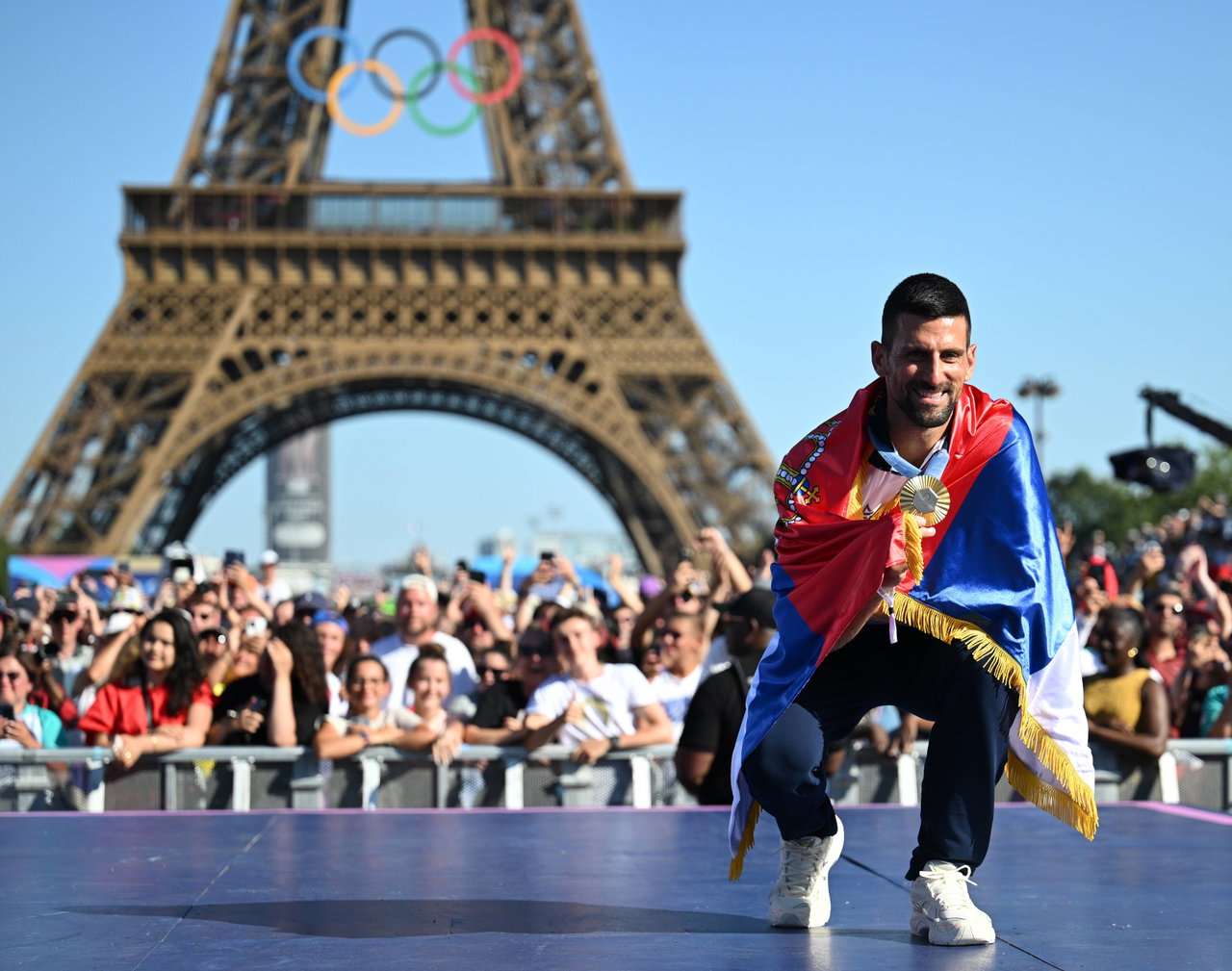
The demands of the tennis calendar have been a recurring point of debate in recent years, with several players voicing concerns over its relentless schedule. And it doesn’t look like that conversation will die down anytime soon. With the dates for the tennis events at the 2028 LA Olympics now confirmed, top players are set to face another scheduling challenge, having to head to LA just days after competing at one of the biggest Tour-level events of the season.
Watch What’s Trending Now!
The tennis competition at the 2028 LA Olympics will be held from July 19 to July 28, with the schedule beginning as follows:
- July 19: Mixed doubles begins
- July 20: Singles competition begins
- July 21: Men’s and women’s doubles begin
However, with Wimbledon 2028 set to conclude on July 16, players who reach the latter stages of the Championships will have only a three-day turnaround before heading to Southern California. In that short span, they will need to travel across continents, adapt to a completely different time zone and playing surface, and get ready to compete for an Olympic gold medal.
The tennis schedule has become even more hectic, with players having to play 20 (ATP) and 21 (WTA) mandatory events a year, or face the authorities, docking ranking points. In fact, top players like Aryna Sabalenka and Iga Swiatek voiced their concerns about the current scheduling regulations earlier this year, citing the need to rest their bodies to avoid injuries, even if it meant losing a few points.
The Belarusian also skipped the mandatory WTA 1000 events in Qatar and Dubai, and prioritized her recovery, which saw her win the Sunshine Double the next month.
One factor working in the players’ favor is that the Los Angeles Olympics will be held at the Carson Tennis Center on hard courts. Unlike the 2024 Paris Olympics, where players had to transition from grass at Wimbledon to clay at Roland Garros, the 2028 schedule requires just one surface change, from grass to hard courts.
Even so, the tight turnaround is still likely to test players physically and mentally, especially after the demanding Wimbledon fortnight.
Multiple surface switches were challenging for players during the 2024 Olympics
As it stands, the turnaround from clay to grass is very short, with the grass-court season featuring a handful of events over a month, which concludes in Wimbledon. The technical differences of the two surfaces are one of the toughest challenges for the players to get a grip on in such a short time. And the top players at the 2024 Paris Olympics faced an even tougher challenge.
After going through the usual clay to grass switch on the Tour, players had to make adjustments to play at Roland Garros once again, before going back on the hard courts once again.
Multiple surface switches meant that top players had to change their running and sliding patterns, shots selection, rally lengths, and a whole other set of changes to their playing style within a very short period of time, which turned out to be a recipe of injuries and burnout. In fact, Sinner and Sabalenka cited surface changes as one reason for their 2024 Olympic withdrawals.
The biggest example of burnout was that of Carlos Alcaraz, who won the Channel Slam and then reached the Olympic final. But the Spaniard struggled during the hard-court swing, as he lost to Gael Monfils in the opening round in Cincinnati, followed by a shock loss to Botic Van De Zandschulp in the second round at the US Open. Even Novak Djokovic took a long break after his Olympic glory, following which he too had an early exit at the US Open.
Should the dates stay the same for 2028, players will once again have to make a tough choice of playing at a prestigious event like the Olympics or managing their workload for the rest of the season.