Imago
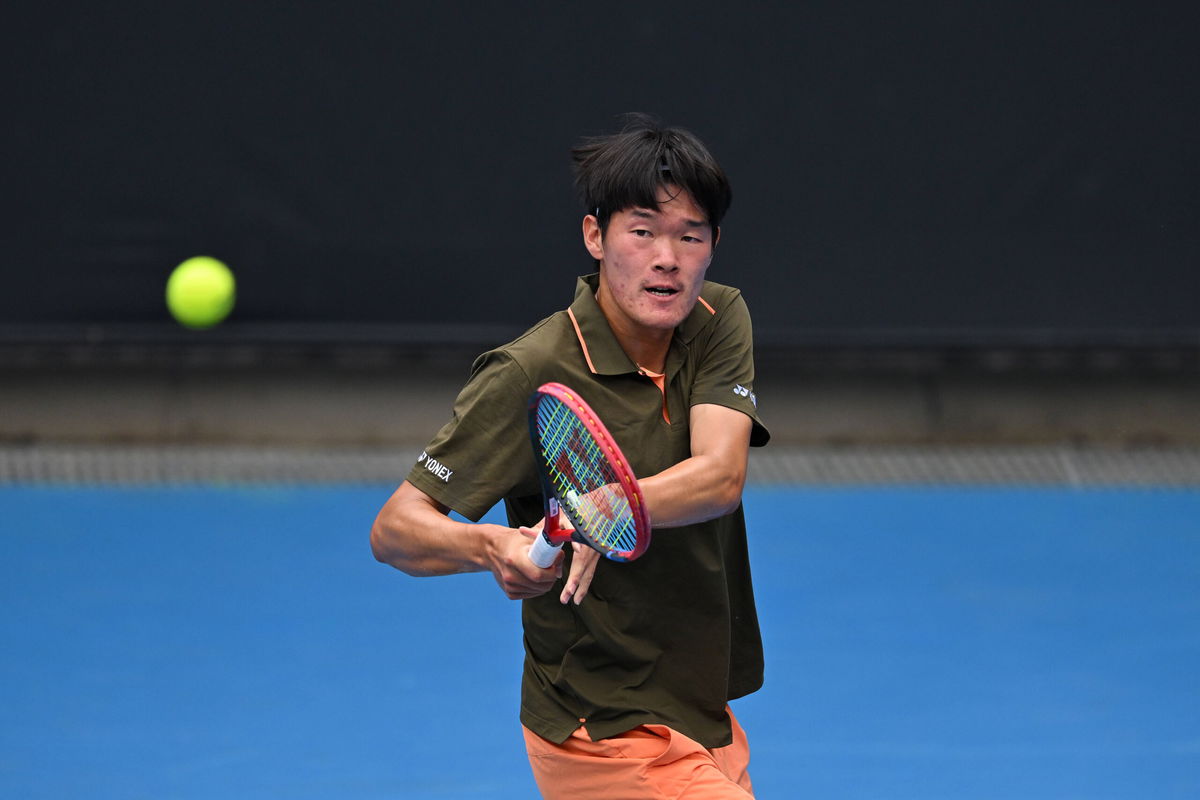
TENNIS AUSTRALIAN OPEN QUALIFYING, Michael Zheng of the USA in action against Cruz Hewitt of Australia during their qualifying match for the Australian Open tennis tournament at Melbourne Park in Melbourne, Tuesday, January 13, 2026. NO ARCHIVING, EDITORIAL USE ONLY MELBOURNE VICTORIA AUSTRALIA PUBLICATIONxNOTxINxAUSxNZLxPNGxFIJxVANxSOLxTGA Copyright: xJAMESxROSSx 20260113145372253717
Imago
TENNIS AUSTRALIAN OPEN QUALIFYING, Michael Zheng of the USA in action against Cruz Hewitt of Australia during their qualifying match for the Australian Open tennis tournament at Melbourne Park in Melbourne, Tuesday, January 13, 2026. NO ARCHIVING, EDITORIAL USE ONLY MELBOURNE VICTORIA AUSTRALIA PUBLICATIONxNOTxINxAUSxNZLxPNGxFIJxVANxSOLxTGA Copyright: xJAMESxROSSx 20260113145372253717
Michael Zheng, a star at Columbia University, made it to the second round of the Australian Open after winning three qualifying matches and his first-round clash. However, tough competition from Corentin Moutet and an injury ended his campaign on January 21. More than a month after the tournament concluded, he has now claimed his prize money of about $150,000. The twist, though? It’s that one condition.
As NCAA rules limit the prize money a tennis player can claim in a year, Michael Zheng was not provided with his cash prize after exiting the Australian Open. However, he was able to claim the money now because he is just months away from graduating in the spring and does not plan to represent Columbia University next year.
“I can take it just because the way the rules are stated, it’s the calendar year, the prize money. So if I took it, and I’m technically a pro because I’ve taken more money, I wouldn’t be eligible for next year. But I’m graduating, and I don’t plan on playing another year of college,” Zheng told Front Office Sports (FOS).
According to the NCAA’s rules, “Once the individual has reached the $10,000 limit in a particular year, he or she may receive additional prize money on a per-event basis, provided such prize money does not exceed the individual’s actual and necessary expenses for participation in the event.”
Imago
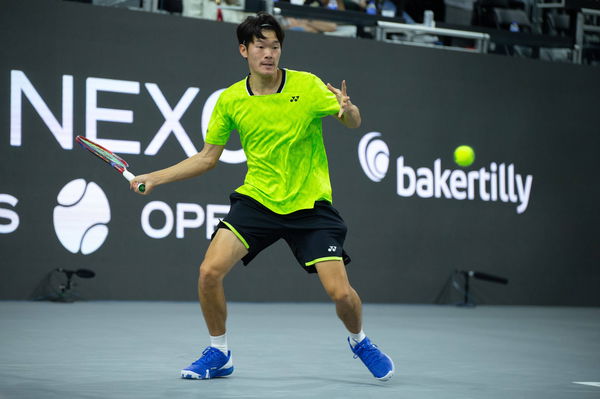
February 9, 2026, Frisco, Texas, USA: MICHAEL ZHENG USA uses a forehand during a menà s singles match at 2026 Nexo Dallas Open at The Ford Center at The Star in Frisco, Texas. Korda defeated Zheng 6:3, 6:4. Tennis 2026: Dallas Open: Korda 6:3, 6:4 Zheng PUBLICATIONxINxGERxSUIxAUTxONLY – ZUMAh193 20260209_zsp_h193_165 Copyright: xDanielxMcGregor-Huyerx
However, the American is confident about not being punished by the NCAA for claiming the cash prize.
“But I’m pretty sure I can keep the money,” he said.
Back in January, Zheng said that he wanted to “double-check” whether he could take the payday without punishment. After a first-round loss at the BNP Paribas Open, the senior said any risk of losing NCAA eligibility would come next year—by which time he will have already graduated with a psychology degree from the Ivy League and turned professional.
After a review of the rules, a Columbia spokesperson told FOS that they determined that Zheng could keep the money if he spent it on tennis-related expenses by the end of the year. Now, there’s his one condition.
Diving further into the background, late last month, court filings showed that the NCAA settled with UNC star Reese Brantmeier and former University of Texas star Maya Joint on a landmark class action lawsuit. The tennis players sued the NCAA over its prize money rules for tennis players, calling the restrictions “illegal and unenforceable.”
Further, Zheng also confirmed that he is “not making any money in school” despite the changes in NIL rules since 2021.
“It’s just the way it works in the Ivy League and through tennis, obviously,” Zheng said.
But that has not held back the 22-year-old from working incredibly hard. And it showed in Melbourne as he got through the qualifiers and made it to the second round of the Australian Open. His elimination was quite heartbreaking as he had to withdraw during the match due to an injury. He did have a great chance of making it to the third round and setting up a clash against Carlos Alcaraz, but his body had other plans.
Despite the early exit, Zheng’s performance at the Grand Slam didn’t go unnoticed. He began his campaign by stunning Australia’s Cruz Hewitt 6-3, 6-3 and then claimed a hard-fought victory over Chilean Marcelo Tomás Barrios Vera 6-4, 6-7, 6-2 in the second qualifier. His third encounter also went down to the wire, but he clinched it 4-6, 6-3, 7-6 over Slovak Lukas Klein. This result led to a clash against his fellow countryman, Sebastian Korda, in the first round.
An intense five-set match followed that saw both players give it their all. After losing the first two sets, Korda made an impressive comeback and won the next two sets. But it just wasn’t meant to be his day as Zheng pushed through in the final set and won the match 6-4, 6-4, 3-6, 6-7, 6-3. The run would eventually come to an end in the second round when he came up against France’s Corentin Moutet.
After winning the first set 3-6, Zheng looked to be in control, and it appeared as if another win was on the cards. However, Moutet took the next set 6-1 as Zheng struggled with a left thigh issue. Though he carried on, the Frenchman went on to take the third set 6-3 before Zheng decided to withdraw from the match after being 2-0 behind in the fourth.
Imago
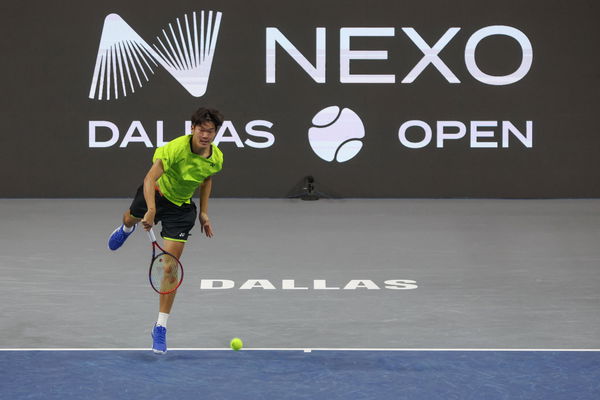
FRISCO, TX – FEBRUARY 09: Michael Zheng USA serves during the Nexo Dallas Open on February 9, 2026 at the Ford Center at The Star in Frisco, TX. Photo by George Walker/Icon Sportswire TENNIS: FEB 09 Dallas Open EDITORIAL USE ONLY Icon26020968
The youngster’s performance at the Australian Open just showed how far he had come, even before completing his graduation. He will be one to watch as he continues to progress.
While Michael Zheng’s display in Melbourne was indeed memorable, it raises the question of whether he was able to maintain that form in the competitions that followed.
Michael Zheng fails to impress after the Australian Open
The 22-year-old was expected to make a powerful impression at the Dallas Open in February. He once again came up against Korda in the Round of 32, but this time it was the latter who advanced by winning the match 6-3, 6-4. After a dismal outing, Zheng looked to improve his fortunes at the ongoing Indian Wells Open.
However, the same fate followed him there as well, as he lost to Czechia’s Vit Kopriva 7-6, 7-5 in the Round of 128. It is safe to say that Zheng’s last two outings haven’t gone as planned, as he lost in straight sets on both occasions.
It remains to be seen if he will be able to pick up his form in the next ATP 1000 tournament, which will be the Miami Open and will begin on March 17.
Related Newsletters