
In January, two tragedies stunned Palm Beach County’s senior tennis leagues and exposed critical medical gaps. One player suffered a fatal heart attack when a defibrillator could not be found in time, while another died a day after continuing play following a head injury. Now, shaken officials are moving swiftly to introduce stronger medical protocols to protect senior players.
Watch What’s Trending Now!
Stan Kanter, president of the Palm Beach County Seniors Tennis League, recently addressed a serious concern. He sent an email to more than 2,000 league participants.
In the email, Kanter wrote, “Both of these (deaths) could possibly have been avoided if players were aware of medical protocols.” He urged communities to take immediate action. Teams were asked to hold meetings to discuss emergency procedures.
Kanter also stressed the importance of preparedness during matches. Players should know how to use defibrillators. He also reminded them to stay hydrated, especially on hot days.
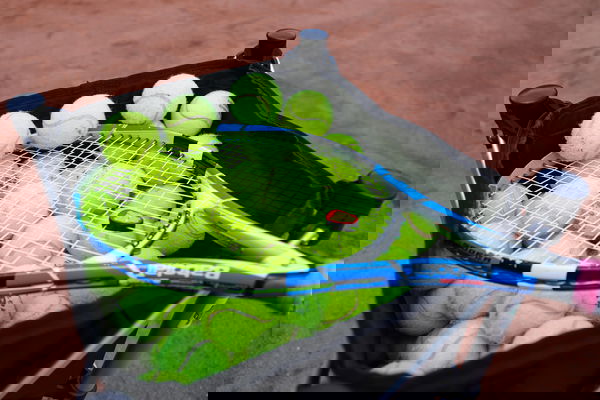
Imago
Russia. Ekaterinburg. June 25, 2025. Tennis racket and balls RazmikxZackaryan
Speaking to The Post, Kanter said the recent tragedies forced the league to reflect. The two fatalities in January raised serious concerns. League officials began reviewing safety practices.
He shared an important reminder about age and physical limits. “We all have to remember that we are not 20 years old anymore,” he said. He emphasized awareness and responsibility.
Kanter added another key message for players. “This is about common sense. It is vital that players listen to their bodies and stop playing if they feel ill.” The advice was directed at all participants.
The Seniors Tennis League includes players aged 55 and older. Teams come from different communities across Palm Beach County. The league remains competitive despite the age group.
Another organization, the Grand Slam Tennis League, operates in a similar way. It includes players aged 45 and above. Many participants are in their 70s and even 80s.
Fatal incidents in tennis have occurred before, but they are rare. Years often pass without a serious case. However, two deaths in a single month are highly unusual.
There have also been past emergencies involving heat stroke or cardiac arrest. In several cases, quick medical action and defibrillators saved lives.
Brett Maynard saves 79-year-old Al Pollack using a defibrillator
Last year, tennis pro Brett Maynard was in the right place at the right time. He works at the 55-plus community of Banyan Springs near Boynton Beach. His quick action helped save 79-year-old Al Pollack.
Pollack collapsed on January 14 during a Grand Slam league match. He suffered a heart attack while playing doubles. The match was being held near Boynton Beach Boulevard and Military Trail.
Maynard was keeping score because the match had gone into a third-set tiebreaker. He was standing only a few feet away. When Pollack fell, he reacted immediately.
He began performing CPR and pumped as hard as he could. Pollack did not respond at first. Maynard quickly called for help and asked someone to dial 911.
He also asked for the nearby defibrillator. Once it arrived, Maynard used the device to shock Pollack’s heart. Soon after, Pollack began to respond.
According to Maynard, Pollack opened his eyes and spoke. He asked where he was and said he felt fine. Shortly after, Palm Beach County Fire Rescue arrived.
Paramedics placed Pollack on a stretcher and took him to the hospital. The timing of the rescue was remarkable. Maynard had completed a refresher course just the night before.
“It had been about two years since the last time I took a course, and I decided it was time to get some more training,” Maynard said. “Little did I realize that 12 hours later I would be relying on what I learned to save the life of someone.”
At Bethesda Hospital East, doctors found a serious condition. Pollack had a 90% heart blockage and required treatment. He spent four days in the hospital and received a pacemaker, two stents, and a defibrillator.
Pollack has since recovered and says he is about 80% back to normal.
Following the recent incidents, both leagues are tightening medical protocols and expanding defibrillator access and training, while officials work to enhance safety standards across senior tennis competitions.
Written by

Edited by

Snigdhaa Jaiswal