
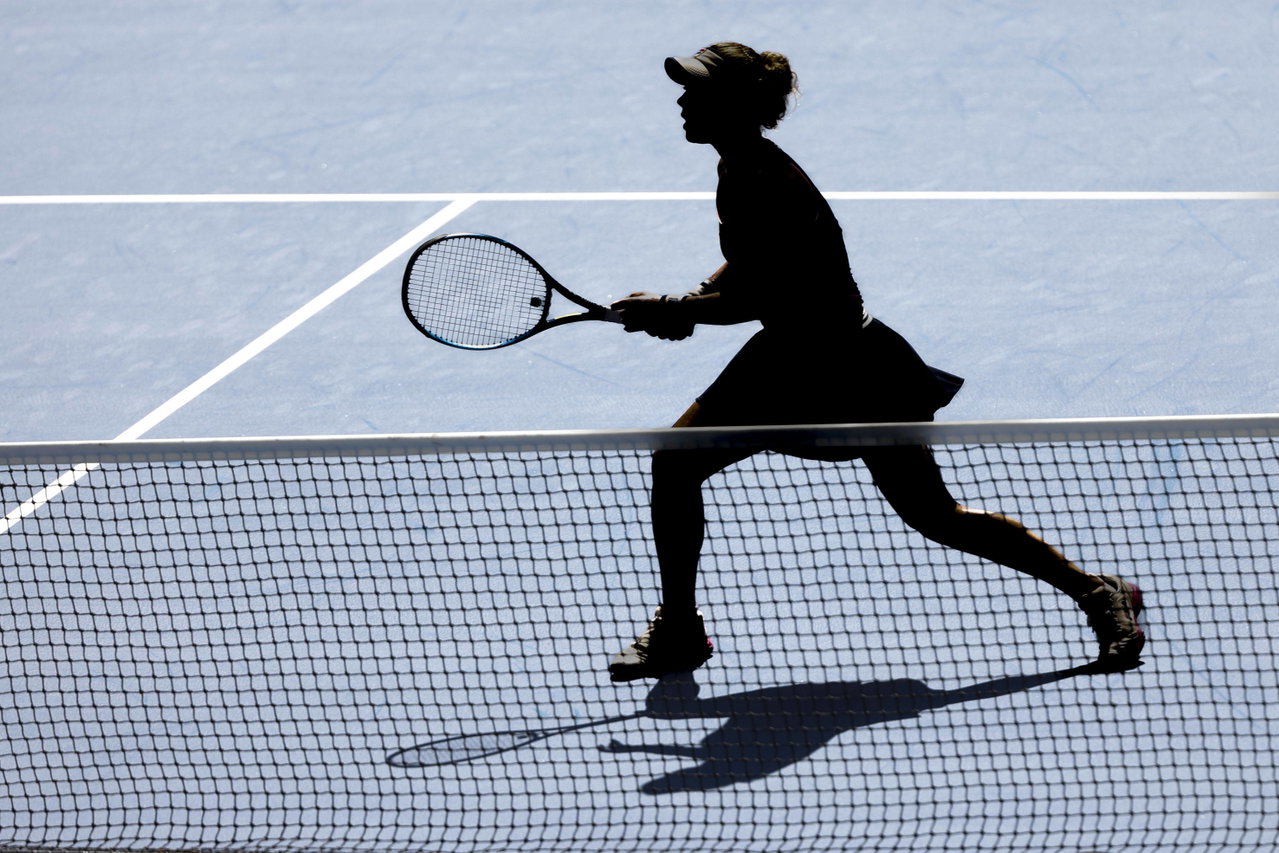
Suing the WTA for $20 million was the only avenue Tara Moore felt she had left after being handed a four-year doping ban in 2025. However, that hope was dealt a hard blow on Tuesday (September 22), when a US judge found no merit in her case, as reported by the BBC website.
Moore sued the WTA on the grounds of negligence, as she felt the organization failed to provide proper warnings about the risk of meat contamination in South America. Moreover, Moore put the existing legal framework of CAS on trial, as she felt the proceedings did not give her the benefit of the doubt and instead assumed her guilt. However, the US court found no legal precedent to overrule the original decision and dismissed the claims.
Moore’s doping controversy has been going on for four years now, with the British player failing a doping test back in 2022, while playing in the WTA event in Bogota, with two prohibited drugs, Boldenone and Nandrolone. Under standard anti-doping protocols, a provisional suspension was imposed on the WTA Pro, meaning she could not participate in any WTA-sanctioned events and effectively froze her career for the time being.
However, Moore found relief when an independent tribunal found her not guilty in late 2023. The British player argued that her failed tests were the result of meat contamination, a common trend in competitions held in South America, which was the main basis for the tribunal’s dismissal.
Moore played eight matches on her return to the Tour in 2024, playing at lower-level ITF events. However, this is when the ITIA sought CAS (Court of Arbitration for Sport) intervention in the case, which led to the verdict being reversed and Moore being handed a four-year ban. As per the CAS ruling, while the meat contamination was attributed to Boldenone, Moore was unable to provide definitive proof of the origin of the Nandrolone.
Meat contamination is a well-known subject in tennis now, with other players also facing similar issues, especially while being in competitions in South America. Colombian tennis star Robert Farah also tested positive for Boldenone, but was cleared after proving the meat contamination. However, according to Moore, there were no prior warnings from the WTA during her positive test. Incidentally, after Moore and two other players tested positive in April of 2022, the ITIA issued an official directive in October of that same year, warning players to avoid meat-based products while competing in South America.
From being tested positive to being cleared of wrongdoing, only for the ax to fall again, Tara Moore has experienced it all. However, the British player has not been alone in her fight, as some of the biggest names in the sport have voiced their support for her.
Tara Moore Has Had the Support of Other Players
While fighting her anti-doping battle, Tara Moore has received support from some of the sport’s top stars. Former World No. 1 Simona Halep, who had her own doping controversy, sympathized with the British player, pointing out the harsh sanctions a player faces in the event of a failed test.
“Well, if I’m right about the name, Tara Moore, is the person who got suspended and then she got zero and she lost everything. Can you believe she lost everything? And now she has to start from zero without any fault. This, for me, is unacceptable, because we work our whole life, we dedicate our life to sport, and a few people, who don’t know you, take some test, and they judge only on scenarios,” said Halep during a 2024 interview with ‘We Are Tennis’. “I was judged on scenarios about the blood. In the urine, it can be contamination. The level was so low. Two days before, I was negative, so there was no time to do doping.”
Even Novak Djokovic drew attention to the Tara Moore case, when the Serb spoke about the inconsistencies in the legal process when dealing with players with different rankings. Back in 2025, when Jannik Sinner reached a settlement with WADA that resulted in a three-month suspension, Djokovic spoke about existing inequalities, mentioning Moore’s name.
“Simona Halep and Tara Moore and some other players that are maybe less known, who have been struggling to resolve their cases for years, or have been banned for years,” said Djokovic at the Qatar Open last year. There is so much inconsistencies between the cases.”
As for Moore, the ban will end in December next year. Even though she received a four-year ban in 2025, the ITIA had taken the previous nineteen-month suspension into account and adjusted the length of the ban accordingly.