
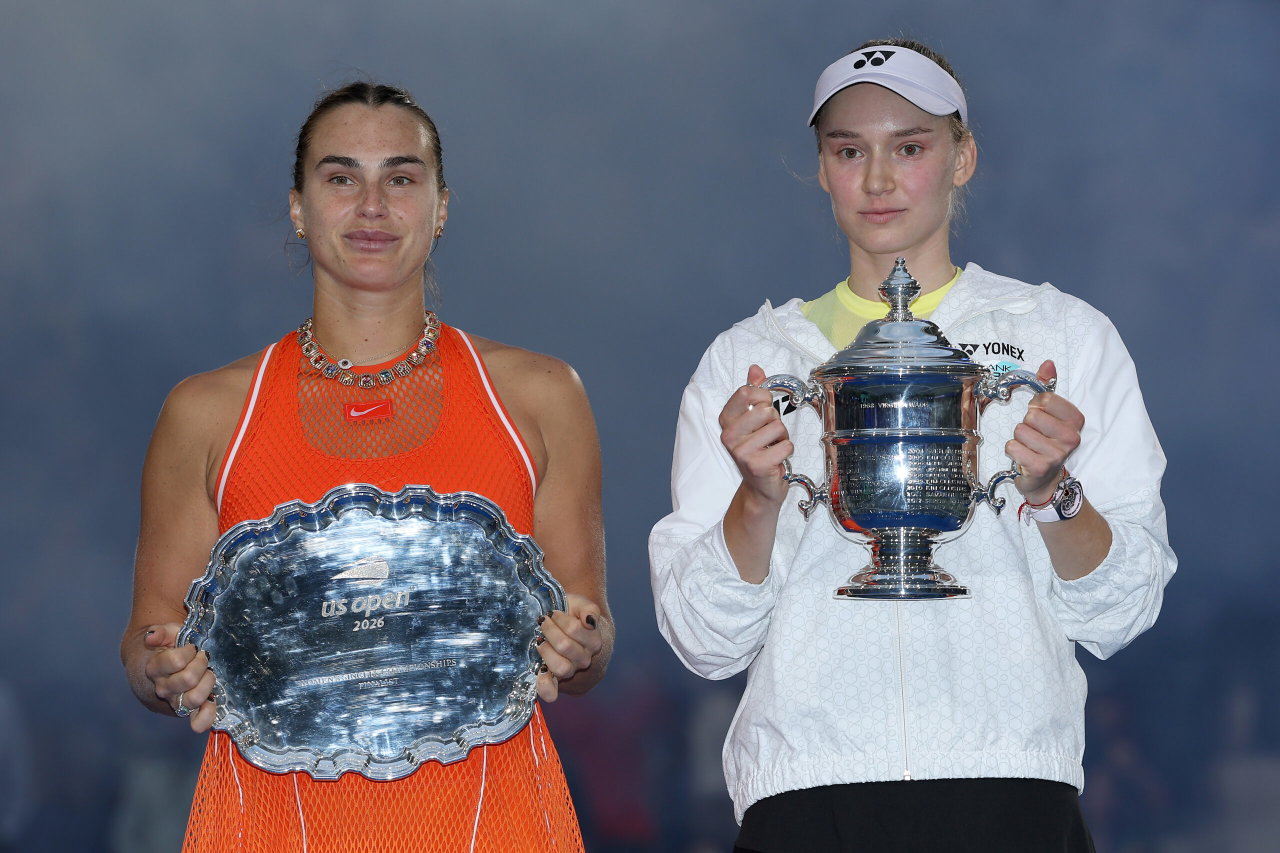
The US Open final was as poetic as it can get: The top two players in the world, fighting it out for the final Grand Slam of the season, in a full-circle moment from their season-opener clash at the Australian Open, where Elena Rybakina edged past Aryna Sabalenka in three sets.
Watch What’s Trending Now!
Nine months later, the sequel played out at Arthur Ashe, and the new world No.1 defeated the two-time defending champion 6-4, 5-7, 6-2 to win her first US Open and third Grand Slam title.
The clash was historic, marking the first time since 2013 that the tournament’s top seeds met in the final. The ultimate showdown had all kinds of moments. Let’s unravel them in detail.
1. A code violation that set the tone for Sabalenka’s afternoon
Rybakina struck first, breaking in the fifth game to take the lead in the opening set, and Sabalenka’s frustration quickly came out in a code violation, slamming a ball into the stands. The top-seeded Belarusian double-faulted to hand the break to Rybakina, and right after the break of serve, she sent the ball halfway to Manhattan. She got the code violation for ball abuse, just under 30 mins in the match.
The frustration resurfaced in the seventh game, when she faced another break point and hit the bottom of a courtside camera, narrowly avoiding a point penalty. However, she managed to hold that game, trailing 3-4.
2. Rybakina wins a set while landing just 27 percent of first serves
The most bizarre statistic of the entire final belonged to the opening set. Rybakina managed only 8 first serves in the entire set, a mere 27 percent of first serves in play, yet still cruised to a 6-4 win. She made the most of what she had, winning 7 of those 8 points, which included 3 aces.
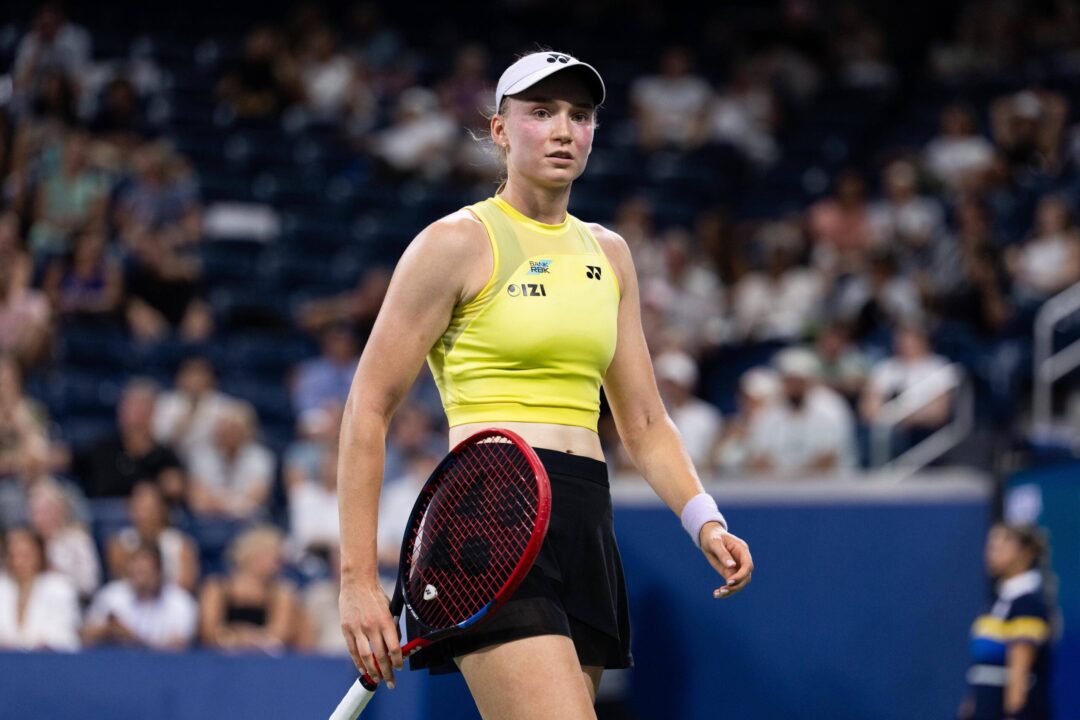
Rybakina could win the set despite a poor first serve due to Sabalenka’s unforced errors. The 28-year-old looked completely out of her place in the opening set, hitting every alternate ball into the net or sending it long. She eventually piled up 15 unforced errors, whereas Rybakina had not committed one until 25 minutes into the match, and ended the opening set with just 5.
3. Sabalenka squanders two set points before finally leveling the match
There were no breaks of serve till the last game of the second set. However, there were moments earlier in the set when things could have been easily wrapped up. Sabalenka held her serve to 40-0 to lead 5-4, and then Rybakina served to stay in the match. The top seed earned two set points with a sensational backhand winner return off the first serve, but Kazakh saved both of them, producing errors from her.
The following game was not easy for the defending champion, as it needed two deuces to hold serve and go up 6- 5 in the set. In the 12th game, Rybakina started with an ace and then scored another at 30-30 to break the deadlock. The second seed went to the net to win the game and take the set to a tie-break, but Sabalenka replied with a backhand passing shot, taking it to deuce. Finally, on the third set point, the Belarusian fired down a backhand down the line on Rybakina’s second serve, clinching the second set 7-5 in 57 minutes.
Even though Rybakina improved her first-serve percentage from 27 to 61, she made some crucial unforced errors, committing 13 in total in the second set.
Sabalenka looked far more stable than she did in the opening set. She took her chances with the shots, and it paid off this time. She had 12 winners in both sets, but the winners in the second set came on crucial moments.
4. Sabalenka’s emotional collapse, and Rybakina’s gracious response
The decider followed the same script as the first set, Rybakina breaking early for a 2-1 lead and riding her patience in longer rallies as Sabalenka’s shot tolerance broke down first. By the closing stages, Sabalenka had played 17 more points on her own serve than Rybakina simply to keep pace, a measure of how much harder she was having to work just to stay competitive.
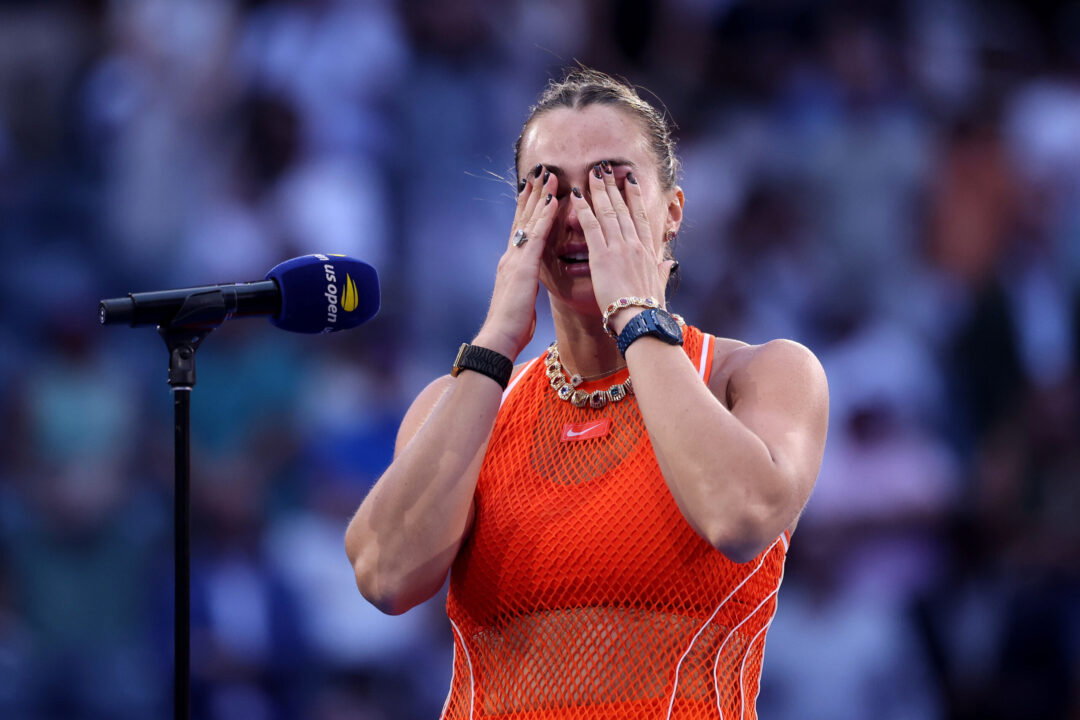
Serving at 5-2, Rybakina double faulted on her first championship point before closing it out with an ace. Sabalenka’s reaction afterward said everything. She sat courtside with her coaching team and fiancé in silence, punched the back of her own chair, told a courtside camera to “f***” off, and smashed her racket before composing herself for the ceremony.
“The last thing I want to do right now is give a speech, but I’ll try my best,” Sabalenka said while holding back tears. “Obviously I’m disappointed, but I want to congratulate Elena on an incredible year, incredible result. I wish I could have performed a bit better, but I guess next year.”
“It’s tough to find words right now, I didn’t expect nothing like this coming to this tournament,” Rybakina, calm throughout even in victory, returned the tribute. “Aryna, you’re a great champion, you push me to such limits. I’m falling in love with New York more and more.”
5. Elena Rybakina winning her third Grand Slam title
The win places Rybakina in rare company. She becomes only the second player since WTA rankings began in 1975 to beat the world No. 1 in multiple Grand Slam finals in the same season, joining Steffi Graf’s 1995 sweep of Roland Garros and the US Open, having already beaten Sabalenka in this year’s Australian Open final too.
She is also the first player since Victoria Azarenka at the 2012 Australian Open to beat former Slam champions in both the semifinal and final of a major, and her third career Grand Slam title puts her alongside Iga Swiatek and Sabalenka as the only players to reach three or more majors this decade. Her US Open record after winning the first set now stands at a perfect 12-0.
While Rybakina was creating history, the American chair umpire Greg Allensworth repeatedly got the emphasis wrong on Rybakina’s name throughout the final. But he eventually got it right as the match progressed.
For Sabalenka, the loss ends her season without a Grand Slam title for the first time since 2022. She won her first Grand Slam against Rybakina in 2023, winning the Australian Open, and that same player has ended her streak in 2026.