
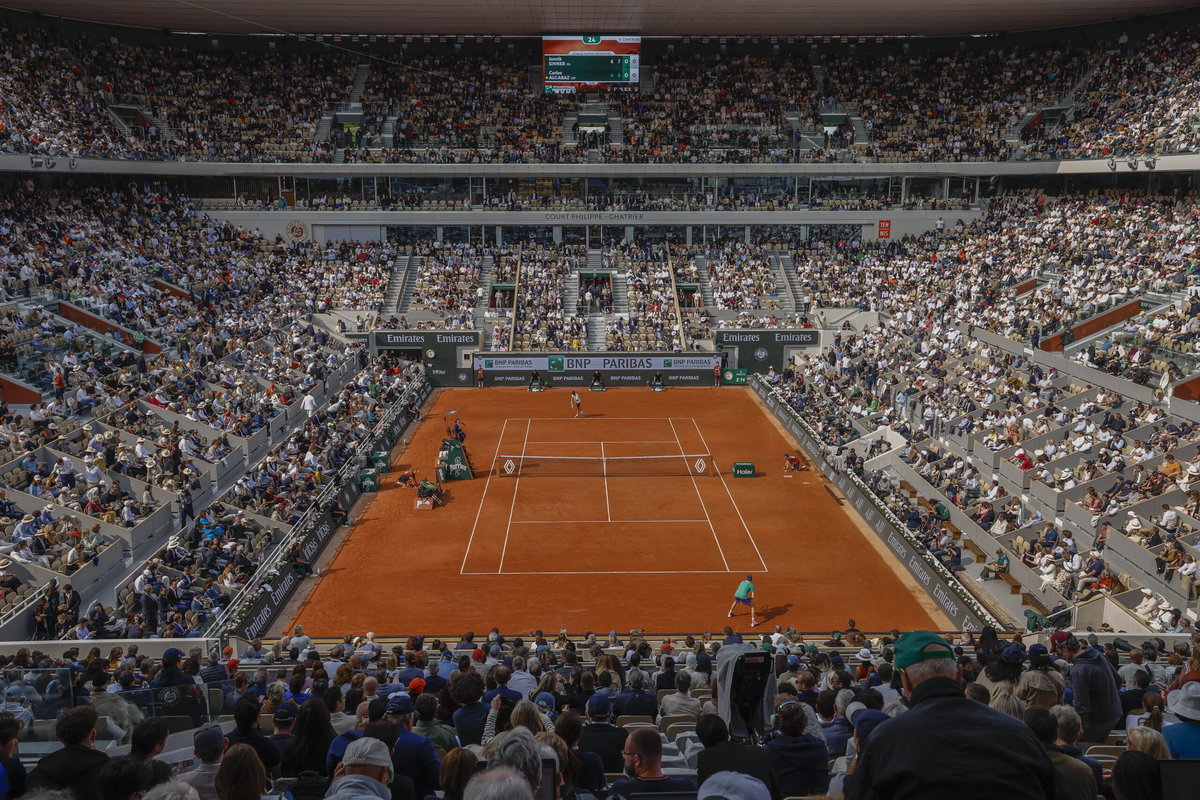
The players’ forum seems to have scored a major victory in the ongoing pay dispute with the Grand Slams, as the French Open became the first Major to agree to a historic measure. After sustained pressure from some of the world’s top tennis players, Roland Garros has become the first Grand Slam to adopt a revenue-sharing model with players.
Watch What’s Trending Now!
As reported by the Guardian, this new measure ensures that the prize money pool at Roland Garros does not increase by fixed amounts at the tournament’s discretion, but rather changes dynamically with the tournament’s overall revenue. Top players like Jannik Sinner, Aryna Sabalenka, and Coco Gauff have been making their case for a 16 percent revenue share at the Majors, with the increase eventually going up to 22 percent by 2030.
This move comes after the players showed their dissatisfaction with the fixed increases in prize money at the French Open this year. That change looked great on paper but reduced players’ overall revenue share. Roland Garros increased its total prize pool by over 9 percent, but with revenues going north of $450 million this year, players’ revenue fell below the 14 percent mark, prompting players to protest by limiting their media time to 15 minutes, a symbolic number given the circumstances. However, now that the French Open has adopted a revenue-sharing model, players will have the leverage to pressure the other three Majors as well.
Since players are a major selling point of these tournaments, the revenue-sharing strategy will help the lower-ranked players by aligning player earnings with the commercial growth of the sport.
With the US Open being the only Major left this season, the pressure will be on the USTA and its new head, Craig Tiley. During his time as the head of the Australian Open, Tiley was vocal about his disagreements with the revenue share model proposed by the players, as he felt that an evolving payout as per the revenue would limit the Slam’s ability to put back money in the tournament for infrastructure development and helping the grassroot tennis in the country, sentiments which were shared by Wimbeldon’s chairman, Debbie Jevans as well.
This new French Open development will now have everyone fix their attention on New York, where players have hinted at boycotts if their demands are not met. The most prominent of them has been Jannik Sinner‘s claims to boycott the much-vaunted mixed doubles event during the fan week. The mixed doubles event was quite a hit for the USTA last year, as the showcourts were packed to watch the top singles players in a unique doubles pairing, which had its own entertainment value as well.
It remains to be seen whether the players will boycott the main event or continue their move to limit media time. Even though it was perceived as symbolic and lacking merit, the French Open‘s decision will give the players the confidence to withstand the pressure and receive the same assurances from the other Slams as well.