
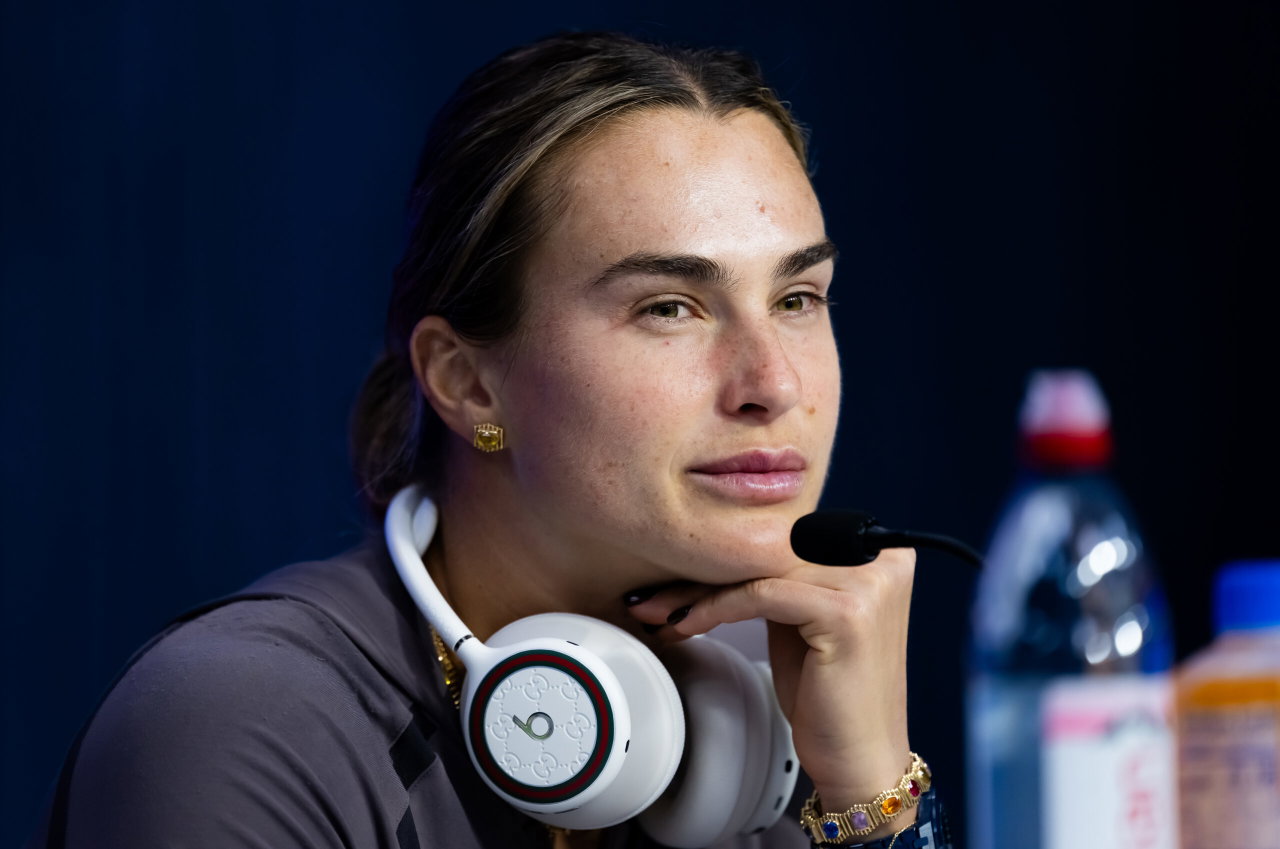
Aryna Sabalenka was not about to let a reporter turn sponsor work into a partying narrative. After her second-round win over Polina Iatcenko, The Athletic’s Matt Futterman described her pre-tournament week as being filled with parties and fun, and Sabalenka shut the framing down almost immediately.
Watch What’s Trending Now!
Jessica Pegula and Madison Keys later backed Sabalenka on The Player’s Box podcast. Pegula said she would have been angry too, while Keys stressed that sponsor commitments before a Grand Slam should not be mistaken for partying.
“Come on, I would’ve been pissed,” Pegula said. “We don’t go to these events. We’re not like partying and getting, like, we’re not like, ‘Yeah, let’s do shots,’ like partying. No, we’re working. Honestly, it’s brands, sponsors, and commitments that you have.” Desirae Krawczyk and Jennifer Brady agreed, calling the question “crazy” and “wild.”
Keys acknowledged that those events can still be enjoyable, but rejected the idea that players treat them like parties.
“It’s also like, okay, yes, it can be fun, because obviously it can be fun to go do new things and stuff like that,” she said. “But also the week before the US Open, it’s like, I would say most of us, if we could, we would just go to practice, go to the site, come back to our rooms, chill, go to dinner with our friends. Like we wouldn’t be adding extra stuff to our schedules.”
Sabalenka’s original reaction showed exactly why the framing bothered her.
“You guys are like a joke,” she said. “Parties, fun. Like why would you even say that? Why would you even think about that? Like what kind of question is that? Just because I posted some activities with brands and you think that I’ve been partying?”
Futterman clarified in the room that he was not suggesting Sabalenka had been partying instead of training, but she remained unimpressed, telling him to “think before you say stuff” before moving on. He later revealed on social media that Sabalenka and her agent had reached out to apologize for the exchange afterward.
And it was hardly Sabalenka’s first awkward media exchange.
In her first press conference of the tournament, she had already gone after what she called “miserable haters” criticizing her online. During the 2024 French Open, veteran broadcaster Mary Carillo also withdrew a double-fault question mid-answer, joking that it was “too stressful” for Sabalenka before clarifying that she was kidding.
Sabalenka is hardly alone. Other players have also faced awkward or completely unrelated questions in press conferences.
When Press Conferences Go Off Script
At last year’s US Open, Iga Swiatek was famously asked whether she had considered wearing hair beads, seemingly in reference to Naomi Osaka’s viral hairstyle, prompting an incredulous Swiatek to respond,
“What kind of question is this, I’m sorry?”
At this year’s Australian Open, both Amanda Anisimova and Coco Gauff were repeatedly asked by the same reporter about American politics and how they felt representing the nation at the moment. Both players ignored the question as it had nothing to do with the sport and was just a question to create controversy.
Carlos Alcaraz had his own moment of confusion at a Laver Cup press conference, when he was asked about the new smart glasses from Meta and his opinion on whether they could find any use for tennis.
Attending press conferences after matches, regardless of the result, is a mandatory requirement that every player must follow. If a player decides to skip the press conference, they are charged a penalty. Historically and uniformly, all players have hated attending press conferences and facing the media, and part of the blame lies with the absurdity of the questions they have to face, but there’s no escape.