“We’ve Been Losers At Times”: Alexander Zverev Makes Strong Statement After Winning First Grand Slam

Add us on Google
“We’ve Been Losers At Times”: Alexander Zverev Makes Strong Statement After Winning First Grand Slam
Add us on Google
Imago
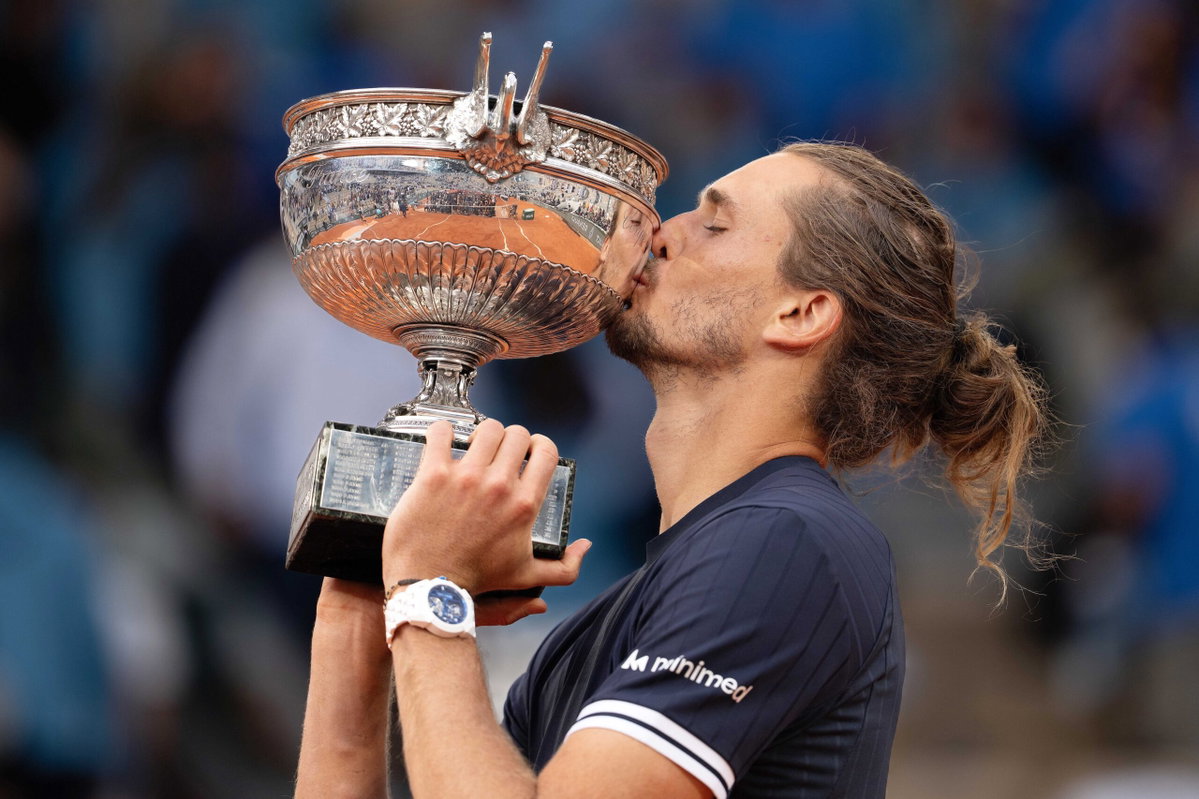
Jun 7, 2026; Paris, France; Alexander Zverev of Germany kisses the trophy after winning the mens singles final against Flavio Cobolli of Italy on day 15 at Stade Roland Garros. Mandatory Credit: Susan Mullane-Imagn Images
Imago
Jun 7, 2026; Paris, France; Alexander Zverev of Germany kisses the trophy after winning the mens singles final against Flavio Cobolli of Italy on day 15 at Stade Roland Garros. Mandatory Credit: Susan Mullane-Imagn Images
A single phrase always followed Alexander Zverev’s name for years: The best player without a Grand Slam. The word ‘choker’ had become a permanent fixture around him with three Grand Slam final defeats, including one in the 2020 US Open final against Dominic Thiem from two sets up. On Sunday, he answered all of it with the Musketeers trophy aloft.
Watch What’s Trending Now!
“We’ve been losers at times in the most important moments. At the end of the day, we’re Grand Slam champions now, and that’s what counts,” he said in his speech after defeating Flavio Cobolli 6-1, 4-6, 6-4, 6-7(5), 6-1 in the 2026 French Open final.
Zverev after winning his 1st Slam at Roland Garros
“We’ve been through injuries. We’ve been through heartbreak. We’ve been through losses. We’ve been losers at times in the important moments. But at the end of the day, we’re Grand Slam Champions now.” ❤️ pic.twitter.com/eYpDJ6ZZsE
— The Tennis Letter (@TheTennisLetter) June 7, 2026
He honestly and unfalteringly accepted everything spoken and written about him, not with bitterness, but with the fullness of the truth. Zverev didn’t try to point out that the criticism was unfair. He swallowed it, sat on it in the wake of three losses over six years, and used Sunday afternoon on Court Philippe-Chatrier to make it irrelevant.
He also took time to thank those who had remained with him through it, recognizing a team that he called the longest in tennis, including his coach cum father and elder brother, who have been with him for 29 years; his physical trainer, who joined him in 2014 when he was only 16; and a best friend who has been at his side for more than 10 years. The choker label is a thing of the past. The Coupe des Mousquetaires is not.
How Zverev finally silenced his Grand Slam demons
The weight of that label had grown heavier with every passing final. Following Thiem in 2020, he had to retire in the semifinals at the 2022 French Open against Rafael Nadal after playing two intense sets due to an ankle injury. He then met Carlos Alcaraz at this same event in 2024, having a 2-1 set lead, only to be dismantled in the final two sets. Then there was Jannik Sinner at the 2025 Australian Open, another loss to provide the critics with ammunition.
Just weeks before Roland Garros, Sinner put him away 6-1, 6-2 in the Madrid final. It appeared that the pattern was set. Next, Zverev arrived in Paris, and he played as if he were out of patience with the narrative.
With him, it’s always the serve that gets the ball going, and this time was no exception. Across the final, Zverev landed 76% of his first serves and won 73% of those points. For context, Cobolli just got 53% of his first serves in and won 63% of points on them across the match. Zverev also won more rally points from the Italian, 50 to 42, and importantly, it was 39 of the 51 rallies over 9 shots that went his way. In a Grand Slam final on clay, you need to control the long exchanges to produce the ultimate difference and become the champion. Zverev dominated them.
Imago
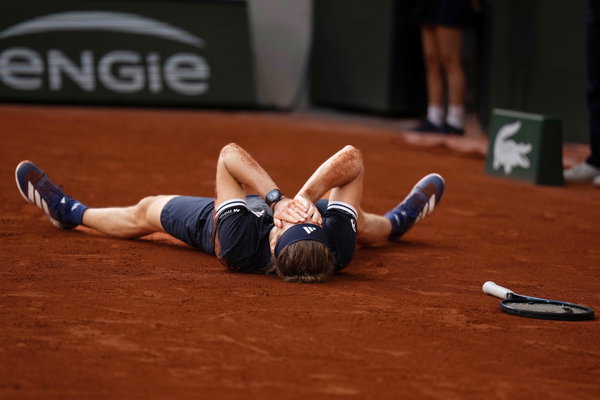
Jun 7, 2026; Paris, France; Alexander Zverev of Germany celebrates winning the men’s singles final against Flavio Cobolli of Italy on day 15 at Stade Roland Garros. Mandatory Credit: Susan Mullane-Imagn Images
The contest was a roller coaster ride. Sascha broke right away in the first set and ran through it 6-1 without drama. Cobolli’s range was found in the second, as he broke in the seventh game and held it comfortably at one set apiece. The third set was closer than it appeared on the scoreboard. Neither player gave up until Cobolli served at 4-5. Zverev, staring down two early points lost in that game, won four in a row to break and go 2-1 in sets. One set from the title he has been chasing all these years.
The fourth set saw it all but slip away from the German. Cobolli was 5-3 up at the break, and it looked like the same old story would repeat. Zverev broke back, took it to a tie-break, and then, after the now well-documented moment where a cramping Zverev received medication from courtside, was outlasted by the Italian, who sealed the breaker with a monstrous forehand winner down the line. It all came down to the fifth set.
The game could have unravelled. Each of Zverev’s experiences indicated that it could. Instead, he broke Cobolli in the opening game of the decider after a series of deuces, and then proceeded to win the set 6-1 in the same dominant fashion he had opened the match. The symmetry was striking.
The German made nine double faults in four hours and 16 minutes, the only sign of a crack in an otherwise solid gameplay, but it did not matter. The first serve was held when it mattered the most, rallies were won, and that backhand, a most potent shot in the men’s game, did its job.
Zverev is 29 years old. It took him four Grand Slam finals and seven semifinals to make it here, and each of those losses was severe enough to have broken a lesser competitor’s will entirely. The New York version of him, who was knocked down by Thiem six years ago, wouldn’t recognize what he produced on the Philippe-Chatrier on Sunday. That, more than any speech or quote, is the genuine answer to the choker label.
