
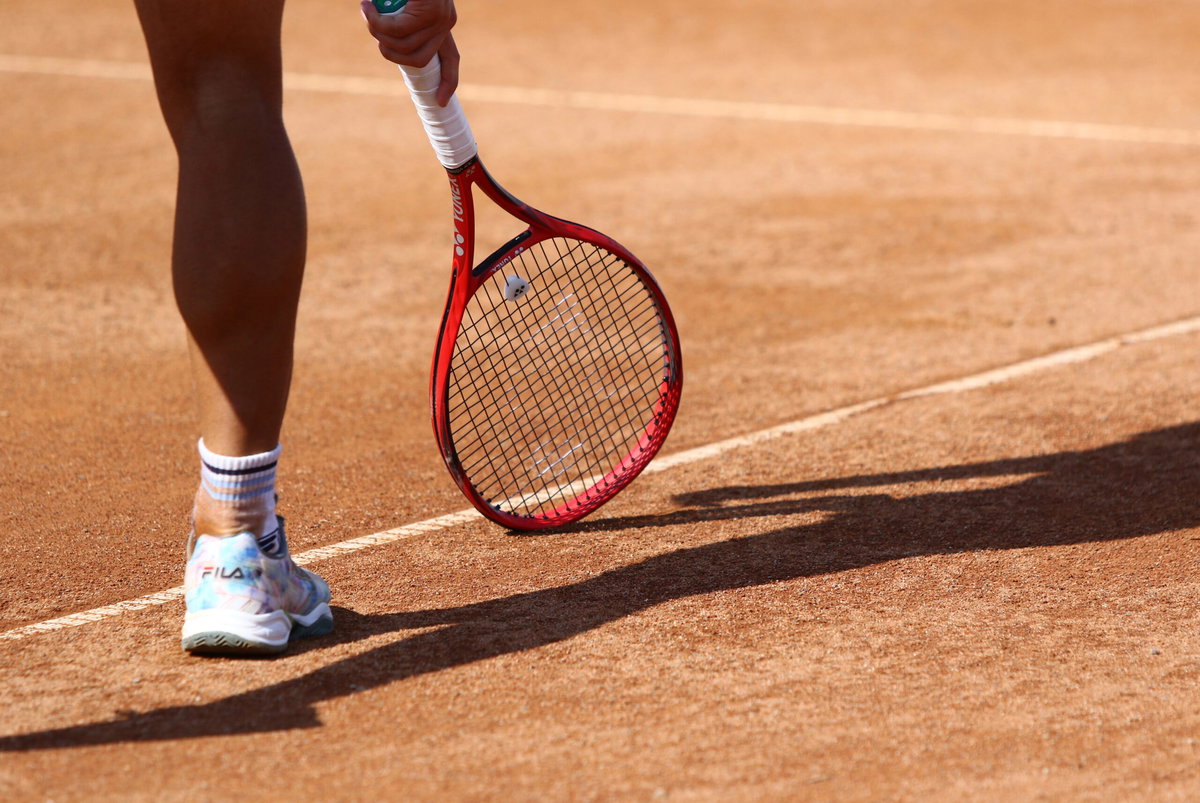
The red clay is a distinct feature of the French Open since its inception and is unique to Roland Garros. However, it might surprise a few that what looks like clay on our TV sets is actually a mixture of different components, of which clay is just a small part. What is seen on the outside is only the fifth layer visible to the naked eye; four other layers lie beneath, holding the surface together.
Watch What’s Trending Now!
Let us take a deep dive into what goes into creating one of the most iconic sporting venues of all time:
What Is the Roland Garros Clay Court Actually Made Of?
At the basic level of the court at the French Open is the drain, which ensures water percolates through the surface smoothly. What comes next is a 30cm layer of crushed gravel, followed by a 7-8cm layer of coal residue, commonly known as clinker. The surface then has a 6-7 cm layer of crushed limestone, followed by a 1-2mm coating of brick dust. It is the last two layers of white limestone and brick dust that give the court the unique red color for which the courts are known.
Where Does the Red Clay Come From & Why Is It Used?
The bricks are sourced from a particular factory in Oise. This kind of Parisian brick is unique and easily distinguished from other construction bricks. The factory uses almost 2000 tonnes of bricks and crushes them to produce fine red clay, delivering almost 80 tonnes of red clay every year to the courts at the French Open.
It is important to note that modern clay courts actually originated from grass courts back in the 1880s. Ernst and William Renshaw, brothers and excellent grass-court players, observed that the surface became unfit to play once the grass dried up due to the heat of the day. In a unique and groundbreaking solution, the brothers crushed terracotta pots and used the fine clay layer to ensure the surface held, which gave rise to the idea of clay courts, officially adopted by the French Open in 1928, before the Davis Cup.
Imago
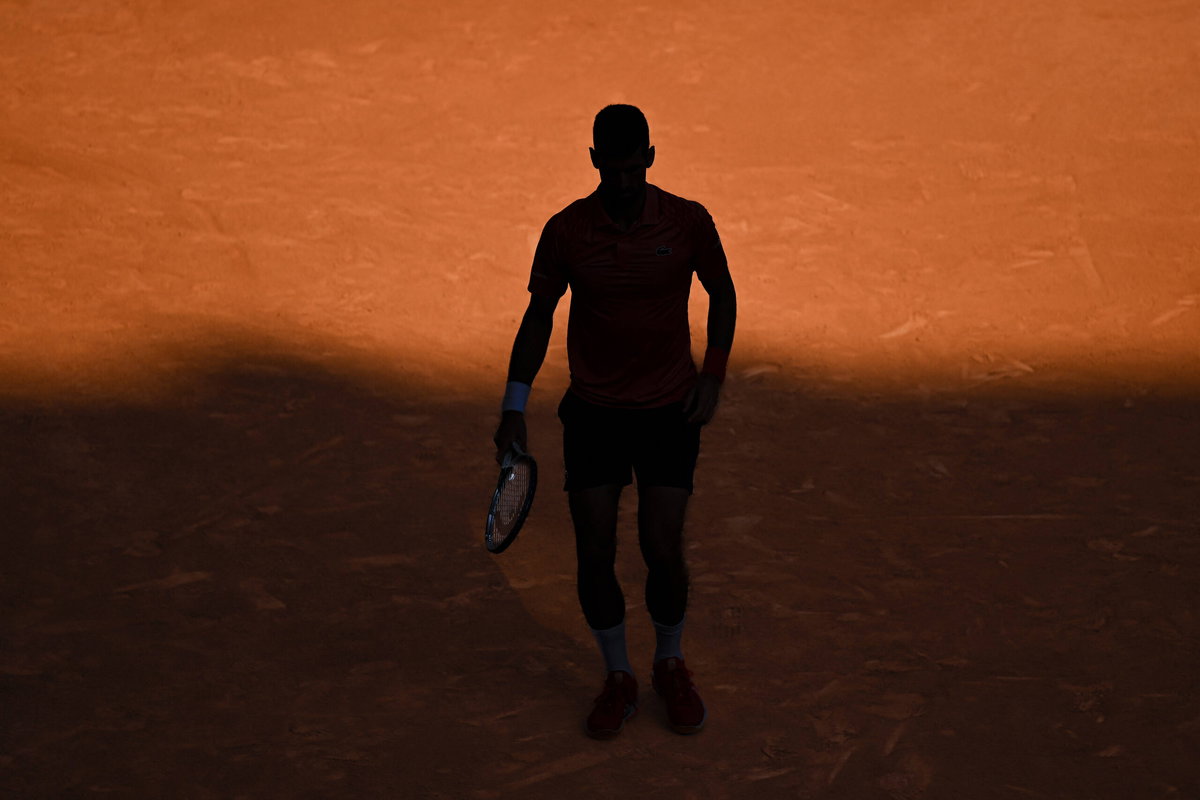
French Open Day 10 Novak Djokovic in the shadows silhouette, shadow, shade during the French Open, Grand Slam tennis tournament on June 6, 2023 at Roland Garros stadium in Paris, France. Photo by Victor Joly/ABACAPRESS.COM Paris France PUBLICATIONxNOTxINxFRAxSPAxUKxUSAxBELxPOL Copyright: xJolyxVictor/ABACAx 856029_045 JolyxVictor/ABACAx 856029_045
Why Does Roland Garros Clay Play So Differently?
The thin layer of red brick dust that makes up the topsoil at the French Open allows players to slide on it. The nature of the surface is slower than on hard and grass courts. This necessitates that the world’s top players play a very different kind of tennis. The pace of the surface neutralizes the advantage of having a big serve, as the returner gets enough time to put the ball in play. Points are longer, as players have to be creative to find openings within rallies to win points with topspin and also get used to moving on the surface.
One could argue that the French Open was perhaps the most difficult Major to win, given the physicality of the clay-court game. Players lose their serve efficacy completely and do not get free points. One of the best servers in the game, Pete Sampras, struggled on clay, as his famous serve-and-volley tactic was completely toothless on the Parisian surface. The man who has won seven Wimbledon titles and 7 other hard-court Majors could reach the semifinals of the French Open only once.
The next key on clay courts is the use of topspin shots, which help the ball grip the surface more and jump higher, making it difficult for the opponent. Players who rely on low bounce and flat shots do not fare well on clay, as the ball does not skid through, giving opponents ample time to return the shot. Venus Williams, who thrived on the faster courts at Wimbledon and the US Open with flat, powerful shots, struggled at Roland Garros, making only one final in 2002, where she lost to her sister, Serena Williams.
Movement is the most important part of clay-court tennis, as the surface is slippery, and any player who cannot move on clay won’t be able to play on clay. This was evident in the case of Boris Becker, who often found it difficult to bring his usual explosive, fast tennis to a slow-paced clay court.
How Are Roland Garros Courts Maintained During the French Open?
To ensure that players have no difficulty moving on courts, it is of paramount importance that the courts are maintained while making sure that the thin topsoil layer of brick dust holds firm. Roland Garros relies on manual labor from over 100 people rather than any technology to ensure the courts are pristine. There is a meticulous routine followed by the ground staff, which starts with uncovering and sweeping the courts on match day morning.
Ground staff sweep the courts and brush the lines after every set during the match, and after every match ends, the court is watered. Once the day’s play is done, another round of watering is done in the evening to keep the topsoil layer firm and the surface safe for players.
Rafael Nadal, who has been the undisputed king of clay, had an advantage on clay courts due to his prowess with topspin. The fast-rotating nature of the ball helped it bounce off the clay easily, making it difficult for opponents. He also stood out on the surface with his unmatched balance and swift movements- leading him to win the title 14 out of the 19 times he played.