
Essentials Inside The Story
- Sabalenka was seen using a handheld cooling device on her face and neck during changeovers in her opening win at Roland Garros 2026, as temperatures in Paris hit the mid-30s Celsius every day of the tournament so far.
- Cooling aids, ice packs, and misting devices are all legal under WTA and ITF rules during changeovers, with the ATP also introducing a formal heat rule for 2026 based on the wet-bulb globe temperature system.
- The opening days of the French Open have already produced worrying scenes on court, raising bigger questions about player welfare and whether the sport is equipped to handle extreme heat at Roland Garros.
Paris in late May turns brutal. Sun high, clay baking, heat becomes a weapon. The opening days of the 2026 French Open have already served up some deeply uncomfortable scenes. Casper Ruud was almost unable to move during his opening match on Monday before fighting back to win. Adam Walton called for medical assistance while facing Daniil Medvedev. During a match between Andrey Rublev and Ignacio Buse, a ball kid stumbled from heat exhaustion.
Watch What’s Trending Now!
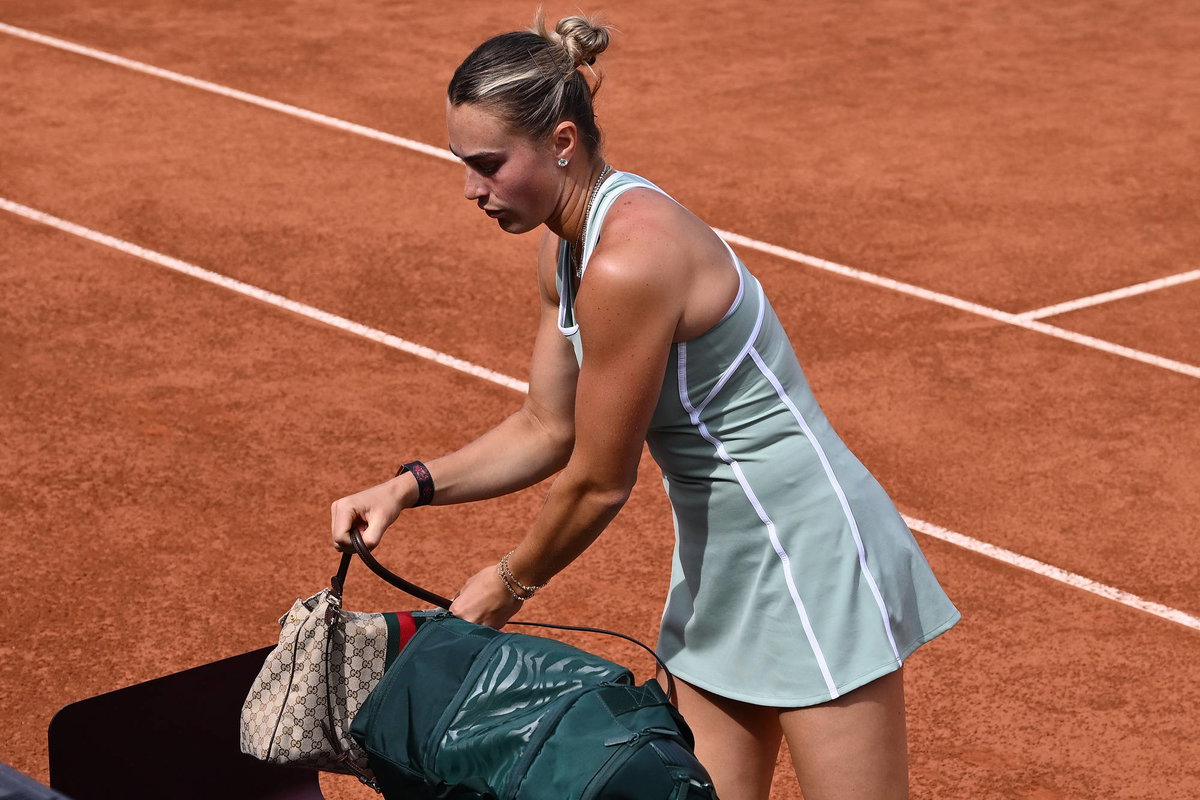
The temperatures have been in the mid-30s Celsius every single day so far, and Roland Garros has been feeling every degree of it. Cameras caught world No. 1 Aryna Sabalenka doing something during her first-round win Tuesday that caught people’s attention: pulling out a small handheld device at changeovers and rubbing it around her face against that backdrop.
What Cooling Aid Is Aryna Sabalenka Using During French Open Matches?
Courtside reporters identified the device as a handheld cooling gadget that costs about £130 and is made to cool the skin quickly and give relief during short breaks in play. During changeovers in her 6-4, 6-2 victory over Spanish world No. 50 Jessica Bouzas Maneiro on Court Philippe-Chatrier, Sabalenka was seen applying it to her face and neck. In 75 minutes, she glided through the match, light on her feet despite the relentless heat, and the device seemed to be one part of a broader recovery routine she was running at every sitting.
It is worth noting that Sabalenka has experience with managing heat. She was spotted at Wimbledon in 2025 applying ice packs directly to her head during changeovers to cool down, and at one point even stopped to bring water and ice to fans in the stands who were struggling with the temperature. Heat management is not new to Sabalenka, and she’s been refining her approach for seasons.
Why Do Tennis Players Use Cooling Devices at Roland Garros?
Clay courts demand more: higher bounces, longer rallies, a greater physical toll than hard courts, and the energy cost of each rally is high on clay. Add the heat of the mid-30s to that equation, and the body is dealing with two stressors at once: the physical stress of the match and the cardiovascular stress of regulating temperature. The line between playing well and running on empty gets very thin, very fast.
Players on the ATP and WTA Tours employ a variety of recovery tools during changeovers: cooling towels soaked in ice water, ice vests between sets, handheld misting fans, electrolyte drinks, and, now, devices such as those Sabalenka was seen using. Cooling tools are not new; what’s changed is their sophistication and ubiquity at the elite level.
Has Aryna Sabalenka Spoken About Playing in Extreme Heat?
Sabalenka’s press conference barely touched on the temperature after her win over Bouzas Maneiro. Her mind was somewhere else. She reflected on her arrival at Roland Garros following a shock early exit from the Italian Open and was honest about what motivates her to perform on the big courts.
“It probably sounds a bit crazy, but when I feel good about what I’m wearing and how I look on court, I tend to perform much better,” she said. “I like to bring a little bit of fashion to the tennis court.”
She was in a custom black-and-red Nike mesh outfit, with diamond necklaces catching the light on Philippe-Chatrier. Originally, she had planned to wear three necklaces, but she took one off. “I feel pretty comfortable. For me, it’s important to look good,” she said. It’s a mindset that’s a marker of who Aryna Sabalenka is as a competitor: confident, deliberate, and playing her best when she feels most like herself.
Is the Cooling Device Legal to Use During Tennis Matches?
Portable cooling and recovery aids are allowed during changeovers under WTA and ITF rules, as long as they don’t cross into performance-enhancing territory. The line the rules draw is between enhancement and recovery. A recovery tool is a device that cools the body during a 90-second changeover. It helps a player get back to a basic level of function. But it doesn’t make them quicker on their serve, or better at reading spin. It just helps the body cope with conditions it wasn’t designed to cope with at full competitive intensity.
At changeover stations, players regularly bring along towels, ice packs, electrolyte drinks, and cooling gear. Ahead of the 2026 season, the ATP has also introduced a formal heat rule based on the wet-bulb globe temperature system. If the WBGT reading is 30.1 degrees Celsius or higher, players in best-of-three games are permitted a 10-minute cool-down break after the second set.
If the reading is above 32.2 degrees, play can be suspended altogether. Players have been visibly struggling this week at Roland Garros, but officials have confirmed humidity levels are still low enough that the WBGT has not come close to triggering the rule. For now, players are coping with the heat themselves, one changeover at a time.