
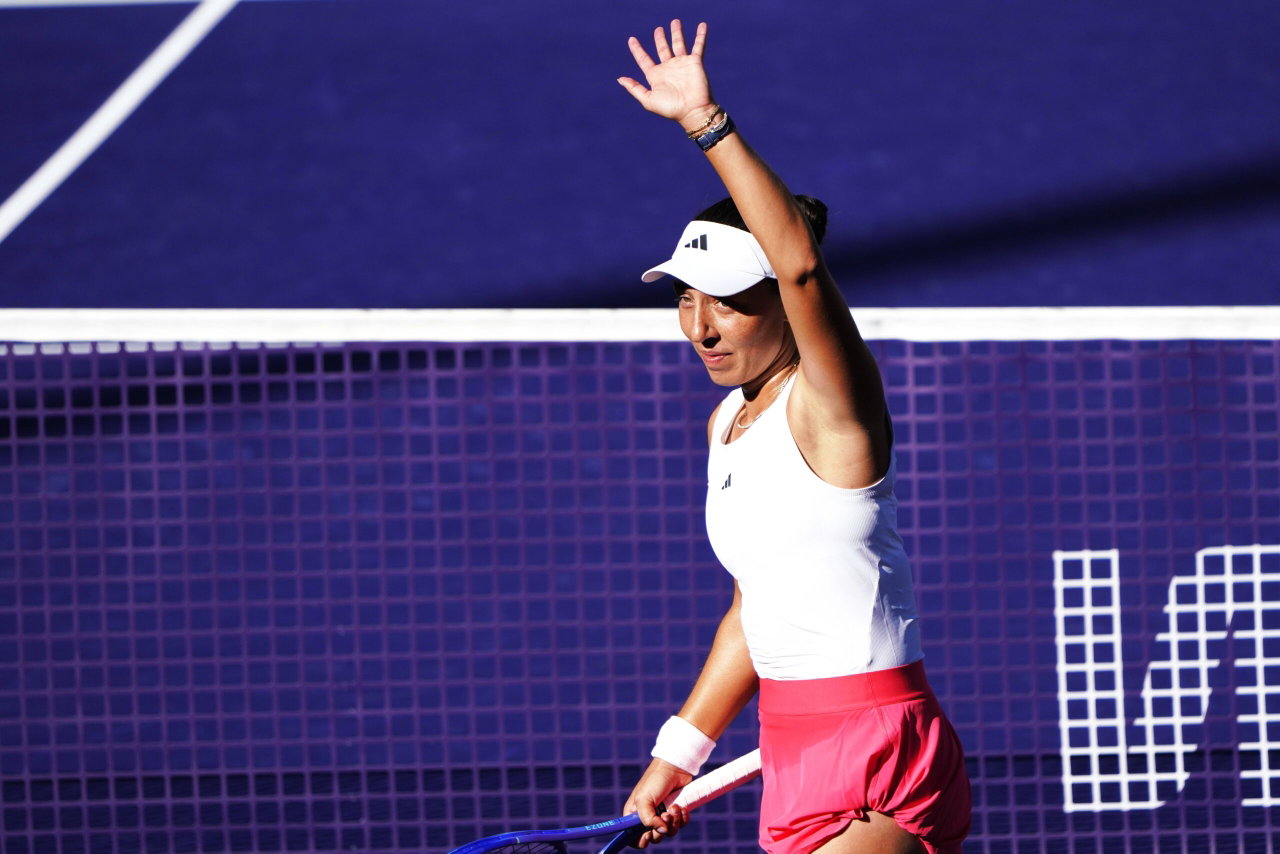
Jessica Pegula once thought consistency was the weakest part of her tennis game. Early in her professional career, putting together strong results week after week was a struggle, and even her rise into the top 10 did not happen overnight. Now, at 32, she has turned that old weakness into a defining strength, with five consecutive WTA Finals appearances and a 50-14 record in 2026 to show for it.
Her victory over Linda Noskova on Thursday was a good example. Pegula saved a match point, recovered from a breakdown in the deciding set, and won 7-6(2), 4-6, and 7-5 after two hours and 45 minutes. The result secured her third WTA Finals semifinal appearance and put her in rare company. According to Opta Ace, she became only the third player to reach consecutive semifinals at the season-ending championships after turning 30, joining Serena Williams and Martina Navratilova.
The comparison matters because both legends sustained their dominance well beyond the age when many players begin to lose ground. Navratilova reached consecutive semifinals in 1991 and 1992 (losing in the finals on both occasions), while Williams made it to the final four three years in a row from 2012 to 2014. Pegula has now reached the semifinals in 2025 and 2026. She has not matched their titles or overall achievements, but joining that small group speaks to the standard she has maintained deep into her thirties.
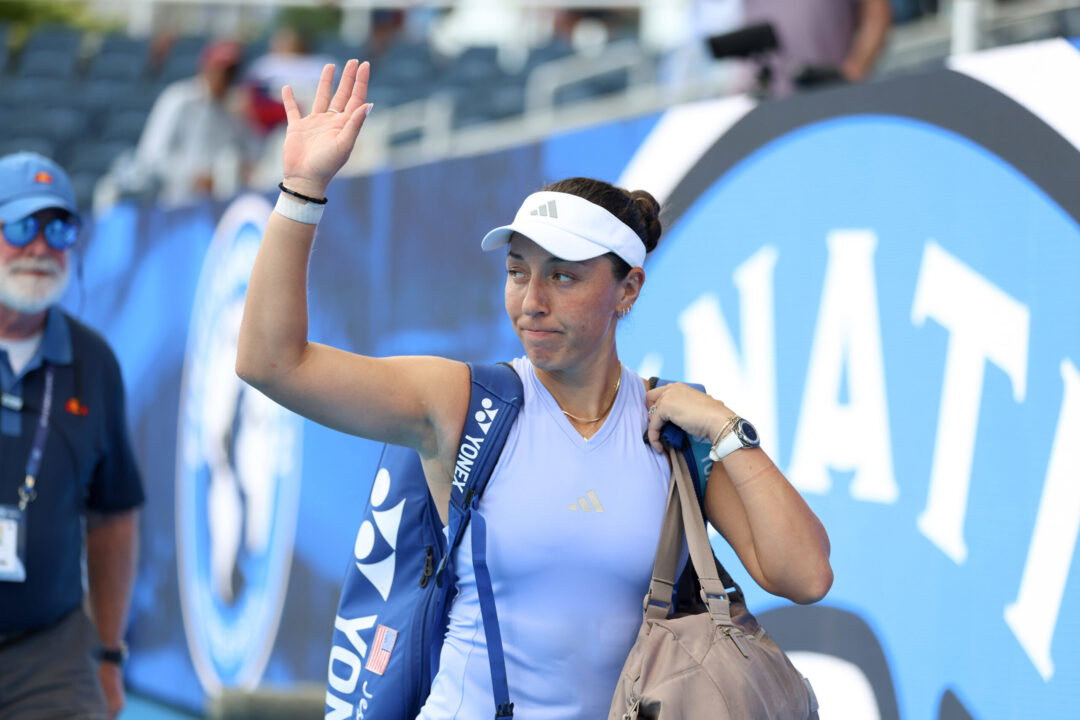
Imago
MASON, OHIO – AUGUST 15: Jessica Pegula of United States waves to the fans during day five of the Cincinnati Open at the Lindner Family Tennis Center on August 15, 2026 in Mason, Ohio. PUBLICATIONxNOTxINxBRAxMEX Copyright: xShainaxBenhiyoun/SPPx Sportspressphoto_SPR207903
One reason Pegula has remained competitive is that she does not allow a particular surface to dictate her season. Her 2026 results offer a clear example. She won titles in Dubai on hard courts and Charleston on clay, reached the finals in Washington and Cincinnati, and finished runner-up in Berlin on grass. She also reached the Wimbledon quarterfinals.
That range is not simply about having the same game work everywhere. Pegula has explained that she tries to approach each surface with an open mind rather than dwell on what she dislikes about it. Her philosophy is straightforward: identify what is not working and find a way to adjust.
“I try to know if I’m struggling on one. I’m like, ‘Yeah, I don’t really like it, but I got to find a way to figure out how to make it work,” she said.
That attitude is particularly valuable across a long season. Players cannot always choose the conditions that suit them best, and refusing to get stuck on surface preferences gives Pegula more opportunities to compete. Her 50-14 record in 2026 and fifth consecutive WTA Finals qualification underline that consistency.
Her match against Noskova showed another part of her game that deserves attention: the ability to find solutions when her original plan stops working.
Pegula was frustrated after Noskova found her rhythm and took control of the deciding set. Rather than abandon her approach, she recognized that her return game was still creating opportunities. She focused on improving her serve and reminded herself that the match was not over.
That response was backed by a career-best 16 aces. Pegula is not generally regarded as one of the WTA’s biggest servers, but she has worked on changing the speed, direction, and type of delivery. She described the approach as pitching different pitches, rather than relying on the same serve repeatedly.
The distinction is important. Her serve was not perfect against Noskova: she also recorded eight double faults. Yet she found enough variation to produce free points when she needed them most. She even saved match point with an ace before breaking back and winning the final three games.
Pegula’s strength, then, is not that she never struggles. It is that she can recognize a problem, make adjustments, and stay engaged long enough to give herself another opportunity. That quality becomes especially important against opponents who can dominate stretches of a match.
A First Meeting With Mirra Andreeva Adds Another Test
Pegula’s semifinal against Andreeva brings a different challenge. The two had never faced each other in a professional singles match, despite having practised together twice. Andreeva arrived in the knockout stage after a dominant group campaign, including a 6-4, 6-0 win over Sabalenka.
There is also a more personal subplot. Before the tournament, a hot microphone caught Pegula referring to the 19-year-old as a “diva” after a practice session. The comments spread online, but both players appeared to take the incident in good humor. Pegula later joked that Andreeva might have turned her into a diva too.
The matchup is interesting beyond that exchange. Andreeva has the movement and power to put Pegula under pressure, and her efficiency through the group stage suggests she will not offer many easy openings. Pegula, in contrast, arrives after two demanding matches and will need to use her experience and serve variation to disrupt the teenager’s rhythm.
This is where the qualities that define Pegula’s season will matter most. She has shown that she can compete across surfaces, adjust her tactics, and recover when a match begins slipping away. Andreeva presents a stern test, but Pegula’s run has already demonstrated why she remains one of the Tour’s most dependable players at 32.