
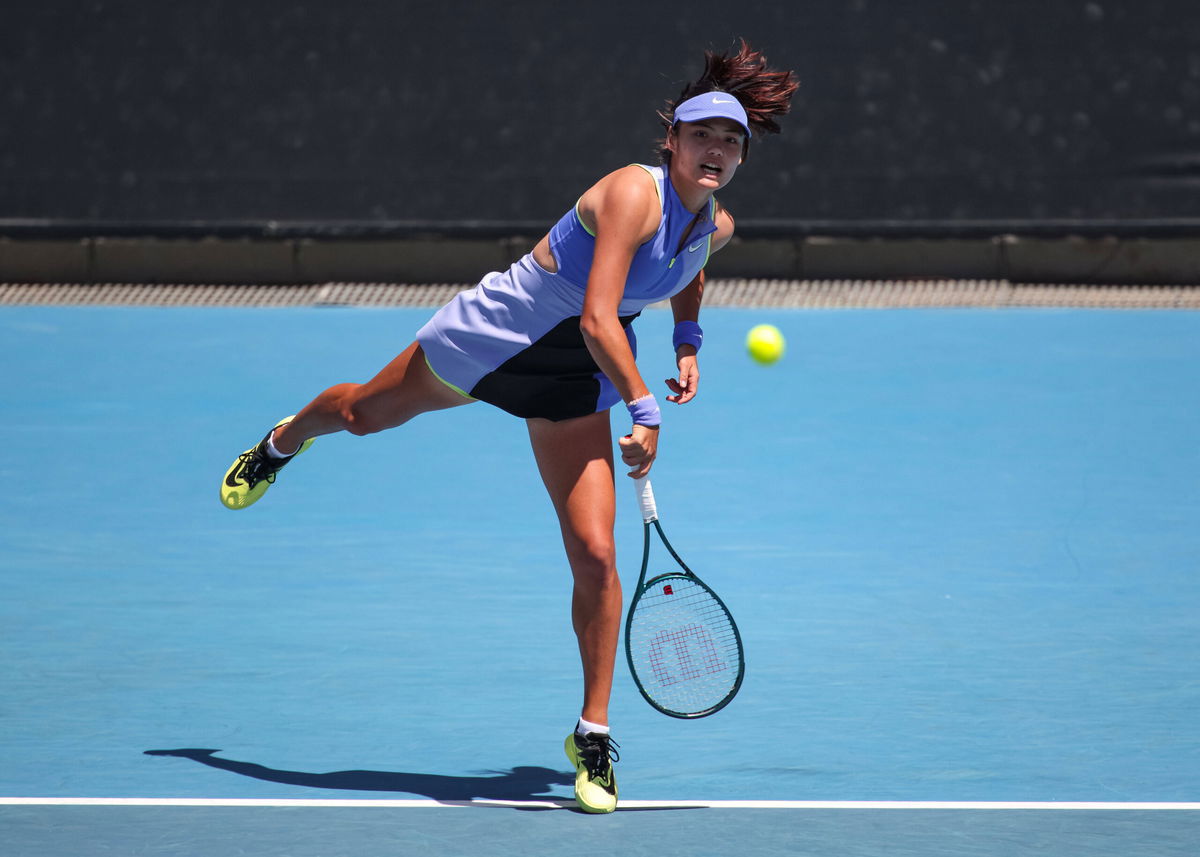
Every time Emma Raducanu steps back onto the court, the tennis world stops and watches. The British No. 1 made her long-awaited return to the WTA Tour in mid-May 2026, after a frustrating two-month layoff due to illness. Fighting through a gritty two-hour, 25-minute battle at the Internationaux de Strasbourg, Raducanu showed flashes of brilliance, taking early leads in both sets. Yet, a string of unforced errors and her own eight double faults handed the match to France’s Diane Parry, who closed it out 6-4, 7-6. A tough result, sure, but the 23-year-old is already resetting her sights on the season’s second major.
Watch What’s Trending Now!
Who is Emma Raducanu’s father, Ian Raducanu?
Meet Ian Raducanu, the man who shaped Emma’s fierce ambition from the very beginning. He’s the Romanian-born father from Bucharest, to be precise, who runs a tough-love playbook that could rival any sports movie. Working in finance alongside his wife, Ian has always been the unflinching voice in Emma’s corner, her ultimate motivator (and biggest critic).
Emma herself has laid it all out: “My dad’s method was very different, basically the opposite. He told me that I couldn’t do this and that, and then I wanted to prove him wrong so badly. That’s what made me so ambitious.” Described by insiders as a “softly-spoken man with a steely side,” Ian is also known for his restless pursuit of excellence, so much so that he’s cycled through her coaches like a mad scientist searching for the perfect formula. And you know what? After her US Open win, he even gave her the ultimate dad compliment: “You’re even better than your dad thought.”

Imago
Emma Raducanu during her third round match Wimbledon Tennis Championships, Day 5, The All England Lawn Tennis and Croquet Club, London, UK – 04 Jul 2025London The All England Lawn Tennis and United Kingdom PUBLICATIONxINxGERxSUIxAUTxHUNxGRExMLTxCYPxROUxBULxUAExKSAxCHNxDENxINDxITAxPORxESPxSWExTURxMEXxCOLxVENxPERxECUxBRAxARGxCHIxURUxPARxPANxONLY Copyright: xJavierxGarcia/Shutterstockx 15384469ke
Who is Emma Raducanu’s mother, Renee Zhai?
While her father provides the fire, Renee Zhai is the rock, the gentle, fierce, and unwavering heartbeat of the family. Originally from Shenyang, China, Renee brought a completely different energy to Emma’s upbringing. While Ian told her what she couldn’t do, Renee constantly reinforced what she could. Emma calls the dynamic “opposite” but perfect: “My mum was always backing me to prove him wrong.”
Their bond runs deeper than tennis. Emma has called her mother her “best friend” and a pillar in every sense of the word. ” She knows me inside out, it’s kind of freaky, so I go to her a lot,” Emma shared with Women’s Health. Beyond the hugs, Renee celebrates the big moments the way only a Chinese mom can: by whipping up a batch of her famous homemade dumplings, just like after Emma’s US Open triumph. She’s given Emma something priceless: “I think the confidence comes from just inner belief. My mum comes from a Chinese background, they have very good self-belief.”
Does Emma Raducanu have siblings?
Short answer: No, she’s flying solo. Emma Raducanu is an only child. There’s no hidden sibling rivalries or backup sister, just Emma and the full, undivided attention (and pressure) of both Ian and Renee. While that might sound intense, it’s also meant that all resources and sacrifices from her parents have gone directly into her journey from the streets of Bromley to Arthur Ashe Stadium. It’s a dynamic that forces a unique kind of maturity, and Emma wears that badge proudly.
What are Emma Raducanu’s parents’ ethnicity and nationality?
This is where Emma’s story becomes truly global. If you look at her passport, she was born in Canada in 2002, representing the UK. But her roots run deep in two very distinct cultures. Her father, Ian, is full-blown Romanian, Bucharest to be exact. Her mother, Renee, hails from Shenyang, China.
The family moved to England when Emma was just two, planting her firmly in Bromley, a London suburb, where her international identity was forged. That multicultural foundation is no small footnote; it’s likely the secret to her mental toughness. Speaking three languages (English, Mandarin, and Romanian) and navigating different customs has given her a sense of adaptation and resilience that most teenagers could only dream of.
Inside Emma Raducanu’s relationship with her parents
Let’s be real, calling Emma’s parents “involved” is the understatement of the century. She has publicly described them as “so pushy.” And she’s not complaining; she’s grateful. “When I was younger, more so. Now they are at a place where they tell me what they think is best, but they realize ultimately that the more they push, the more I am going to resist.” Growing up, Ian and Renee were strict, no boyfriends, limited hangouts with friends, and a relentless focus on discipline. Emma admits she resented it at times. Yet, she acknowledges that those rigid boundaries built her self-confidence.
As for sitting in the player’s box? Don’t expect to see them front and center every match. Ian and Renee prefer the anonymity of the regular seats. They stay out of the limelight to let their daughter breathe and focus. But make no mistake, they’re always watching. After every victory, there’s a hug. After every loss, there’s a homemade meal. As Emma put it, “My parents showed tough love and, at the time, I probably wasn’t as grateful as I am in hindsight.”
So, where does Emma go from the Strasbourg heartbreak? The calendar doesn’t wait, and neither does she. Despite the straight-sets loss to Diane Parry, she didn’t look rusty; she looked fierce. With her trusted former coach Andrew Richardson back in her corner, there’s a sense of unfinished business. The tennis world is eyeing the French Open starting May 24. It’s a brutal surface for a comeback, sure, but this is the same player who came from nowhere to conquer New York. Expect Raducanu to learn from every double fault, shake off the loss, and show up swinging in Paris. This Brit isn’t going anywhere.