Getty
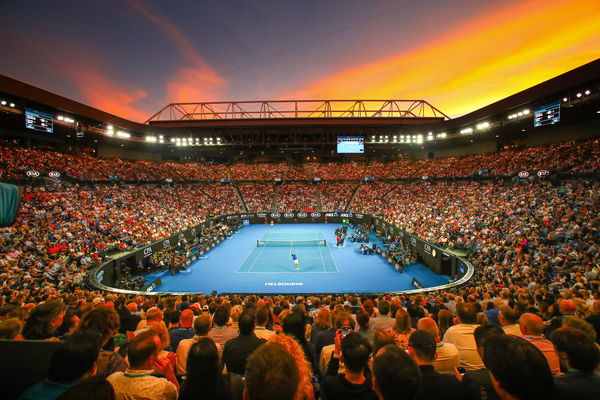
A general view inside Rod Laver Arena at sunset during the Men’s Singles Final match betwen Novak Djokovic of Serbia and Rafael Nadal of Spain during day 14 of the 2019 Australian Open at Melbourne Park on in Melbourne, Australia. (Photo by Scott Barbour/Getty Images)
Getty
A general view inside Rod Laver Arena at sunset during the Men’s Singles Final match betwen Novak Djokovic of Serbia and Rafael Nadal of Spain during day 14 of the 2019 Australian Open at Melbourne Park on in Melbourne, Australia. (Photo by Scott Barbour/Getty Images)
The Australian Open is the first Grand Slam of the year, setting the tone for the entire tennis season. “It really kicks off the summer, and there is no better time of the year in Melbourne than the summer,” said celebrity stylist and influencer Elliot Garnaut, who attended the Australian Open two years ago as an ambassador for Ralph Lauren.
Watch What’s Trending Now!
The Australian Open 2026 will run from January 12 to February 1, promising three weeks packed with world-class tennis and entertainment. The action begins with Opening Week from Monday, January 12, to Saturday, January 17, before the Main Draw officially gets underway on Sunday, January 18, and runs through to the finals on Sunday, February 1.
The tournament takes place at Melbourne Park, a 40-hectare sporting precinct on the banks of the Birrarung (Yarra River), tucked between the Royal Botanic Gardens and Melbourne’s buzzing CBD. Fans can look forward to highlights like free kids’ entry on the first day, qualifying matches, live music every night, and the exciting new Million Dollar 1 Point Slam. But do you know there’s another name for the Australian Open?
What is the origin of the “Happy Slam” nickname?
It was Roger Federer who first gave the Australian Open its famous nickname, the Happy Slam.
“Everybody is kind of happy to see each other, kind of after the off-season. It’s kind of like the ‘Happy Slam,’” Federer said back on January 14, 2007, and he had plenty of reasons for calling it that.
Imago
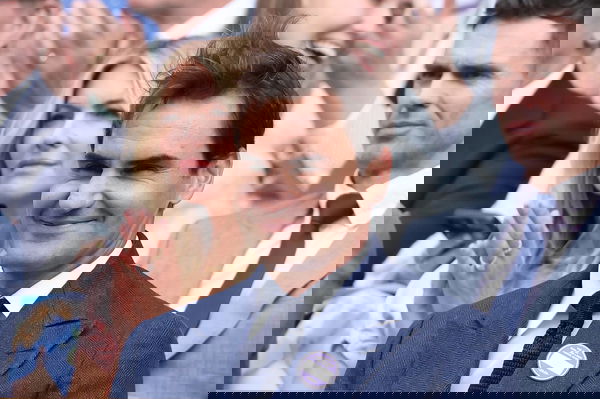
Swiss Roger Federer watches a tennis match on day eight of the 2025 Wimbledon Championships in London on Monday, July 07, 2025. PUBLICATIONxINxGERxSUIxAUTxHUNxONLY LON2025070712 HUGOxPHILPOTT
For players coming from the depths of the European winter, the warm Australian sunshine feels like instant rejuvenation. Competitors have long felt especially well looked after by Tennis Australia, particularly over the last 15 years since Craig Tiley stepped in as tournament director.
One of Tiley’s early moves was introducing a blanket payment of $1,000 to every player in the main draw, singles and doubles. That gesture was hugely appreciated by those lower down the rankings, many of whom made the long trip to Australia knowing a first-round loss might barely cover their travel expenses.
Then in 2018, Tiley pledged to eventually increase total prize money from AUS $55 million to AUS $100 million, which would place the Australian Open above the other three Grand Slams. Add in Melbourne’s food scene, the summer climate, and facilities that have been transformed over the past decade, including three covered courts and world-class gym and recovery rooms, and it’s easy to see why players truly love being there.
Why was the Australian Open long considered the most enjoyable Grand Slam?
One of the reasons players enjoy the Australian Open so much is the top-tier, player-focused environment at Melbourne Park.
The tournament offers expansive, meticulously designed locker rooms, lounges, dining options, training spaces, and recovery areas that make life on site exceptionally comfortable.
The Aussie vibe also plays a big role in the tournament’s appeal.
The relaxed, friendly spirit of Melbourne, along with enthusiastic, respectful crowds and welcoming volunteers, creates an atmosphere that feels both casual and lively, striking a contrast with the more formal feel at some other Grand Slams.
Held during the Australian summer, the first Grand Slam of the year offers a festival-like setting, with live music, engaging off-court activities, and the chance for players to start the season on a high note. After a long off-season, competitors often arrive feeling refreshed and excited, a vibe that has helped earn the Australian Open its nickname, the “Happy Slam.”
What challenges have tested the “Happy Slam” image in recent years?
While the “Happy Slam” has long been loved by players, journalists, broadcasters, and fans, many feel the vibe has shifted over the years.
Some who covered the tournament in the 1980s and 1990s talk about a time when things felt looser and more flexible. Now, they say, officials are stricter, systems are tighter, and rules are very much rules. Whether it’s nostalgia or reality, plenty believe the old carefree feeling isn’t quite what it once was.
The Australian Open also hasn’t been short on controversy.
Over the past 16 years alone, the tournament has faced strike threats, failed drug tests, natural disasters, debates around homophobia, and even match-fixing scandals. Novak Djokovic has often been at the center of the biggest flashpoints, particularly when it comes to player power and prize money.
One of the earliest major controversies came in 2005, when the buildup was overshadowed by a drug scandal.
The Belgian sports minister at the time announced that reigning US Open champion Svetlana Kuznetsova had tested positive for ephedrine at an exhibition event. Reporters flooded the story for days. Although Kuznetsova avoided punishment because the substance was only banned in competition, it cast a dark cloud over the tournament before a ball was even hit.
The timing of the Australian Open may partly explain why tensions often boil over there. By mid-January, it had been more than four months since all players were last together at the US Open.
The ATP and WTA also hold player meetings right before the tournament begins, and that combination has repeatedly created the perfect setting for explosive moments.
In 2012, player frustration over prize money was already high, and a strike threat aimed at the 2013 Australian Open was only avoided after Roger Federer and Novak Djokovic helped lead talks with the Grand Slam tournaments. Then in 2018, the issue flared up again in Melbourne, with Djokovic pushing for a major increase in prize money and even threatening to form a breakaway players’ union.
The situation cooled after Craig Tiley promised higher prize money, and Djokovic later went on to launch the Professional Tennis Players Association in 2020.
Even Australia’s own legends haven’t escaped controversy.
Margaret Court, who won a record 24 Grand Slam singles titles, has remained a polarizing figure because of her public views on gay rights. In 2018, things became especially awkward when Billie Jean King said Margaret Court Arena should be renamed, calling for inclusivity and respect.
Add in a match-fixing scandal in 2016, devastating bushfires in 2020, and the challenge of staging the event during a pandemic, and it’s clear the Australian Open’s recent history has been anything but quiet.
Does the Australian Open still deserve the “Happy Slam” nickname in 2026?
The Australian Open still holds many of the qualities that earned it the “Happy Slam” nickname. It’s the first Grand Slam of the year, played in sunny Melbourne with a festive atmosphere that contrasts with the winter months players have just left behind.
When you compare it with the other Grand Slams, the differences become clearer.
Wimbledon leans heavily on tradition, strict etiquette, and historic prestige, while Roland Garros brings its own intense, clay-court identity. The US Open is known for its energetic, big-city, late-night party feel, which some find overwhelming or distracting. The Australian Open, by contrast, feels more accessible and welcoming, from the player lounges and city proximity to the sunshine and social activities.
That said, modern realities like commercial pressures, heat controversies, and occasional crowd behavior have complicated its image, making it less uniformly “happy” than it once seemed. Still, when weighed alongside the traditions and pressures of the other Slams, the Australian Open’s unique blend of sunny start-of-season optimism and player-centric environment means the nickname still resonates, even if it’s no longer quite as idyllic as the rose-tinted memories suggest.
Do you agree with us?


Related Newsletters