
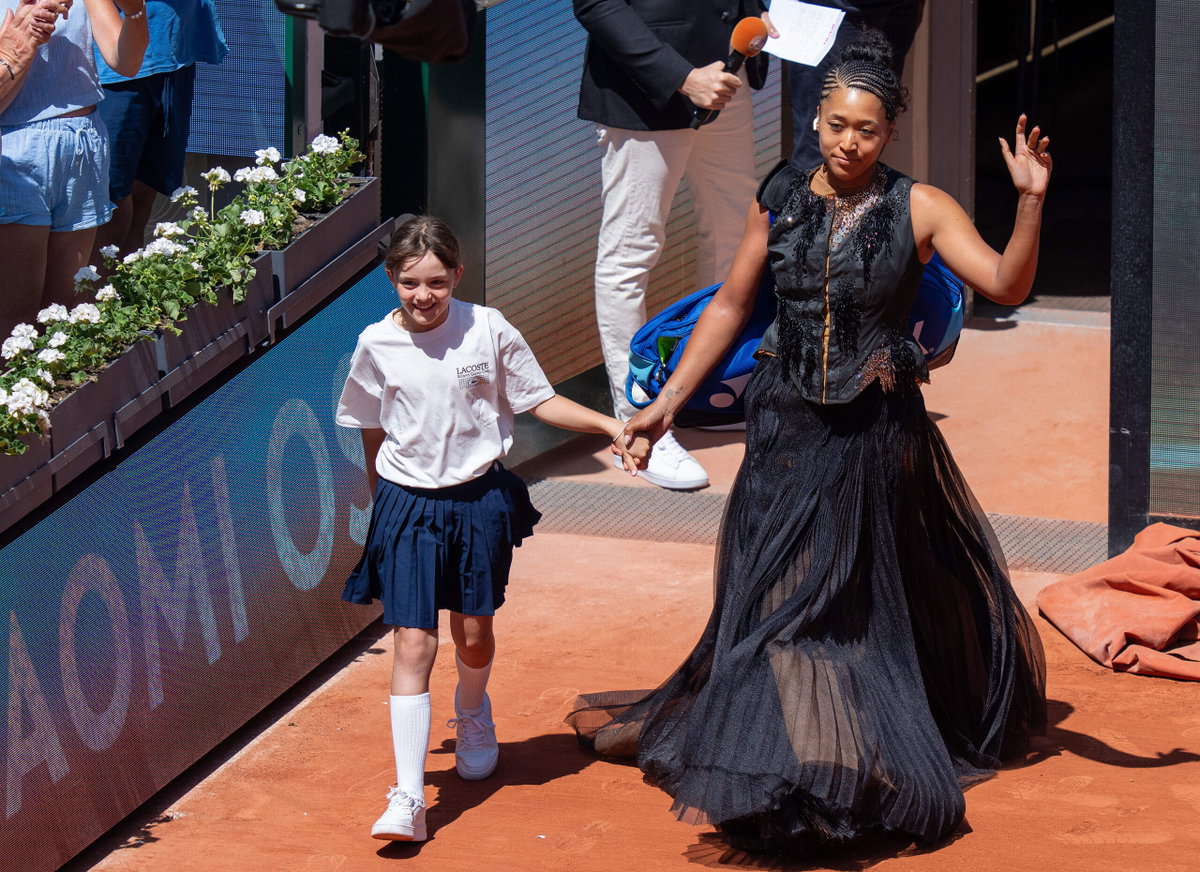
Naomi Osaka had just reached the fourth round of Roland Garros for the first time in her career. She had been through nearly three hours against Iva Jovic, saved a second-set tie-break deficit, and closed it out 7-6(5), 6-7(3), 6-4. Then she walked in at the press conference and was told that her next opponent is the world No. 1, Aryna Sabalenka, who has beaten her twice in 2026. She came up with as nonchalant a reply as possible.
Watch What’s Trending Now!
“I don’t really know,” Osaka said. “I didn’t know that, so [laughs], I don’t know. YOLO. Like, whatever.”
She elaborated, but the tone never shifted. “I feel like I played a pretty good match in Madrid. I think I just dipped in the second and third sets, so hopefully, just keep the consistency and keep trying to be aggressive and whatever happens, happens.”
It was something more measured than just bravado. Sabalenka had defeated Osaka in straight sets at Indian Wells in March 2026 and then won from a set down in Madrid in April 2026. Osaka led that Madrid match and had her chances. If you look at the head-to-head, it’s 2-1 in favor of Sabalenka, since the last time Osaka beat her was in 2018 at the US Open. The record from 2026, however, is the one that counts. Osaka has played enough tennis at this level to understand that it isn’t about strategy alone, but it’s about composure, too.
The second week at the French Open is a new experience for Osaka. In nine previous appearances at the tournament, she never made it past the third round. All that changed on Saturday. The milestone was significant for a player who has been better known for the four Grand Slams she won between 2018 and 2021, but also for one plagued by injuries and mental health challenges.
“I’m grateful for every match won, and I continue to hope to win,” she said when asked what had changed in recent years to make this possible.
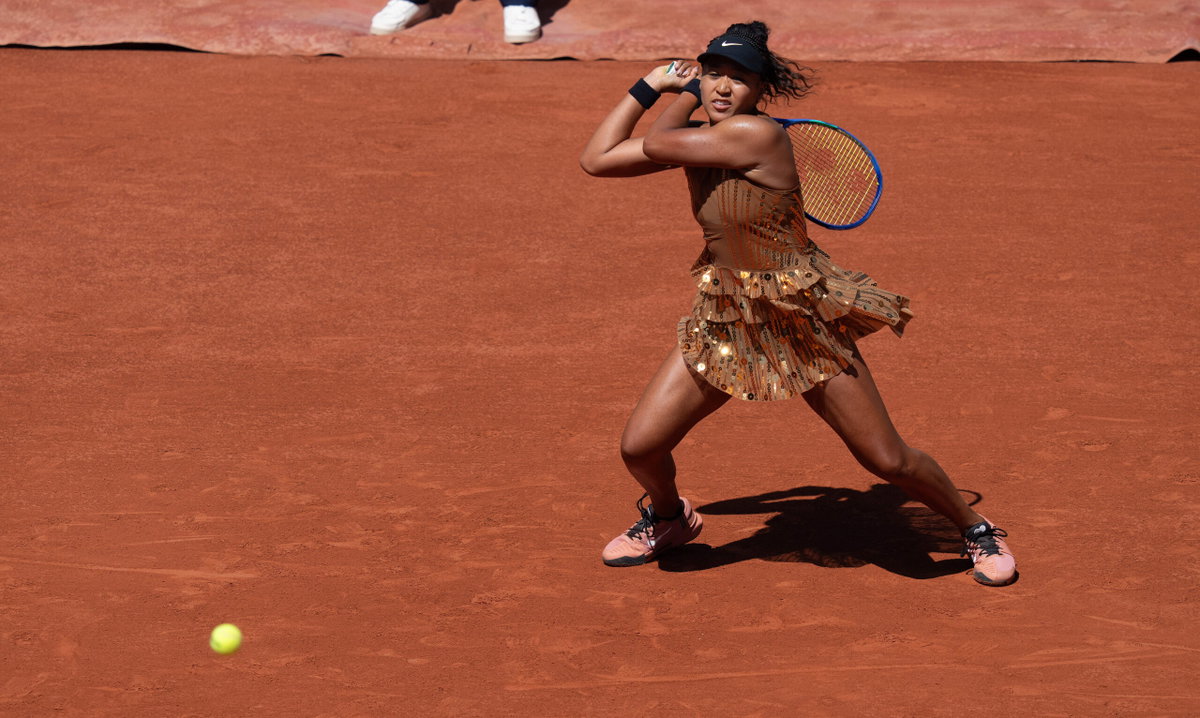
Imago
May 26, 2026; Paris, France; Naomi Osaka of Japan returns a shot during her match against Laura Siegemund of Germany on day three at Stade Roland Garros. Mandatory Credit: Susan Mullane-Imagn Images
Part of the answer lies with her coach, Tomasz Wiktorowski. Osaka mentioned a particular element that he had told her, which has changed the way she plays on this surface.
“He said Nadal has won 98% of his matches here, and he’s only won 50-something percent of the points. So I just thought to myself, I don’t have to win every single point, but I just have to try [to win] every single point.”
It’s been a game-changer for a player with Naomi Osaka’s ball-striking talent to rephrase the mental aspect of clay-court tennis in that way.
The injury picture has also played a role. The former world No.1 has historically struggled on the clay swing, often getting hurt before Roland Garros could benefit from any build-up she had assembled.
“I usually got injured in Stuttgart, so I didn’t play in Stuttgart. And then I felt pretty good,” she said. She acknowledged that the Indian Wells and Miami stretch was not ideal, but the decision to prioritize clay preparation paid off. “I don’t want this to be my last round. I want to keep going. So, I’m going to keep focusing on every match.”
There was also Jovic, who threw everything at Osaka. The 18-year-old American was intense and unafraid, with a firm belief in the third set. The youth factor was a double-edged sword, Osaka said.
“One of the reasons I was relaxed was knowing she was young. The youngest players are often the most intimidating because they’re fearless and they just go for it. I also knew, going onto the court, that she was a great player. So I hoped that my veteran status would allow me to shine at the right moment.” It did, just barely.
Aryna Sabalenka, who beat Daria Kasatkina in straight sets to set up the clash, was equally direct about what she expects. “I feel like the last one in Madrid was a really tight match, was great level. She really stepped in and raised her level in that match. I’m just ready for the fight. Ready to do anything it takes to get the win.”
Despite being just seven months apart in age, the two have never truly peaked at the same time. Osaka’s four majors came between 2018 and 2021, before Sabalenka made her first Grand Slam quarterfinal. Osaka is in her best-ever clay-court form against the world No. 1, who is also a four-time major champion. But the question of who Osaka is now goes beyond just a tennis match, and she addressed it during the same press conference.
“For a Long Time, I Wasn’t Having Fun” Osaka Opens Up on Her Transformation
The gold sequined dress was not worn by chance. Osaka revealed that every outfit involves at least a year and a half of planning with Nike, multiple fittings, fabric considerations, and adjustments for weight fluctuations. “If I wanted to wipe my hands on my dress, that would be impossible. That’s the only adjustment I have had to make. Other than that, it’s actually quite comfortable,” she said with a laugh.

Imago
May 26, 2026; Paris, France; Naomi Osaka of Japan as she goes on the court for the coin toss in her dress designed by Kevin Germanier for her match against Laura Siegemund of Germany on day three at Stade Roland Garros. Mandatory Credit: Susan Mullane-Imagn Images
But fashion is not vanity. It is a marker of something deeper and not something she switches on or off.
“I consider it part of me. It’s literally like my self-expression and for me it would be weired to wear a normal tennis kit almost at this point I think. it’s the fun of it. For a long time, I didn’t have fun for a little bit. You guys know that period of time in my life. So, now, I just want things to be fun and I want to make it exciting for myself.”
Between 2021 and 2023, Osaka took breaks from the tour, publicly admitted to her mental health issues, and at times appeared to be unsure about her professional tennis future. The player walking into week two of Roland Garros with YOLO jokes and talking about sequins and what it will take to win a lesson from her coach is not the same player who was leaving the court in tears at Melbourne 2022. The Roland Garros second week is the result of that entire journey, finding its footing on clay.
When asked what had changed in her game overall, she returned to the same theme. “I think I’m much calmer than before. Before, I had too big an appetite. Now, my appetite is still there, but I understand it’s a process. I’ll get there, or I won’t. I just have to enjoy it while it lasts.”
For Naomi Osaka, enjoying it is no longer just a mindset. It is the result.