
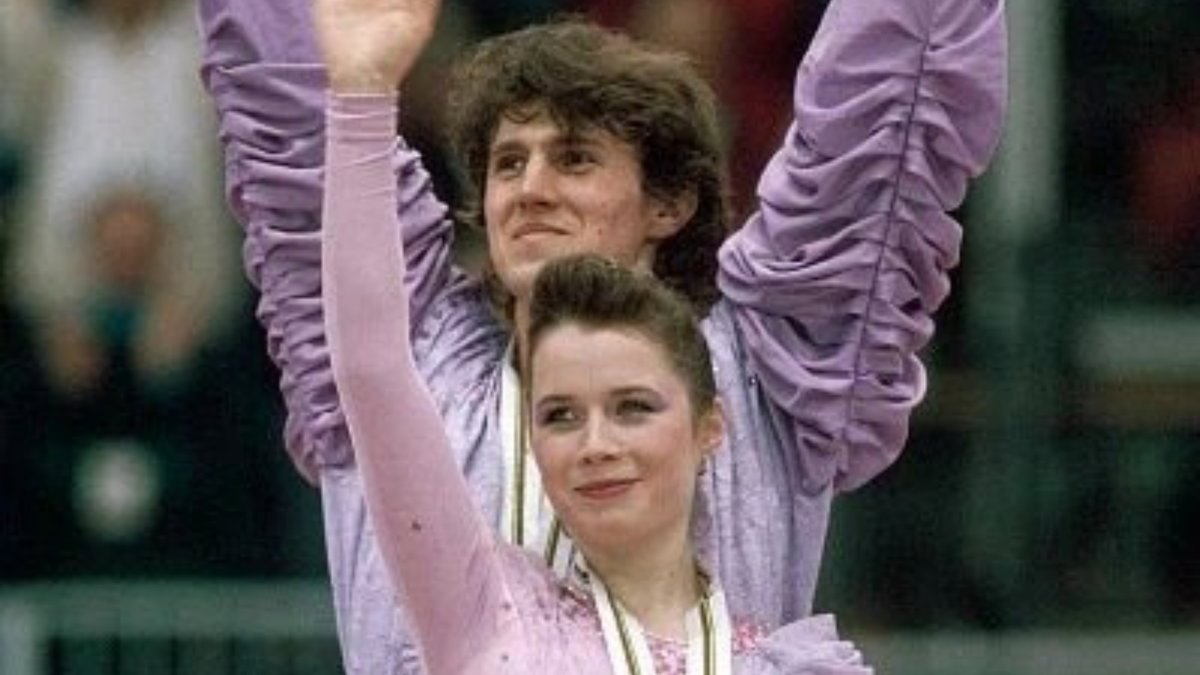
Reaching the top once is difficult. Legendary Russian figure skater Artur Dmitriev had to do it twice. After winning Olympic gold with Natalia Mishkutionok at the 1992 Winter Olympics, it seemed the then-24-year-old’s rise to even greater heights was inevitable. But when Mishkutionok retired after the 1994 season, many questioned whether he could ever win again with a new partner. Dmitriev refused to let that be the end of his story and went on to win another Olympic gold in 1998 with Oksana Kazakova. Now, 28 years later, the figure skating legend is no more, having passed away at the age of 58.
Watch What’s Trending Now!
On June 29, the Russian Figure Skating Federation announced his death in a statement. “We regret to announce the passing of Artur Valeryevich Dmitriev, a two-time Olympic champion and three-time European champion in pairs figure skating. Artur Dmitriev became the first figure skater to win Olympic gold with two different partners.”
The exact cause of death has not been officially confirmed by the federation. However, the figure skating news account FS Gossips stated on X that Dmitriev died following a heart attack. Reuters, meanwhile, reported that he died after undergoing heart surgery.
His former Olympic partner, Kazakova, also told TASS that he suffered an aortic dissection, a serious medical emergency involving a tear in the body’s main artery. Doctors carried out emergency surgery in Moscow and fought to save his life, but he did not survive. While the skating world mourns his loss, Dmitriev leaves behind a legacy that few athletes in the sport can match.
Long before he stood atop Olympic podiums, Dmitriev was a young boy growing up in Norilsk, a remote industrial city in northern Siberia, in what was then the Soviet Union. Sport came naturally to him. Before dedicating himself to figure skating, he tried ice hockey, judo, and wrestling. Those experiences helped build the athleticism that later became a key part of his success on the ice.
Imago
Credits:x@@InMemoriamX
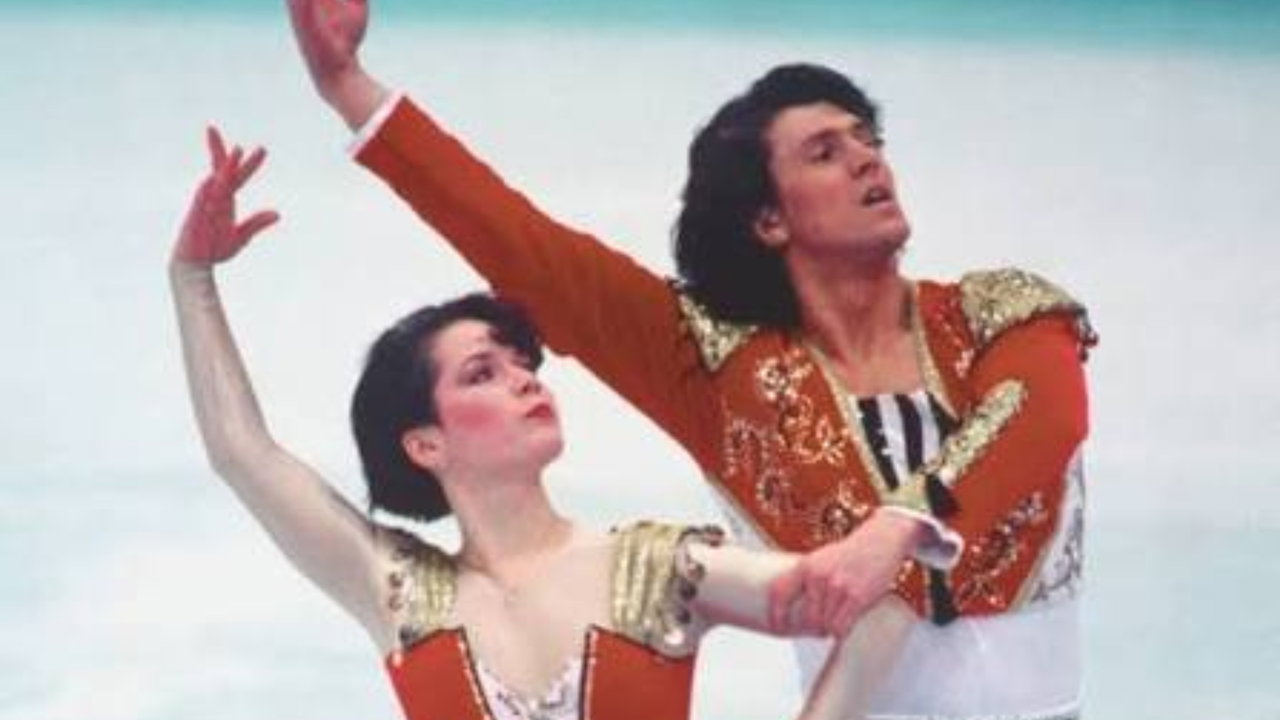
Dmitriev began skating in 1975 and first trained as a singles skater under coach Fanis Shakirzyanov. He quickly developed into one of the strongest jumpers of his generation and mastered all five types of triple jumps. His career changed in 1986 when he moved to Leningrad (now St. Petersburg) to work with legendary coach Tamara Moskvina. There, he was paired with Mishkutionok, beginning a partnership that would turn both skaters into international stars.
The pair broke through in 1991 by winning both the European and World Championships. They repeated as world champions in 1992 before capturing Olympic gold at the Albertville Winter Games.
When Mishkutionok retired after the 1994 season, many assumed Dmitriev’s best years were behind him. Pair skating depends on years of trust, timing, and chemistry between partners, meaning he had to start over from scratch. At 26, he was also considered too old by many to build another Olympic-caliber partnership capable of challenging younger, more established duos.
However, he accepted a new challenge and partnered with Kazakova in 1995. The decision proved to be a masterstroke. Just three years later, they won Olympic gold at the 1998 Nagano Winter Games. The victory made Dmitriev the first, and still the only, male pairs skater to win Olympic gold with two different partners.
After retiring from competitive skating in 1999, Dmitriev stayed very much involved with the sport. He enjoyed a successful career as a coach and choreographer, working with skaters in Russia and the United States and inspiring the next generation. But four months have elapsed since the skating world lost another well-known figure, Johnny Johns.
However, his death comes just four months after the figure skating community lost another respected name.
Before Dmitriev, Figure skating lost another revered champion
Johnny Johns was one of the most influential figures in American figure skating. Before dedicating himself fully to skating, he balanced the sport with Little League baseball and was known for his unusual ability to pitch with both his left and right hands.
During his competitive career, Johns competed in three different disciplines. He first appeared in men’s singles, finishing sixth at the 1971 U.S. Championships. He later found success in ice dance alongside Mary Campbell, winning the 1973 U.S. Ice Dance title and claiming bronze medals at the 1971 and 1972 national championships. The pair also won the 1972 Nebelhorn Trophy and finished sixth at the 1973 World Championships, the best world result of his competitive career.
Johns then switched to pair skating, where he partnered with Melissa Militano. Together, they captured back-to-back U.S. Pairs Championships in 1974 and 1975 while earning top-10 finishes at the World Championships. He retired from amateur competition in 1975 as one of the country’s leading pair skaters.
While his achievements on the ice were impressive, John’s greatest impact came as a coach. He spent 27 years at the Detroit Skating Club before moving to Arctic Edge Ice Arena in Canton, Michigan, in 2006. In 2019, he relocated to Hertz Arena in Estero, Florida, where he continued mentoring skaters.
But then, Johns passed away on February 20, 2026, at the age of 74 in Naples, Florida. According to U.S. Figure Skating, he died from complications following knee surgery. His passing, followed by Dmitriev’s death just months later, marks a sad period for a sport that has lost two highly respected figures in a short span of time.