Imago
Credits: IMAGO
Imago
Credits: IMAGO
The Winter Olympics rarely make it into the MMA scene. However, this week they did. What began as a humble attempt at a tribute by a Ukrainian athlete has escalated into a global debate about rules, expression, and where humanity fits within elite sports.


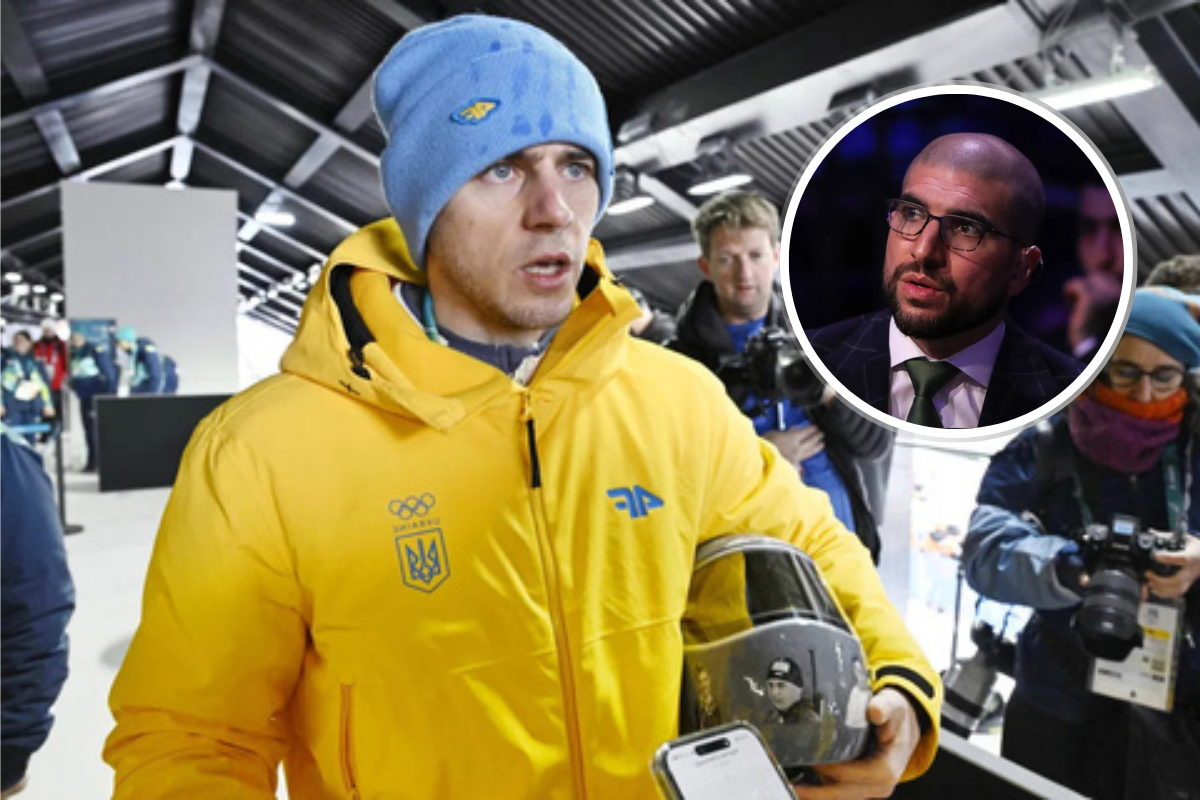
When Ukrainian skeleton racer Vladyslav Heraskevych arrived wearing a helmet featuring the portraits of 24 Ukrainian athletes and coaches killed during the war with Russia, he knew it would cost him. The IOC had already warned him since, according to them, the helmet violated Rule 50 of the Olympic Charter, which prohibits political demonstrations or propaganda in Olympic venues. However, Heraskevych wore it anyway and was disqualified just minutes before his heat began. This was a move that surely divided many, especially Ariel Helwani, who did not mince words while letting his stance be known.
Watch What’s Trending Now!
Ariel Helwani’s criticism of the IOC decision gets echoed by Merab Dvalishvili
Ariel Helwani didn’t hold back when addressing the decision during his Olympics coverage for CBC. “They couldn’t have gotten this more wrong,” he said. “This wasn’t propaganda… It was his attempt to pay homage to others.
“There’s a difference between a protest, a political statement, and paying homage. Vladyslav was doing the latter. And the IOC got it wrong.”
The Court of Arbitration for Sport ultimately agreed with the IOC, citing athlete expression restrictions that prohibit statements on the field of play. The sole arbitrator stated that the rules strike a “reasonable balance” between expression and keeping the focus on competitiveness while admitting sympathy for Heraskevych’s case. The racer himself accepted the outcome with resolve. Draped in a Ukrainian flag, he stated, “From day one, I told you that I think I’m right. I don’t have any regrets.”
View this post on Instagram
Former UFC bantamweight champion Merab Dvalishvili was among many who publicly supported Ariel Helwani’s views, commenting simply, “Well said.” For ‘The Machine,’ the issue is personal. As a Georgian, he has lived through Russian aggression before. After defeating Jose Aldo at UFC 278, he used his moment to call for peace, saying, “Hopefully we can stop this war… The people are dying every day.”
So, his support for Helwani isn’t new territory—it’s consistent. The International Olympic Committee feared a precedent. Ariel Helwani called for humanity. An Olympic dream came to an end between strict guidelines and symbolic tributes. However, in Ukraine, Heraskevych has been celebrated as something else entirely: a figure who chose remembrance over compliance.
Ukrainian athletes rally in support of the Olympian
If the IOC had expected the decision to be a gentle closure of the chapter, just like Ariel Helwani, Ukraine’s reaction was the opposite. Vladyslav Heraskevych responded to the disqualification with a remark that felt less like defeat and more like resolution. “This is the price of our dignity,” he said on Instagram, presenting the punishment as something endured rather than regretted.
The country’s highest office promptly expressed its support. President Volodymyr Zelenskyy publicly thanked him, describing the helmet as “a reminder to the whole world of what Russian aggression is and what the price of the fight for independence is.” Days later, Heraskevych received the Order of Liberty “for selfless service to the Ukrainian people, civic courage, and patriotism.”
Fellow Olympians shared the sentiment. Olga Kharlan, a two-time fencing champion, described his stance as one based on honor and memory for those “who will never be able to compete again.” Boxer Wladimir Klitschko went even further, saying that when he looks at his own Olympic medal now.
He wrote, “When I think of my Olympic medal today, I don’t feel pride anymore. I feel shame. For the IOC, the show must go on. I’m here to say what they don’t want to hear: the killing must stop.” Even those still participating showed quiet solidarity, with the luge team bowing with raised helmets and skier Dmytro Shepiuk flashing a sign that read “UKR heroes with us.” Whatever the IOC verdict said, Ukraine’s message was unified. And with outsiders like Ariel Helwani and Merab Dvalishvili echoing the message, this protest is definitely going to get more traction in the coming weeks.
Written by

Edited by

Gokul Pillai