
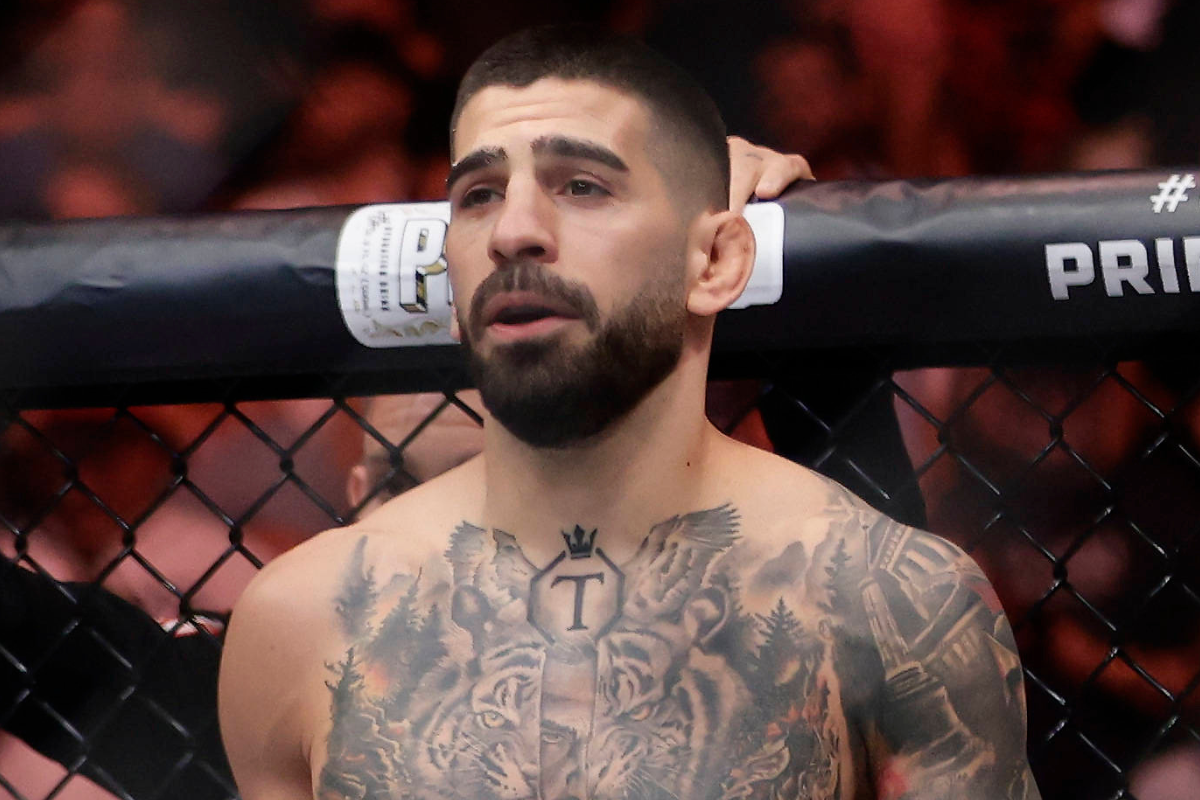
The one-man wrecking machines of the UFC were not always so eager to fight. For many, what started as an attempt at self-defense against bullying later became their life’s calling. Georges St-Pierre was bullied as a kid. Conor McGregor said he once carried a dumbbell to school for protection against his bullies. He later picked up boxing to protect himself. And joining that list is lightweight champion Ilia Topuria.
Watch What’s Trending Now!
Last October, speaking at a Youth Drug and Violence Prevention Program in Madrid, Topuria had confessed, “When I was in school, I suffered bullying. During recess, people tried to take my money and clothes. I felt alone until I found the courage to confront the situation and put things in order.” The champion labelled bullying and harassment as problems that affected everyone.
Fast forward to today, Ilia has revisited those painful days in the latest sitdown with Charlas Adictivas. ‘El Matador’ described how growing up came with constant confrontations. Despite being seen as fearless inside the Octagon, Ilia Topuria admitted that he wasn’t always comfortable with conflict.
“We were bullied at school,” he said. “There was constant confrontation with the kids at the school, and you have to stand up for yourself a lot of the time.
“I was always a kid who didn’t like confrontation in the street, but sometimes you have to face those kind of situations, and I felt afraid.”
That internal struggle, he admitted, brought fear and a sense of helplessness.
“It awakens a sadness; you start to feel less,” he added. “You don’t have that courage until you speak up.”
But the best part of the chat was when Topuria broke the myth about fighters. There is often a misconception about how people practicing martial arts can become aggressive. Topuria clarified the situation that, at least in his case, the stereotype was far from the truth.
“The truth is that I never liked having confrontations with anyone on the street or in a non-sports environment. But, unfortunately, sometimes you had to face those situations, and I felt afraid,” he said. This puts things in perspective.

Ilia Topuria opens up about the bullying he faced growing up "We were bullied at the school. There was constant confrontation with the kids at the school, and you have to stand up for yourself a lot of the time. I was always a kid who didn’t like confrontation in the street, but Show more
The glorified idea of street fighting gives MMA a bad reputation. Sure, several fighters talk about facing off ‘in the streets,’ but very few actually do it.
Topuria further shared how bullying affects your confidence and your perception of yourself, especially as a child or a teenager. Fortunately for him, he was never afraid to share those feelings with his brother, Alexandre, or others close to him.
The honesty in those words reveals a side of Ilia Topuria that fans rarely see. Before becoming a world champion, ‘El Matador’ was just another child trying to navigate difficult social dynamics, which influenced his mindset long before his fighting career took off. Now, his past is driving his purpose both inside and outside the cage.
Ilia Topuria helps launch initiative to help schoolchildren
The champion has entered a very different kind of fight—one focused on preventing the next generation from having to go through what he did. Ilia Topuria has collaborated with Isabel Díaz Ayuso, the president of the Community of Madrid, to launch an initiative tackling bullying and drug usage among schoolchildren.
The program focuses significantly on education, sports, and direct interaction, using workshops and speeches to reach students before those issues take root. It’s not just about raising awareness; it’s also about providing children with the necessary tools, support, and guidance at the right time.
During the presentation, ‘El Matador’ didn’t distance himself from the message.
“When one agrees to become the face of an initiative like this, one cannot remain a passive actor,” he said. “You must live up to the task you’ve accepted.
“I want to leave you with one final message: none of us is as strong or as intelligent as all of us together—you are not alone.”
The Spaniard emphasized accountability, especially in an age when social media can amplify evil as easily as it spreads connection. In many ways, this initiative represents a shift in his role. He’s no longer just a fighter looking for a win; he’s trying to influence what happens long before young people ever face those kinds of battles.