
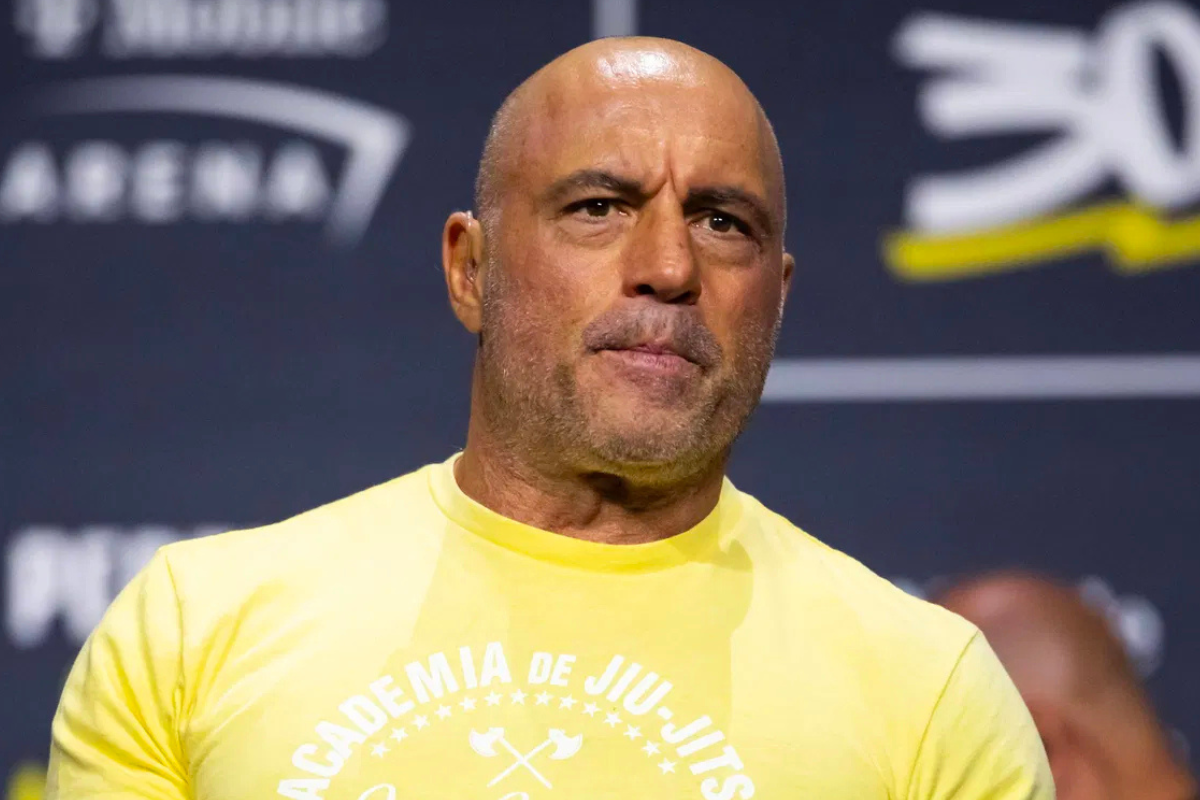
Joe Rogan’s knee is still giving him grief. And yes, we’re talking years after surgery. The UFC commentator recently got candid about the lingering pain from an old meniscus injury, offering a reminder that some injuries can continue to cause problems long after the initial damage is gone.
Watch What’s Trending Now!
While chatting with rising UFC bantamweight star Ethyn Ewing about knee injuries, the JRE host opened up about his own ongoing battle with the troublesome knee.
“They don’t recommend that anymore because they did a study of people that have had meniscus surgery versus not having meniscus surgery and just rehabilitation,” Rogan said on the JRE MMA Show. “And it shows that rehabilitation seems to be the better path.
“I mean, especially for like, I have one that’s been scoped and it bothers me all the time. That’s the one I got shot up today. It always bothers me. It’s like there’s missing padding on one side of it. It’s missing.”
Rogan’s comments came after Ethyn Ewing spoke about tearing his lateral meniscus during a college wrestling meet. ‘The Professor Finesser’ underwent arthroscopic surgery, which involved removing the damaged section.
However, looking back, Ewing admitted that he regrets the decision and wishes he had taken a different approach.
USA Today via Reuters
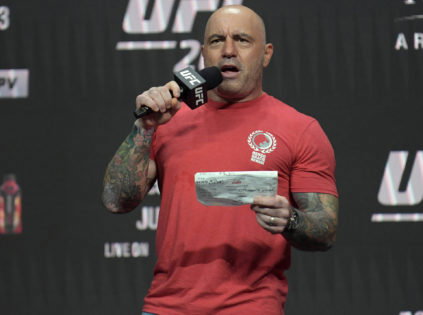
MMA: UFC 264-Weigh Ins, Jul 9, 2021 Las Vegas, Nevada, USA Joe Rogan hosts weigh ins for UFC 264 at T-Mobile Arena. Mandatory Credit: Gary A. Vasquez-USA TODAY Sports, 09.07.2021 16:47:51, 16389700, NPStrans, T-Mobile Arena, Joe Rogan, MMA PUBLICATIONxINxGERxSUIxAUTxONLY Copyright: xGaryxA.xVasquezx 16389700
“Yeah, they did a scope on it,” the UFC fighter replied. “So they shaved the part that was hanging away, which to me, I wish I had never done. Because that knee gives me issues today. Like any of this inversion, like a triangle choke with a right leg going over that meniscus.”
The 28-year-old broke it down simply: the lateral meniscus on the outside of his knee catches whenever he moves his leg into certain positions. When that happens, he has to straighten the leg and pop it back into place.
The good news? After years of dealing with it, he’s gotten pretty good at managing the issue and can usually get things back on track much faster. The two also discussed another knee injury Ethyn Ewing sustained during his second professional fight.
Ewing was caught in an ankle-lock position and felt the familiar pain flare up around the same lateral meniscus. This time, however, he chose a different approach, opting for rehabilitation over surgery and focusing on strengthening exercises to rebuild the knee. That decision appears to have paid off, as the knee has not continued to give him trouble.
Joe Rogan’s own experience, meanwhile, was considerably more painful. He recalled suffering what he described as a bucket-handle tear while practicing jiu-jitsu, with the injury causing his leg to lock up and become extremely stiff.
“But I had a bucket handle tear,” the UFC commentator said. “And in jiu-jitsu it would lock, and my leg would be stuff like stiff, and I could—I have to like push it back into place.
“It was excruciating. It would go back eventually, but it would take sometimes it would take a day before, and it would swell up.”
After decades of putting his body through martial arts, Joe Rogan has picked up more than a few orthopedic battle scars along the way. He has previously talked about undergoing two separate ACL surgeries, while his intense training and hobbies such as archery and hunting have brought other physical problems as well, including lower-back strain and sciatic nerve pain.
And the risks weren’t limited to busted joints, either. Back when Rogan was still competing in kickboxing and taekwondo, he recalls frequently experiencing headaches after sparring. Over time, he began considering the broader risks of repeated blows to the head and whether they could cause long-term brain damage. Those concerns eventually contributed to his decision to retire from competitive fighting at the age of 21.
Now, decades removed from his days in the ring, the 59-year-old’s latest comments are a stark reminder that old injuries don’t always stay in the past. His experience also highlights how the approach to meniscus injuries has evolved, with rehabilitation and strengthening often being considered alongside, or instead of, removing damaged tissue.
Joe Rogan wishes stem cells had been available when he had his knee surgery
Joe Rogan has never been shy about exploring different ways to help athletes recover from injuries, and stem cell therapy has been high on his radar for years.
During the conversation, the JRE host basically admitted that if the treatment had been widely available when he injured his knee, he would’ve been all for giving it a shot and mixed it with some exercises, rather than heading straight into surgery.
“But if I knew, first of all, this is a long time ago. Unfortunately, there was no stem cells available back then. I would have 100% just done stem cells,” Joe Rogan said. “And now I would have done the knees over toes stuff and a lot of cycling, like stationary box bike cycling at not high resistance.
“It’s really good for getting the blood flow to the knees and really good for strengthening up the tendons and the ligaments and everything, but without load.”
It is worth noting that Rogan’s interest in stem cells is not new. He has discussed the treatment multiple times on his podcast and has even credited it with helping him recover from a rotator cuff injury.
After suffering the tear, the UFC commentator said his doctor, Dr. Roddy McGee, suggested giving stem cells a shot, and the experience clearly stayed with him.
“And he was doing them for the UFC, and you know, this was, they could do some pretty potent stuff,” he said while recalling the treatment in episode #2191 of the Joe Rogan Experience. “This is before some of the new regulations have come into place. They’re constantly trying to regulate this stuff because it’s very effective.”
Joe Rogan said he had stem cells put directly into the injured area and focused on his recovery, using crossover bands to gradually build his shoulder back up. He also made a point of backing off whenever the discomfort set in, rather than trying to tough it out. About six months later, the JRE said an MRI showed the tear was no longer visible.
“I’ve never seen this all my years of being an orthopedic surgeon, I’ve never seen a tear in a rotator cuff completely disappear,” Rogan quoted Dr. McGee’s reaction after the scan.
That experience helps explain why Rogan has been so vocal about restrictions on stem-cell treatments in sports. He previously detailed how USADA prohibited UFC fighters from receiving some stem-cell treatments, claiming that athletes should have access to potentially useful medical technologies.
And that history adds another layer to Rogan’s latest comments about his knee. His knee was operated on and still bothers him years later, while Ethyn Ewing took the rehabilitation route with his second knee injury and says it has not continued to cause problems.
It’s a case of two injuries and two different approaches, which helps explain why Rogan remains so interested in treatments that could potentially offer athletes another path to recovery.