
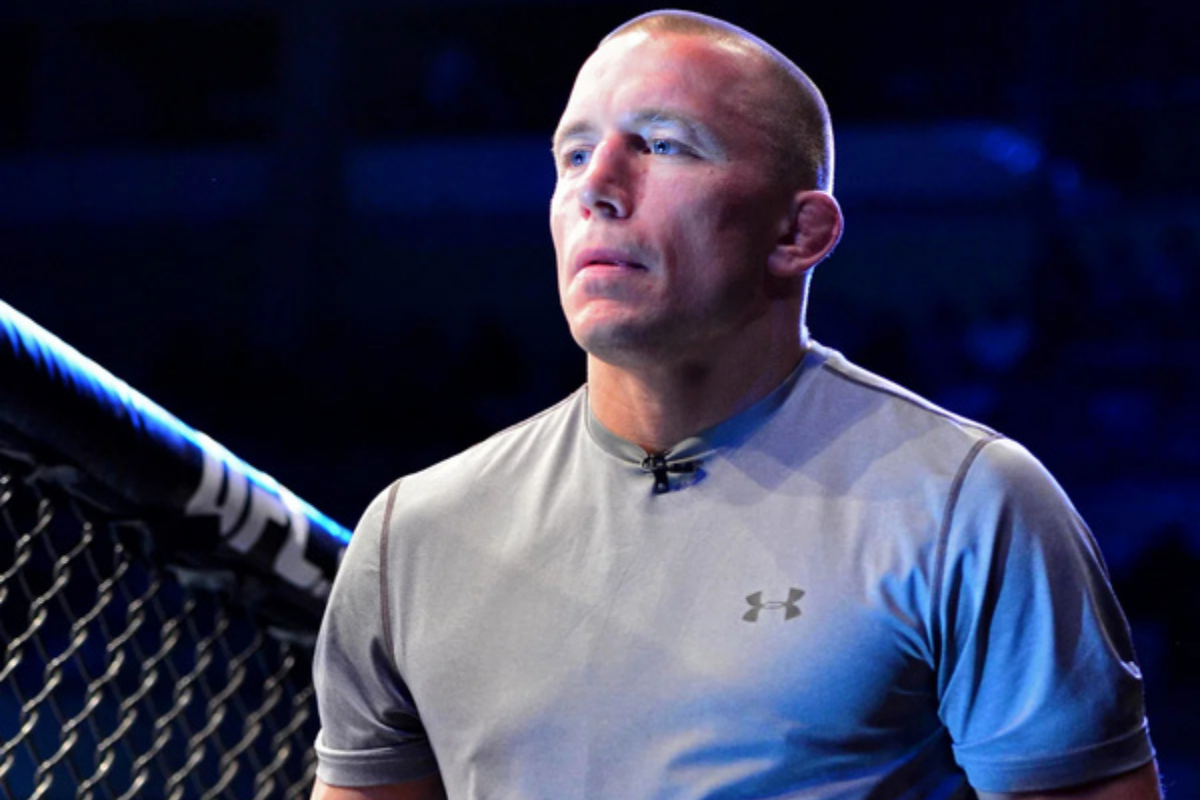
If you thought fighter pay is an issue in the UFC now, it looks like it was way worse in the 2000s. That’s the time when former two-division UFC champion Georges St-Pierre was front and center in the promotion. And despite the legend he later became in the sport, the amount he made in his UFC debut back in 2004 was egregiously low. And after his revelation, which came during a podcast appearance with fellow legend Demetrious Johnson, MMA fans are slamming the UFC over the continuing low payout issued to fighters.
Watch What’s Trending Now!
“What I did with my first paycheck, I mean in the UFC, which was $3,000 to show and $3,000 US to win, I fought Karo Parisyan, I reinvested [in] myself,” GSP revealed. “I didn’t use it to buy a luxury [car] or stuff. I reinvested [in] myself. I bought the stuff I needed to buy the mortgage and stuff like that, but I reinvested in trips to New York, Thailand, and Brazil to seek expertise and make myself better.
“That’s a problem with a lot of guys. When they start [making] money, they buy jewelry, cars, and stuff. No, you don’t want to do that. It’s like a snowball effect. You want to reinvest [in] yourself so you keep the ball rolling in.”
This means since he won the Parisyan fight at UFC 46, he took home 6K in total that night before cuts. While his earnings grew dramatically towards the end of his career, the $3K base pay sounds ridiculous in hindsight.
His second fight pay in June 2004 was reportedly $8,000 in total, and by the first Matt Hughes fight at the end of the same year it had grown to a reported $9,000 base pay. By 2008, after he had already won his third fight with Matt Hughes and had already been a champion, GSP had built enough leverage to negotiate a far more lucrative deal with the UFC. In a June 2021 interview with Wealthsimple Magazine, the Canadian explained that he took a major gamble by telling the UFC he did not want to renew his contract so as to get them to pay him more.
The move ultimately worked in his favor, as the promotion returned with a new deal that eventually helped him earn millions later on. His biggest payday came in the final fight of his career when he defeated Michael Bisping via third-round submission and reportedly walked away with a staggering $10 million purse. His career perfectly illustrates how UFC fighter pay works.
Athletes often begin on minimal contracts and only earn substantial money after building a winning resume and becoming major attractions for UFC fans. Still, compared to other names like Anderson Silva and BJ Penn, St-Pierre’s debut purse was especially low. According to Tapology, Silva made $36,000 in his debut against Chris Leben in 2006.
Today, many newcomers in the UFC reportedly earn around $12,000 to show and another $12,000 to win. Still, during those early years, many fighters were forced to work second jobs to support themselves, something even Demetrious Johnson has spoken about firsthand.
Not to mention, when you compare the UFC’s revenue share to leagues like the NFL, where even rookies can secure multi-million-dollar contracts annually, things become clearer. According to a 2013 internal study commissioned by Lorenzo Fertitta, the UFC paid its fighters around 18 percent of the promotion’s overall revenue. This is far lower than the 50 to 60 percent commonly seen in other major sports leagues.
Although the revenue share since then has gone up, and the UFC has also bumped up the post-fight bonuses after its broadcast deal with Paramount, it’s nowhere near the numbers paid out by other organizations. For example, a fighter gradually moving from $12K to $14K to $16K purses could still end up earning only around $84,000 annually fighting multiple times. But UFC CEO Dana White doesn’t see an issue in that.
In an interview with Rolling Stone, he defended the pay for newcomers, claiming the promotion isn’t willing to pay its new debutants “$370,000” to see whether they belong in the promotion. Naturally, the pay problem persists, and things aren’t hugely better today either. And that contributed to the reactions fans shared once they realized how much money someone like GSP made during his early years in the promotion.
Georges St-Pierre praised while UFC blasted for continuing low fighter pay
An MMA content creator was one of the first to share his opinion. “Already told you on video, guys, UFC fighters get screwed by the organisation. And when they lose, half of the paycheck is gone, then 30% on taxes, 10% to manager, and another 10% to the gym. Fighters only get 25% if they lose,” the user posted. And it’s true, after getting paid, a fighter has bills to pay, which leaves them with essentially nothing.
Another user attacked the promotion. “Shame on the UFC for this,” the user wrote. But it’s not just a UFC problem. The same thing happens in boxing as well. Fighters coming up make very little. The only difference is that if you are a promising name, a promotion may sign you and pay you a lot better than the UFC.
Meanwhile, this fan praised GSP for investing the money back in himself. “Smart move putting that money back into training instead of blowing it,” the fan commented. However, other fighters may not have that luxury. Imagine if the rent is due, or someone in the family has suffered a medical emergency.
Someone else saw UFC’s low pay as exploitation. “Literal exploiting😭😭,” the user claimed. But now with MVP MMA potentially entering the market with better pay, the UFC may finally have some competition. If they continue paying their fighters such low purses, they might choose to work with MVP, and the inflow of talent will stop.
The next user was in awe of Georges St-Pierre for becoming what he became despite making the money he initially made. “Imagine those numbers. And still, made it to the top 🐐,” the user posted. Today, GSP has long retired from the sport, but every time there’s a GOAT conversation, he’s among the top names.
While such backlash has always existed, the promotion has continued with the pay they feel is fair. However, it should be fair to the fighters as well for the issue to appear to go away anytime soon.